
Eastside development could bring more than 1,000 aerospace jobs beyond 2030.
JACKSONVILLE, Fla. — Could the First Coast soon look like the Space Coast?
The future of Cecil Spaceport in Jacksonville is beginning to take shape, and it may look a little different from launch sites like Kennedy Space Center. Instead of vertical launch pads, Cecil has horizontal launch capabilities, which is ideal for the future of private space flights.
New aerospace manufacturing companies are already getting on board as part of a new expansion.
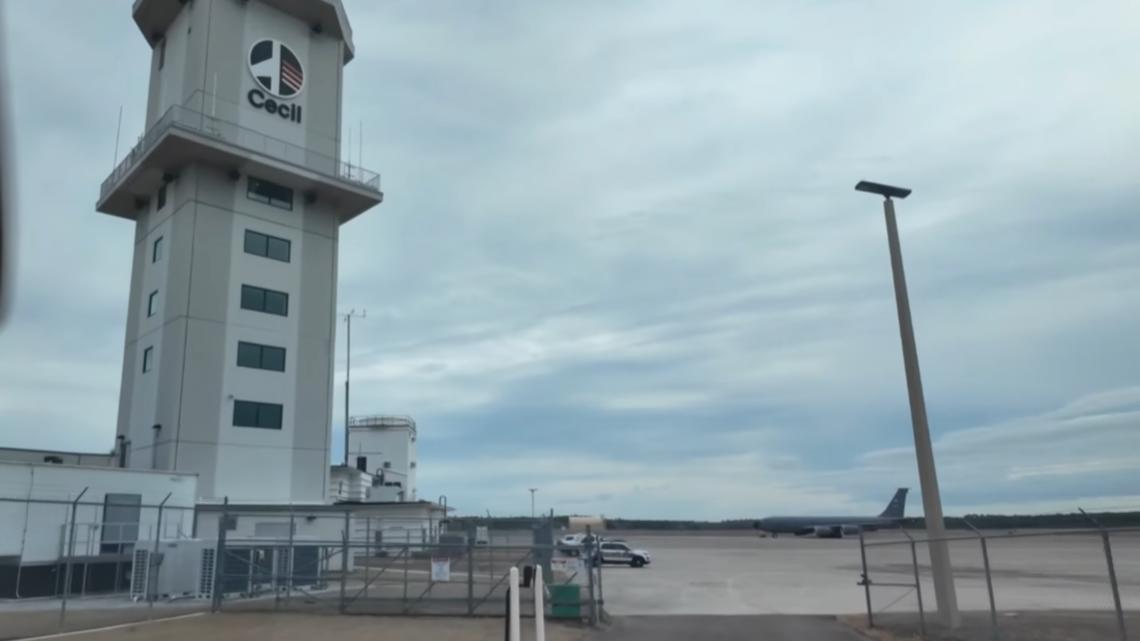
It might not look like much from the outside, but the aerospace industry has taken off at Cecil Spaceport. It has a high-tech mission control center, spaceport hangar with 60,000 square foot and one of its biggest assets, a 12,500-foot runway. The location, formerly a naval airbase, was a designated emergency landing site.
“It’s the third longest runway in the state of Florida, so it’s a huge asset, not only to Cecil, but the city to Jacksonville,” Cecil Spaceport Director Matt Bocchino said. “Because with this runway, because of its length, we can accept any aircraft in production in the world. This is why we are a spaceport, because of this long runway.”
In January, Embry Riddle’s Experimental Rocket Propulsion Lab fired up a test rocket at the spaceport. Other universities, including the University of Florida and University of Central Florida, also use Cecil for testing along with private companies.
“It opens the door not just for Cecil, but the commercial space industry in general,” said Bocchino. “We can only take a certain size rocket here. You won’t see a SpaceX rocket being tested here, but the sizes that are tested here. They start the process of developing bigger rockets and they do research, and it all builds up to something bigger.”
Cecil is looking towards the future, applying for an FAA space re-entry license. Space Florida is committing to fund the process 100%. The spaceport is already cleared for horizontal launches.
“Someday in the future when we have a horizontal launch, the aircraft carrying the rocket will takeoff from this runway,” said Bocchino.
Bocchino said there are already a number of vehicles in development for horizontal reentry like the Intuitive Machines’ Zephyr vehicle.
Cecil is now focusing on the transformation of hundreds of acres on its eastern property for aerospace development. Construction is underway for Boeing’s two additional hangars. There will be an extended taxiway leading to the expansion of the spaceport on the eastside of Cecil.
High-speed manufacturing company Hermeus has already broken ground on its hypersonic engine test facility at Cecil and has crews working on new tech. Otto Aerospace already signed a lease to build a manufacturing facility on the property and will soon be operating out of a temporary building at Cecil. The new development is expected to bring over 1,000 high-paying jobs beyond 2030.
But, when we’ll we start to see vehicles coming back from space? It could be another two years before they are granted a reentry license from the FAA.
“You’re going to see manufacturing jobs, aerospace engineering jobs, the whole gambit of anything in the aerospace industry is going to be here at Cecil,” said Bocchino. “The plan is hopefully stuff coming back from space and landing here in Jacksonville, how cool will that be?”
Since 1999, over $600 million has been invested in Cecil Airport and spaceport, some of the money coming from local and federal grants. According to FDOT’s 2022 economic impact study, Cecil produces $1.9 billion in annual economic impact and that was before Otto and Hermeus became tenants.