By Karen Alava | Staff Writer
Does FIU Truly Meet the Accessibility Needs of Disabled Students and Faculty?
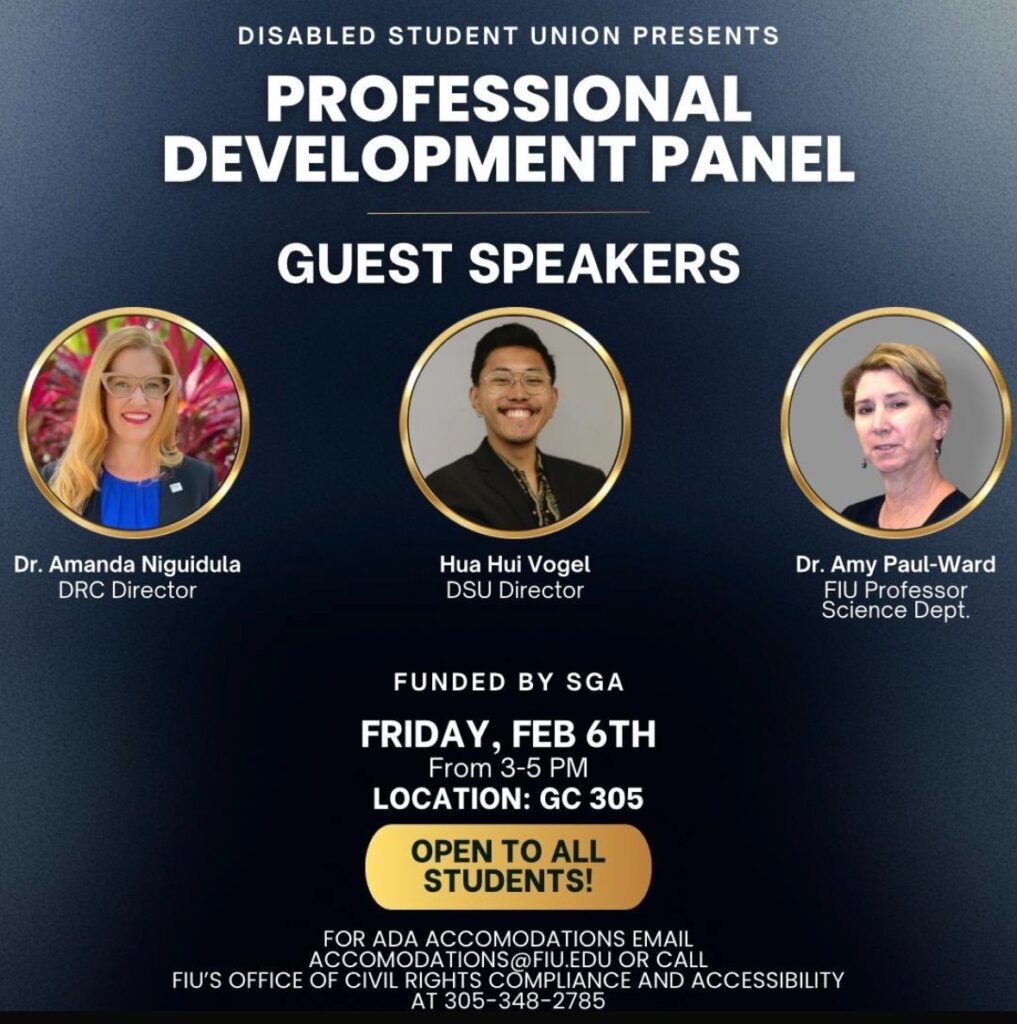
When accommodations depend on individual requests rather than systemic change, accessibility can become an afterthought. That question was at the center of a “Professional Development Panel,” hosted by the Disabled Student Union, that examined whether Florida International University is truly equipped to meet the needs of disabled students and faculty.
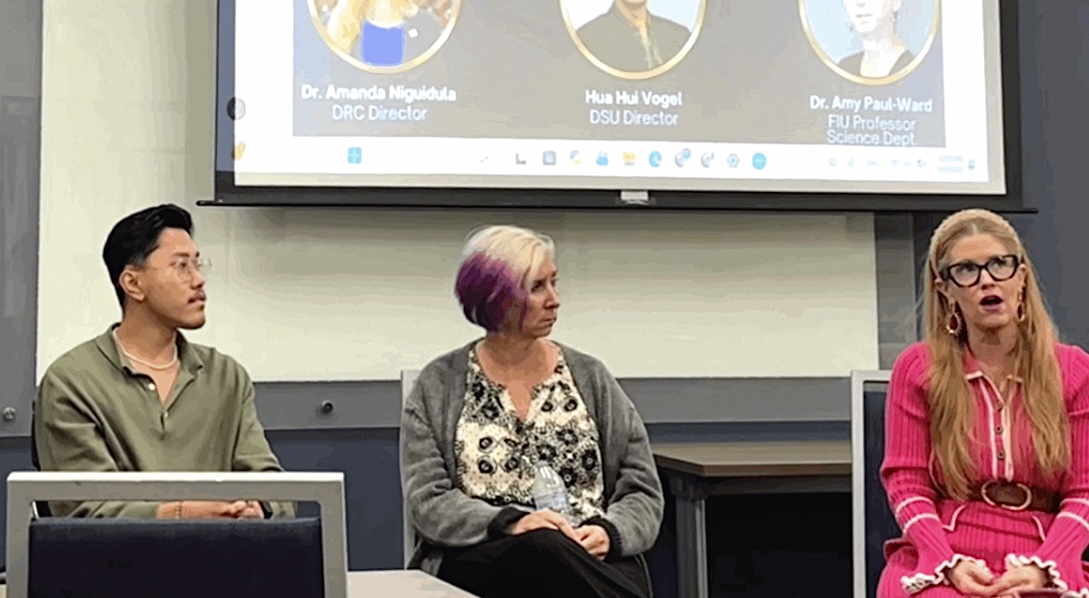
The panel featured Hua Hui Vogel, director of the Disabled Student Union; Dr. Amanda Niguidula, director of the Disability Resource Center (DRC); and Dr. Amy Paul-Ward, a professor in FIU’s science department. Through personal experiences and institutional critique, speakers highlighted persistent accessibility barriers across campus, including inaccessible classrooms, malfunctioning elevators, parking limitations, and delayed responses to accommodation requests.
Disabled Student Union Speakers | Screenshot Via Disabled Student Union Instagram, PantherNOW
Dr. Amy Paul-Ward shared her experience navigating these challenges as a faculty member with a leg disability. She explained that she was assigned to teach in a building where the air conditioning is consistently very cold, conditions that cause her significant pain. Despite requesting a classroom change, she has yet to receive a response.
As a result, Paul-Ward said she has had to adapt independently, sometimes taking her class outside, pushing tables together, and teaching in nontraditional spaces to manage her condition. Her experience underscored how delayed or temporary solutions often place the burden of accessibility on disabled individuals themselves.
The president of the Disabled Student Union reflected on his long history of advocacy, which began in high school after noticing that disabled students were frequently unable to access classrooms and essential resources. He founded a disability organization, organized petitions, and advocated for change, but said meaningful improvements did not occur until his senior year.

Image retrieved from Diversity & Inclusion Speakers Agency
Upon arriving at FIU, he noticed similar accessibility issues, motivating him to become president of the Disabled Student Union. At FIU, DSU now works alongside the Disability Resource Center to advocate for structural change and provide support to students navigating accessibility challenges.
Dr. Amanda Niguidula addressed the broader systemic issues behind these experiences, emphasizing that accessibility efforts often rely too heavily on individualized, one-time accommodations rather than long-term solutions.
“There should be less reliance on one-time fixes called accommodations and rather shifting to a view that says this is not justice,” Niguidula said. “We all benefit when we understand everyone has an opportunity.”
Niguidula explained that accessibility measures are frequently implemented only after someone raises a complaint or resigns, rather than proactively addressing barriers that affect many students and faculty members. According to the speakers, this reactive approach perpetuates inequities and leaves disabled individuals repeatedly advocating for basic access.
Speakers emphasized that accessibility is a collective responsibility and that inclusive design benefits the entire university community.
The “Professional Development Panel” made clear that accessibility remains an ongoing challenge for FIU. For disabled students and faculty, meaningful progress will require institutional accountability and a shift from temporary accommodations to lasting, systemic change.
About Post Author