
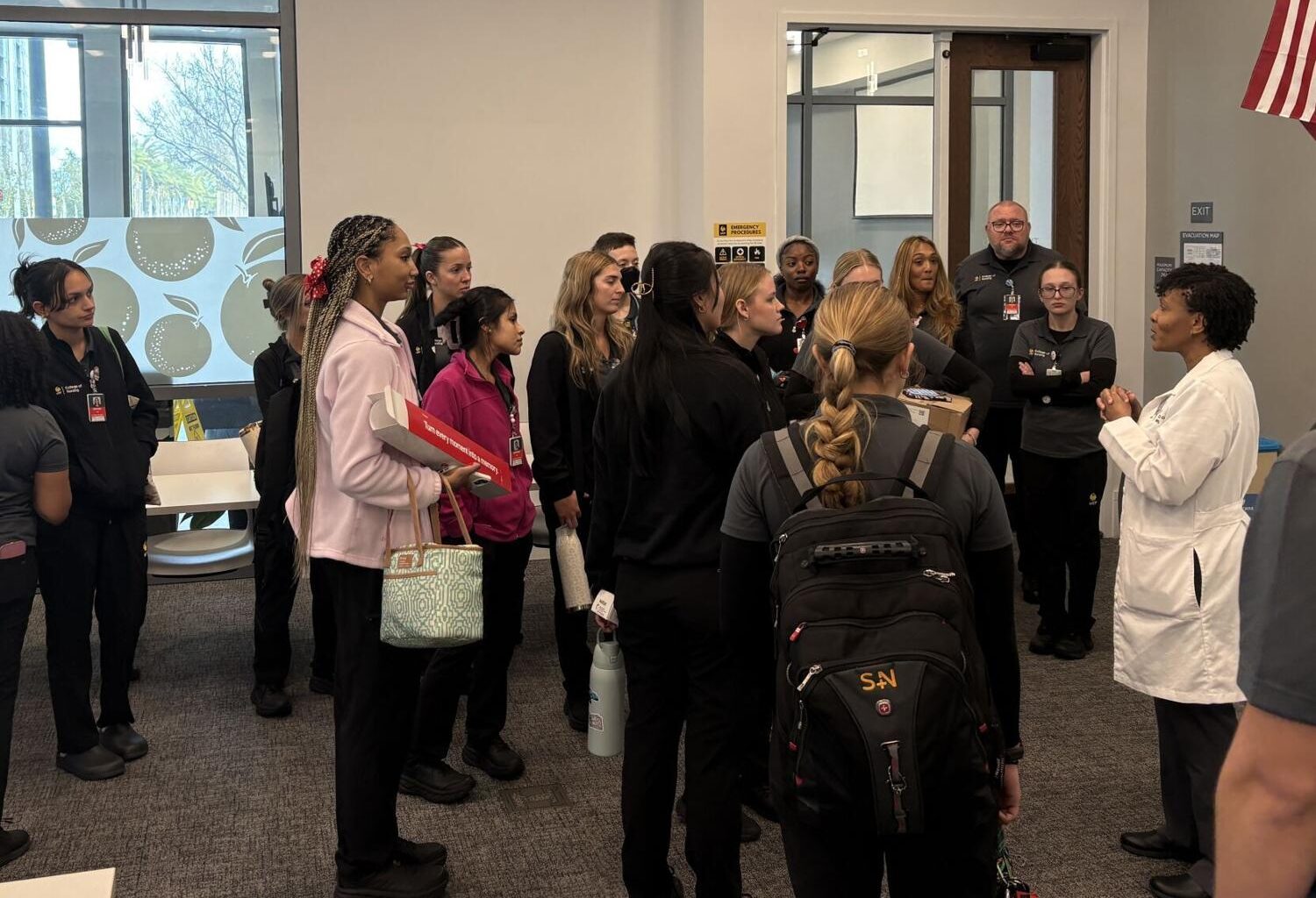

Dr. Fayshonda Cooks (right) debriefs UCF nursing students after the Heart of UCF Health Expo at UCF Downtown on Wednesday. Cooks organized the expo and led the students in providing free health screenings to the public during the event.
Valentina Solorzano
The Heart of UCF Health Expo, organized by a lecturer in the College of Nursing, brought free health screenings and resources to Orlando residents on Wednesday at UCF’s downtown campus.
The event, which brought together several of UCF’s health-related colleges and programs, along with local community organizations, was led by Dr. Fayshonda Cooks, a registered nurse and UCF lecturer.
Cooks led UCF College of Nursing undergraduate students in providing the screenings to members of the downtown community and connecting them with medical resources and organizations.
In rural Georgia, where Cooks grew up, access to health care was scarce, she said. Her family had no health insurance, and she was shocked to learn that people in Florida’s biggest cities are facing the same struggles.
“I grew up in a poor, indigent community, and I could not believe that 40 years later, we still have people dealing with the same kind of stuff I dealt with when I was growing up,” Cooks said.
The expo was an opportunity to present the university’s health programs and local health agencies to the community. The Mental Health Association of Central Florida and the Orange County Medical Clinic, which offer free health care to uninsured adults, were also at the event offering information and services.
Cooks emphasized the timeliness of the expo.
“Especially now, since we have so many people who are without insurance, so many people who are losing insurance,” she said.
According to the United Health Foundation, Florida ranks 45th out of all 50 states in the number of people lacking health insurance, with 10.9% of the population being uninsured.
UHF also ranked Florida 42nd in the number of people avoiding necessary care because of the cost, with 14.3% of the population refusing to seek medical help due to high expenses. In Florida, primary care visits without insurance can range from $150 to $300 for just one doctor’s visit, according to Advent Health.
In the health screening room last week, UCF nursing students tested the body mass index, blood pressure and eyesight of community members in attendance.
Based on their results, nursing students gave patients recommendations for healthier lifestyle choices that could help prevent future health complications. They also directed residents to further medical care if necessary.
“It’s great for people who don’t have the means to make it to a clinic,” said Gabriela Coquieri, senior nursing student at UCF.
According to the National Assessment of Adult Literacy, 14% of Americans cannot comprehend basic health information. The study also found that Hispanic adults have the lowest health literacy of any ethnic or racial group, with 41% having below basic health literacy. According to the U.S. Census Bureau, 35.4% of Orlando’s population is Hispanic or Latino.
“A lot of our job in the hospital is teaching,” Coquieri said. “When someone is getting discharged, we have to teach them: Here’s what you’re going to have to do at home. And a lot of them need extra information on how to do these things.”
Coquieri explained how she’s able to better educate patients, especially those who are Hispanic. She speaks Spanish and has noticed how happy and comfortable patients become when she speaks a language they are confident in.
Having worked in the public health sector for over 20 years, Cooks said that she sees the importance of addressing low health literacy rates.
“Health literacy really is the biggest issue in public health,” Cooks said. “People not understanding the basics for how to be healthy, stay healthy, get healthy, how to get help when you need it … that’s really the biggest factor, in my opinion, for negative health outcomes.”
This event is part of Cooks’ CommUNITY CollaborACTION Initiative. Cooks said it’s about collaborating to address issues in the community and taking the necessary action to resolve them.