
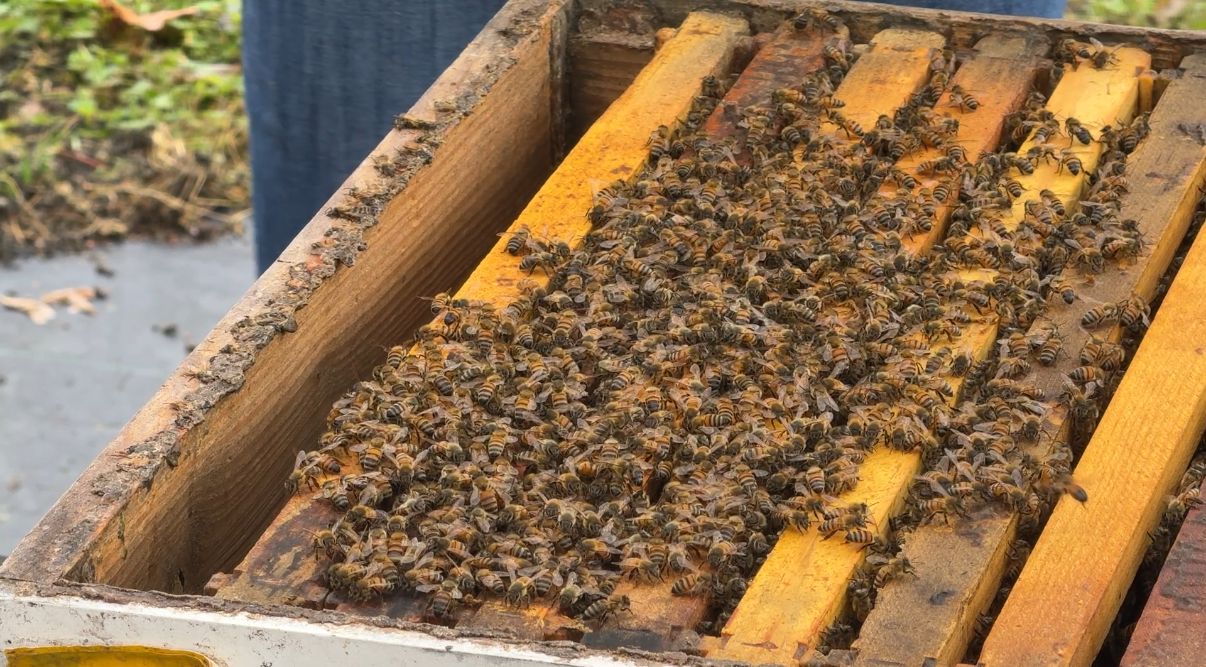
OVIEDO, Fla. — Unusually cold temperatures followed by ongoing drought conditions have taken a heavy toll on beekeepers across Central Florida, leaving many struggling to keep their colonies alive.
What You Need To Know
Black Hammock Bee Farms in Oviedo lost nearly 50% of its bee colonies after extreme cold and drought
Lack of rainfall and damaged plants reduced nectar and pollen sources for bees
Beekeepers are relying on sugar water and supplemental feeding to keep colonies alive
Experts say recovery could take months as vegetation and bee populations rebuild
At Black Hammock Bee Farms in Oviedo, head beekeeper Beth Langlois says this winter wiped out much of the plants her bees depend on for survival.
“The cold weather really affected all the plants here in Central Florida. It killed everything,” Langlois said. “Right now, we don’t have any plants that are producing nectar, as well as plants that are producing pollen.”
Without natural food sources, the farm has been forced to rely on constant feeding to prevent colonies from starving.
“Right now, we’re getting thousands and thousands of pounds of sugar,” Langlois said. “Mixing it with water, making sure all the colonies have buckets on them so that they don’t starve to death.”
Despite those efforts, the losses have been severe.
“We had approximately 500 honey bee colonies at the time, and I’m pretty sure we’re right at, like a 50% loss,” she said.
Langlois says watching colonies die was heartbreaking.
“It was devastating. I felt really bad. I mean, I cried a whole bunch,” she said. “Even when we had to go through to clean up the colonies that did not make it, they froze to death.”
The cold snap wasn’t the only challenge. A prolonged lack of rainfall has slowed the recovery of trees and flowering plants, making it harder for bees to rebuild.
Owner Dennis Langlois describes the combination of weather extremes as a “double hit” to the farm.
“The plants that were affected by the freeze stopped the production of those foods. So whether that be pollen or nectar. But the drought is going to affect the next batch of plants that would be providing nectar and pollen to the bees,” he said.
The affect is visible across the property, where much of the bees’ natural forage has disappeared.
Agricultural experts say bees must work harder to survive during cold weather, burning extra energy to stay warm inside their hives.
“They stick together to cluster around the brood inside of that hive,” said J.K. Yarborough with the University of Florida’s Institute of Food and Agricultural Sciences. “They will vibrate their wings back and forth to keep a nice and warm temperature inside of that hive.”
That process requires significant energy, making access to food critical during extreme weather.
For the Langlois Family, recovery now depends on continued feeding, warmer temperatures, and much-needed rain.
“The bees work hard for us, so we’re going to work harder for them,” Beth Langlois said.
She also urges the public to help protect local bee populations by avoiding pesticides and calling professionals to safely remove unwanted hives.
The family says it could take months for both the colonies and the surrounding vegetation to fully recover. Until then, they’ll continue doing everything they can to keep their remaining bees alive.