
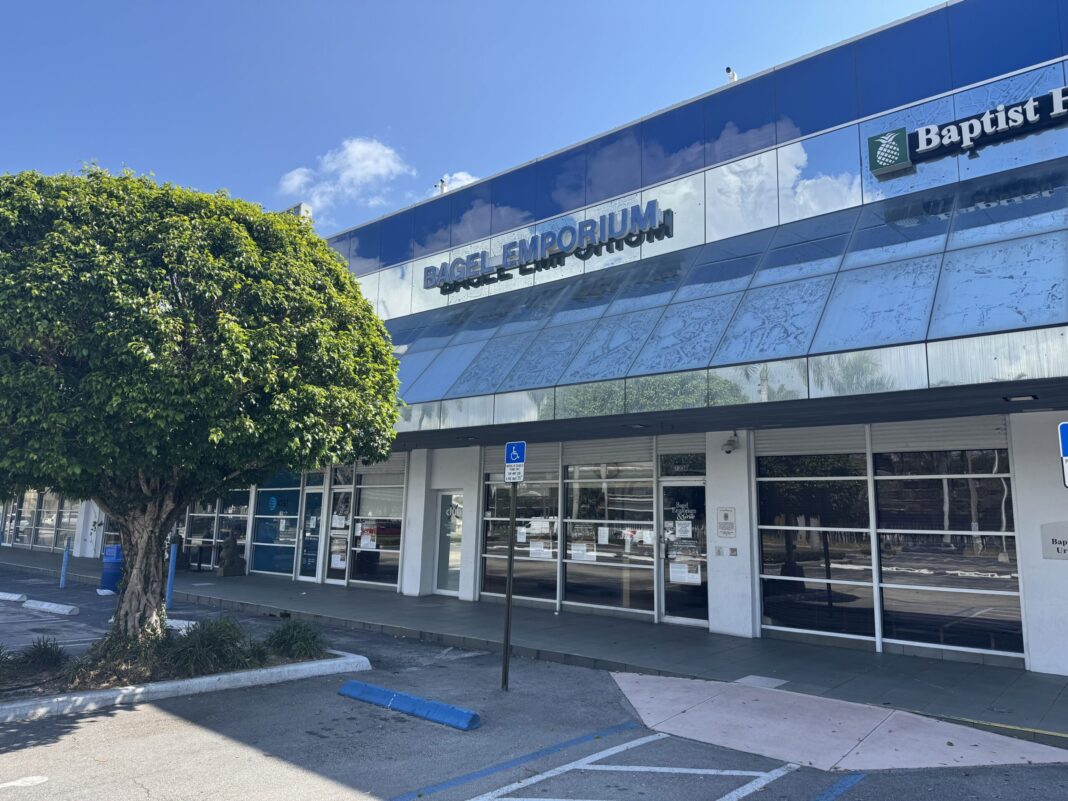
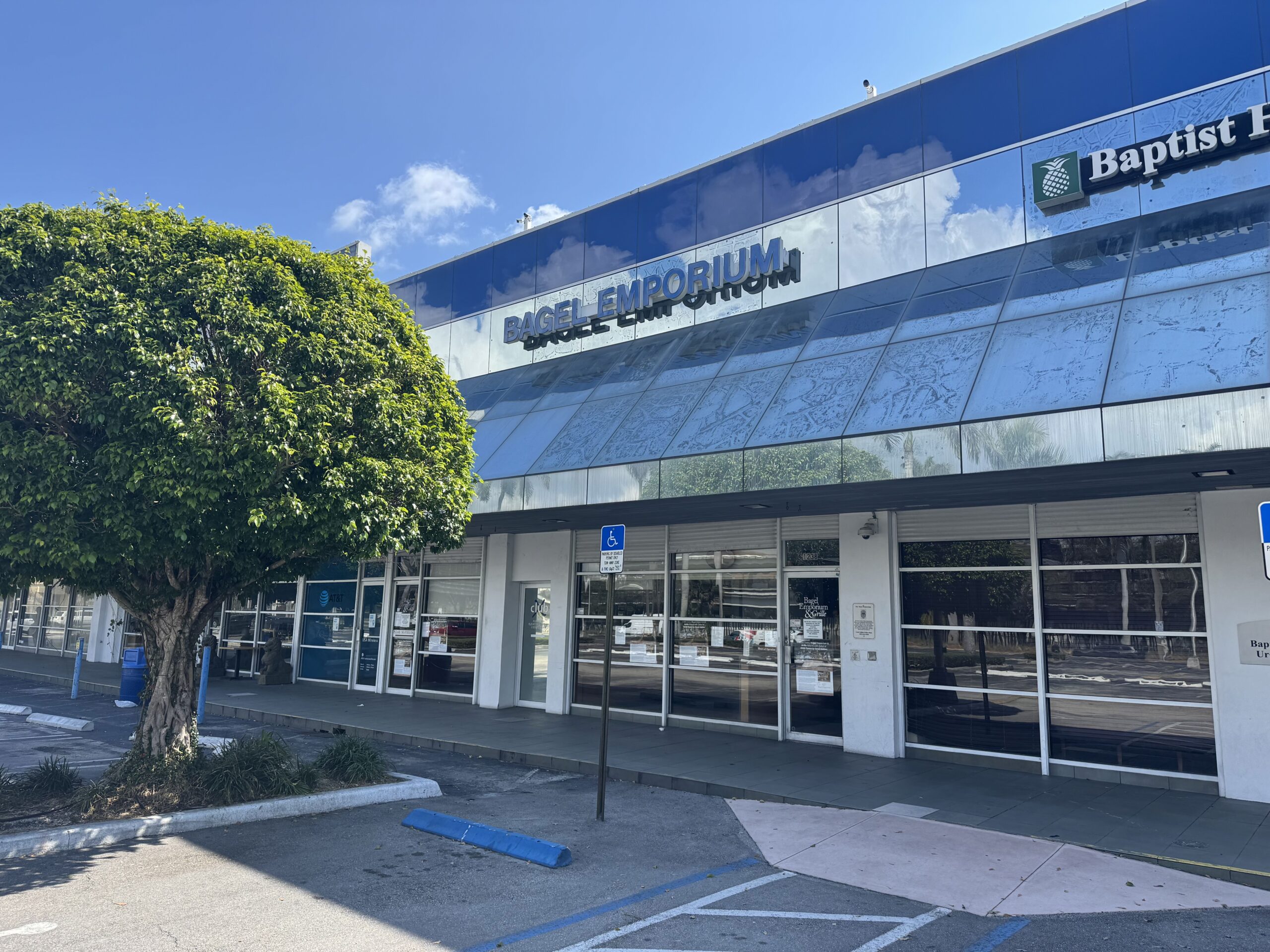
The University Shopping Center across from the University of Miami campus is set to be demolished following the closure of the longstanding Bagel Emporium in late 2025. The property was available for UM to purchase, however, the University said it is unlikely that would happen.
“When you start expanding that boundary line across major roadways, it gets harder to navigate and manage,” said Jessica Brumley, the Vice President of Facilities Operations & Planning, during a roundtable discussion with The Hurricane. “The likelihood of UM purchasing land across the street and building towers is probably not anything that would happen in the near future.”
Instead, a student housing developer, Landmark Properties, bought the property in 2023 with plans to build a new apartment complex.
Leading up to Landmark Properties’ purchase, there was speculation that UM would buy the land for campus expansion. Seeing that the UM Strategic Housing Plan will not be completed until 2032, a new housing development could have been a good option for students while construction continues on campus.
An expansion across U.S. Route 1 would have to be approved by the City of Coral Gables.
“We have agreements that we’ve made with the City of Coral Gables on how we’re going to operate and where we’re going to operate,” said Brumley.
The University is required to submit an annual report to the city on or before June 1, detailing any proposed changes to the Campus Master Plan.
This system was put in place by the passage of Ordinance No. 2010-34 in 2010. It states that the Campus Master Plan covers all land included in the University Campus District (UCD). If a proposed building or development is not submitted and approved in the annual report, construction cannot move forward.
Section 4-202(E)(4) in Article 4 of the Ordinance states that all modifications “shall be approved after the following findings have been prepared by planning staff, recommended for approval by the Planning and Zoning Board and approved by City Commission.”
There are three main regulations that modifications must meet for approval: The submitted proposal must be consistent with the intended purpose, it must make adequate provisions for public services and traffic control and it must be compatible with adjacent properties and the neighborhood.
In addition to the three regulations, new buildings have to follow the Ordinance’s general height and setback restrictions. The UCD states that no building shall exceed 150 feet or 13 stories. Additionally, no building can stand within 25 feet of its front property line.
While there is no explicit limit on the number of students that can be on campus, the City’s extensive zoning laws in Ordinance No. 2010-34 make it difficult for potential new housing projects to get approved. Instead, UM housing hopes to form a relationship with Landmark Properties, as they’ve done with The Residences and Hotel at THesis.
“Pat [Whitely] and I work very closely together to ensure that we have strategic partnerships with THesis and perhaps this company that is going to build across the street. That’s important,” said Brumley. “We will continue to do that to ensure the best amenities are made available to our students if they choose not to live on campus.”