
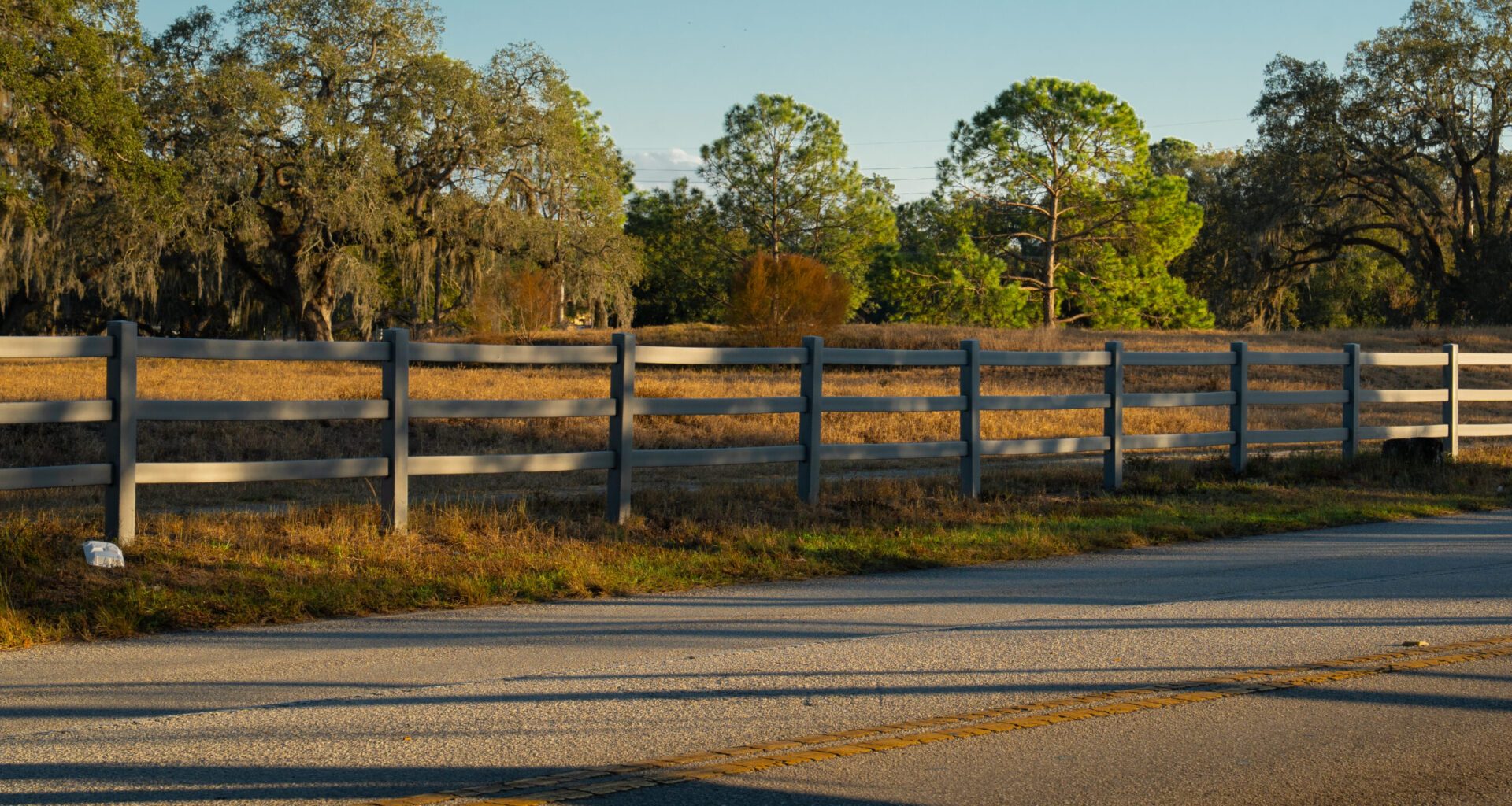
 Some students and community members are worried the Fletcher District’s development could encroach on the neighboring USF Forest Preserve. ORACLE PHOTO/THOMAS MARRS
USF’s former golf course, characterized by an 18-hole public course and, more recently, “No Trespassing” signs, is set to undergo a 27-acre facelift this semester.
The university shuttered The Claw due to financial losses in September 2023, and is now set to redevelop the land into a mixed-use neighborhood that will include housing, retail, restaurants, an academic building and a hotel.
Florida’s Board of Governors approved the first phase of the Fletcher District in November, with groundbreaking expected this spring.
But the estimated $268 million development plan has some USF students and alumni concerned about the potential negative impacts it could have on the USF Forest Preserve.
The 500-acre USF Forest Preserve borders The Claw to the east and is primarily a wetland and sandhill habitat that houses various endangered or protected plants and animals, according to the preserve’s website.
Related: USF reveals vision for housing, retail on former golf course site
Calista Snyder, a USF alumna and local biologist, said she is concerned the development for the Fletcher District could affect native wildlife.
“The Claw was never going to be a perfect, untouched piece of nature,” Snyder said. “But it serves a very important purpose as being the midpoint from urban life to the Forest Preserve.”
In April 2021, USF issued a Request for Information to explore developing the Forest Preserve, which prompted swift backlash from USF faculty and environmental groups.
USF’s Faculty Senate passed a resolution just one month later, supporting the preserve remaining a conservation site.
By August 2021, USF President Emerita Rhea Law created the North Fletcher Property Advisory Committee — a 13-member group composed of USF faculty and staff — to provide recommendations for the preserve.
The committee said the land “wasn’t suitable” for development, and in February 2022, USF announced it would no longer pursue development of the land.
Snyder, who graduated from USF in 2021 and protested the initial development of the Forest Preserve, said The Claw serves as an “ideal” barrier between the city and the preserve.
“By developing [The Claw], you are basically taking away that buffer zone and shrinking the Forest Preserve,” Snyder said.
A buffer zone is a protected layer around environmentally sensitive areas meant to lessen the impacts of development, according to The Nature Conservancy.
Related: USF’s Fletcher District approved in Board of Governors meeting
Still, USF said the Fletcher District will not affect the neighboring preserve and that it plans to use “environmentally responsible” development practices, according to USF’s Tampa Campus Master Plan.
The plan will establish buffer zones along the preserve to serve as wildlife corridors, limit construction near “sensitive areas” and restore native vegetation for stormwater management and biodiversity.
USF did not specify how long the buffer zones will be, or what it defines as “sensitive areas,” but Hillsborough County’s Land Development Code requires development to be set back 50 feet from designated wetlands.
 The USF Forest Preserve is a 500-acre wetland located along Fletcher Avenue to the east of The Claw. SPECIAL TO THE ORACLE/LEILA SUJANANI
USF’s Environmental and Conservation Outreach, Research and Education System, which “secures, utilizes and promotes” the Forest Preserve, did not respond to The Oracle’s request for comment.
Leila Sujanani is a junior biology and geology double major and a former ECORE program assistant.
Sujanani said the environmental measures the university plans to implement are important for the preserve’s health, as they help reduce the negative impacts of nearby developments.
“Without those sorts of safeguards, the preserve’s ecological function is likely to be compromised,” she said.
Related: USF’s Climate Teach-In aims to educate community on environmental initiatives
Sujanani is also a member of the USF Burn Team, which works with local municipalities, local emergency services and the Florida Forest Service to conduct prescribed burns on the Forest Preserve.
Prescribed burns are controlled fires that manage vegetation, control invasive species and can support an ecosystem’s biodiversity, according to USF’s ECORE System.
Sujanani said prescribed burns take extensive planning — including monitoring weather conditions, obtaining permits and notifying nearby residences.
She said construction closer to the burn sites causes setbacks because of the need to account for additional people in the area.
Sujanani said this is something USF should take into account as it adds 696 student beds and 150 multi-family apartments in the Fletcher District.
“If development moves closer, the burns become harder to implement, even though the ecological need for the fire doesn’t go away,” Sujanani said.
Sujanani said the influx of residents living next to the Forest Preserve would require educating more students and community members on the benefits of prescribed burns.
“A lot of time has been spent in being transparent in that communication and making sure the public is educated on why burns happen and why it’s good,” she said.
Sujanani said she hopes USF prioritizes the preserve’s long-term management, despite the Fletcher District’s development slated to begin this semester.
“I don’t think development is necessarily a bad thing, but you really have to think about the ecosystems that will be impacted by this sort of thing,” she said.