
By: Jodie Nicotra | February 19, 2026 | 7 min. read |
Summary
The University of Miami Miller School of Medicine’s Miami Gastroenterology Congress brings together faculty, staff, residents and fellows with local and regional GI and primary care doctors, nurses and advanced practice providers.
The event featured 13 Miller School faculty experts in GI topics like liver health, endoscopy, irritable bowel disease management and common conundrums associated with modern GI practice.
The Miller School’s Carol Antequera discussed the treatment of eosinophilic esophagitis, a chronic allergic reaction in which swelling in the esophagus leads to difficulty swallowing.
Gastroenterologists from across South Florida learned about the newest approaches, diagnostics and therapeutic techniques in gastroenterology during an educational forum hosted by the Division of Digestive Health and Liver Diseases at the University of Miami Miller School of Medicine.
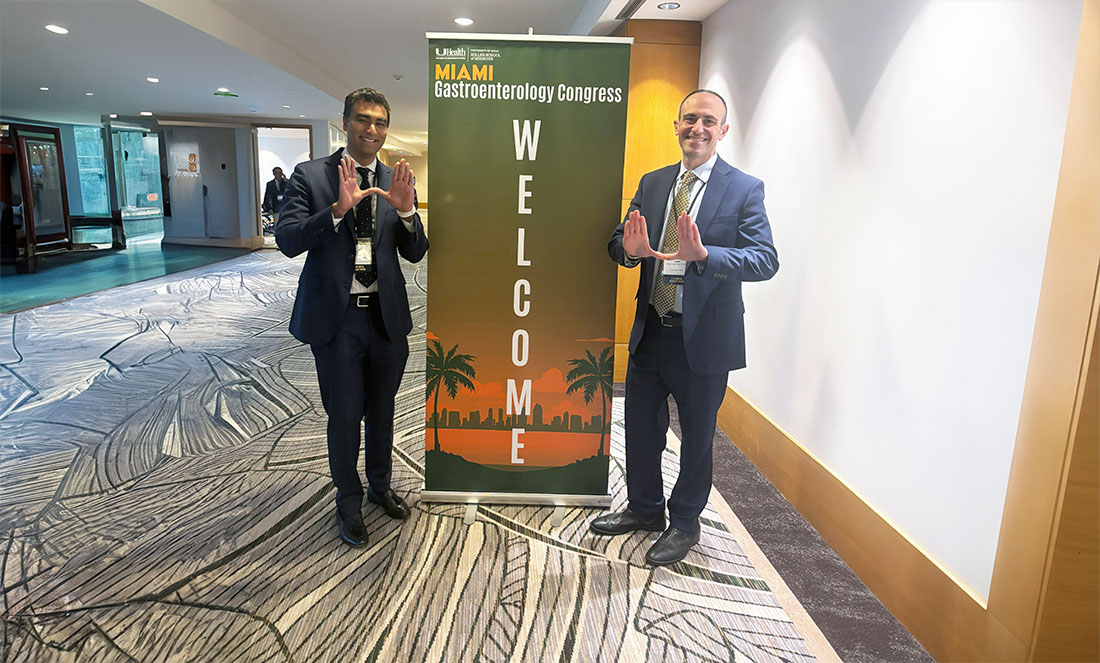
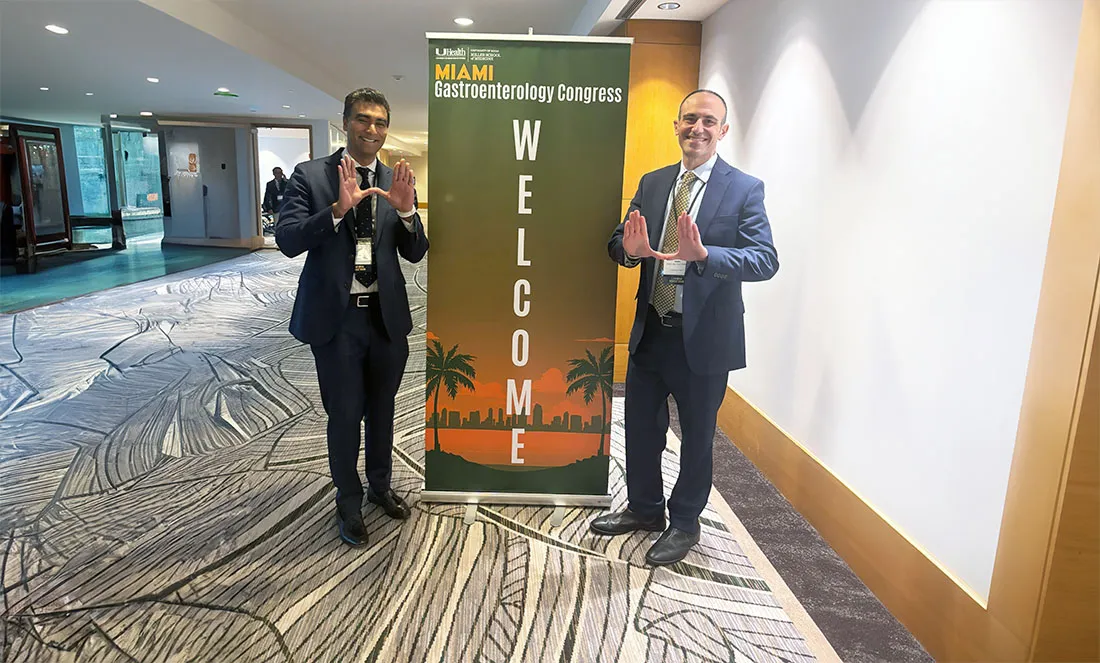
Led by Sunil Amin, M.D., M.P.H., and Jodie Barkin, M.D., the Miami Gastroenterology Congress brings together Miller School faculty, staff, residents and fellows with local and regional GI and primary care doctors, nurses and advanced practice providers. There were more than 100 attendees at the congress, a large number for such an event.
This year’s congress marked the second annual revival of an event that had been hosted more regularly by the Miller School until it was interrupted by the pandemic.
“It had always been at the top of my agenda to reinvigorate the course, and a couple years ago it felt like the timing was right,” said Dr. Amin, an associate professor in the Miller School’s Division of Digestive Health and Liver Diseases. “It’s important for us as a university academic division to host a course for doctors in our community, both to show them what sorts of things we can do and to make it easier to connect for things like patient referrals.”
National GI Expertise at the Local Level
The daylong event featured 13 Miller School faculty experts in GI topics like liver health, endoscopy, irritable bowel disease management and common conundrums associated with modern GI practice.
“We wanted a broad variety of topics across the gastroenterology and hepatology space while also having a great balance of our faculty across the board,” said Dr. Barkin. “We included some of our most senior faculty and also some of our newest faculty, to give them an opportunity to showcase their expertise and let practitioners across South Florida get to know them.”
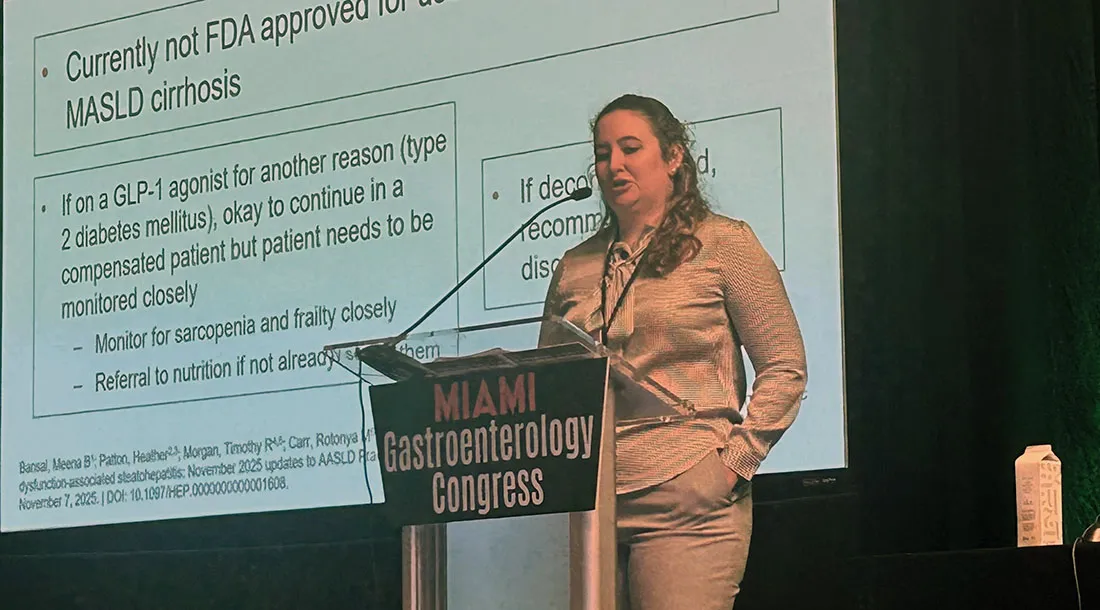 The Miller School’s Dr. Lauren Gilbert discussed the new metabolic era for the liver at this year’s Miami Gastroenterology Congress.
Carol Antequera, D.MSc, PA-C, supervisor of advanced practice providers in the division, gave a talk on the treatment of eosinophilic esophagitis, a chronic allergic reaction in which swelling in the esophagus leads to difficulty swallowing.
“In the future, we’d like to do more of a course or focus group for advanced practice providers, because there are so many physician associates and nurse practitioners among Miami gastroenterologists and I think it would be good to foster that community,” said Dr. Amin.
Insights from National GI Experts
The congress also featured two GI experts from other universities. Mohamed Othman, M.D., chief of gastroenterology and hepatology at the Baylor College of Medicine, discussed endoscopic transcecal appendectomy (ETA), a novel, minimally invasive technique for removing the appendix through the colon rather than from outside the body.
“It’s really cutting-edge, and it requires an incredible amount of skill,” said Dr. Amin. “He talked about it and showed videos of the procedure, which really wowed the crowd. I’ve said before that watching him talk about ETA never gets old.”
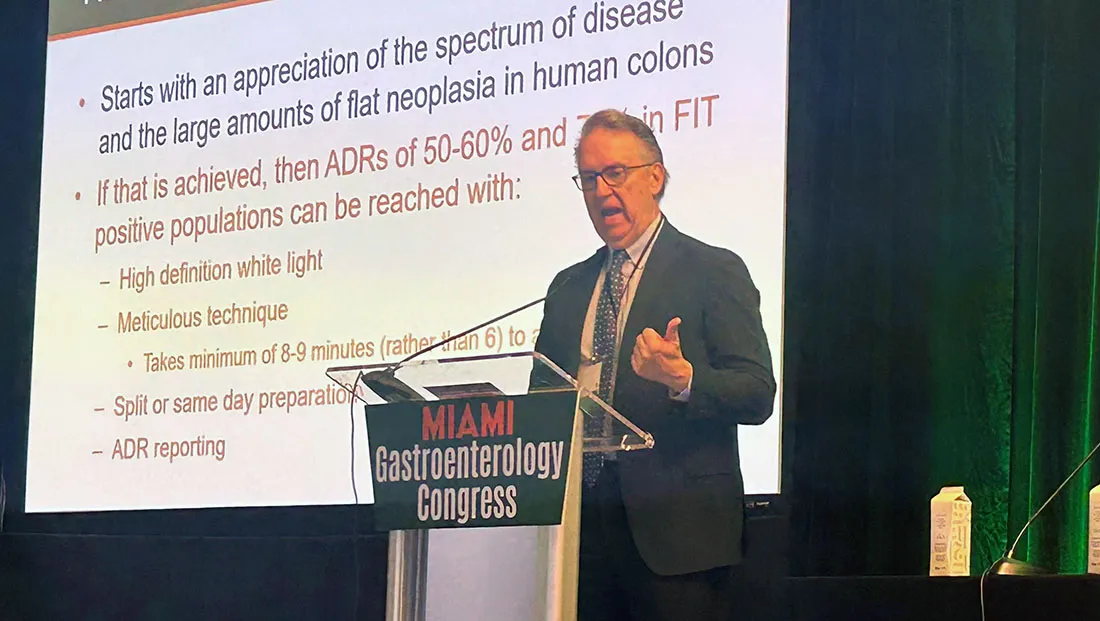 Dr. Douglas Rex was a featured speaker at this year’s Miami Gastroenterology Congress.
Douglas Rex, M.D., from the Indiana University School of Medicine, is a national authority in quality endoscopy and endoscopic mucosal resection (EMR), the standard treatment for removing large colon polyps.
“Colonoscopies are a GI’s bread and butter, and hearing Dr. Rex talk about quality metrics and how we can make ourselves better proceduralists and the things we need to focus on in terms of mastering this task we do every day was really helpful,” said Dr. Amin.
The Future of the Miami Gastroenterology Congress
The organizers plan to continue the Miami Gastroenterology Congress as an annual event. As they have in the past, next year’s congress will include a live endoscopy procedure, a valuable teaching tool.
“Being able to show people how a procedure is managed in real time is valuable, even for small techniques and things that ordinarily people wouldn’t be able to see, even on video,” said Dr. Barkin, an associate professor in the Miller School’s Division of Digestive Health and Liver Diseases. “It helps for participants to hear the thought process and how issues are approached in a clinical scenario, where the doctor can’t make plans ahead of time but needs to be able to adjust to the real-time clinical situation.”
Beyond endoscopy, Drs. Amin and Barkin envision continued growth and a bigger showcase for the talents and expertise Miller School faculty provide to patients and the community.
“Long term, we hope to make this the go-to destination as a focal point of our division, and a conference that attracts people even from the state and national level,” said Dr. Barkin. “We want people to say, ‘The Miami course is amazing, and I really want to get a chance to learn and engage.’”
Tags: Division of Digestive Health and Liver Diseases, Dr. Jodie Barkin, Dr. Sunil Amin, gastroenterology, Gastroenterology & Hepatology, IBD, inflammatory bowel disease, liver disease, pancreatitis