
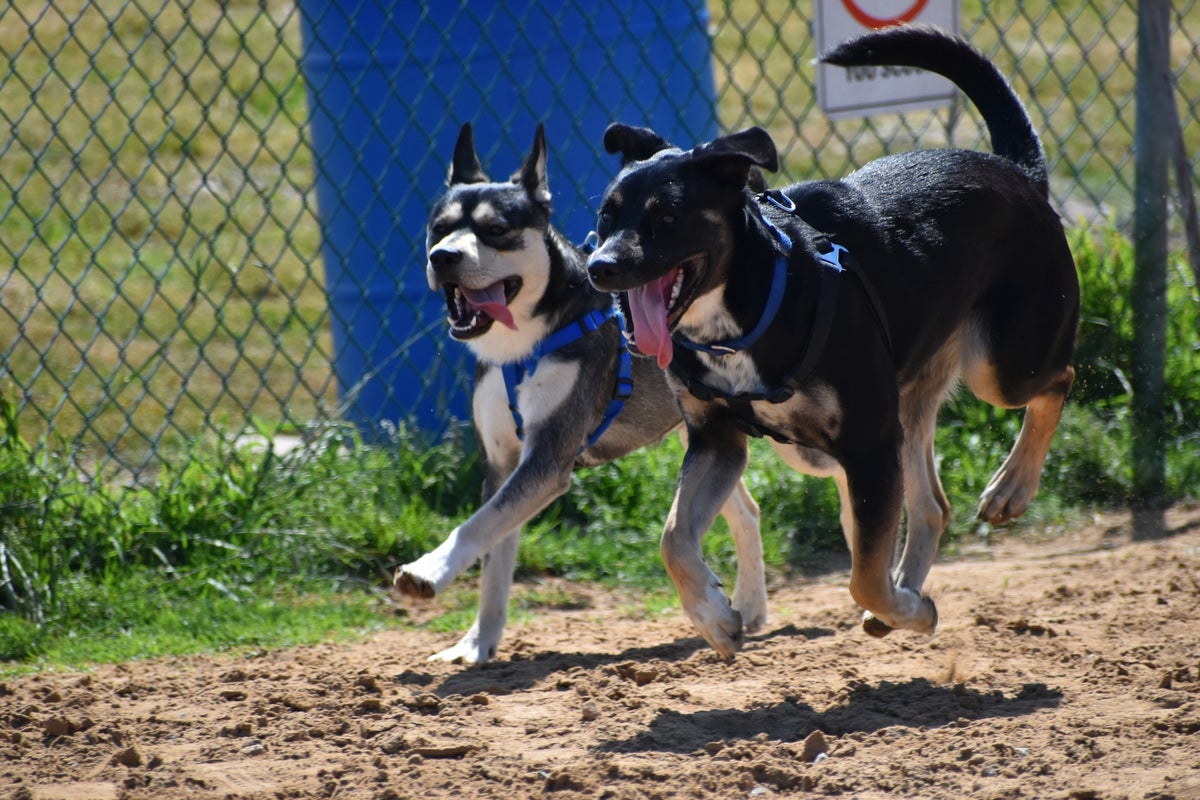
Two new dog parks opened Tuesday, February 10, at Curtis Hixon Waterfront Park, giving dog owners more room along Tampa’s Riverwalk. The parks offer nearly 7,000 square feet for canine enjoyment.
The small-breed park covers 1,980 square feet near the palm trees and Four Green Fields. Meanwhile, the large-breed park takes up 4,900 square feet closer to the Hillsborough River. Over $1.4 million went into creating these areas and making other park upgrades.
The City of Tampa, Parks and Recreation, the Downtown Community Redevelopment Agency, and the Tampa Museum of Art collaborated on the project. Moving the existing dog park allows the art museum to expand its centennial project with a planned glass pier on the river.
Mayor Jane Castor highlighted the project’s importance. “The Riverwalk and Curtis Hixon Park, already beautiful and welcoming, are all that and more now. This collaborative project has delivered these fantastic new dog parks, and now the Tampa Museum can take over the old dog park, making room to expand, including a glass pier on the Hillsborough River,” said Mayor Castor to Fox 13 Tampa Bay.
The site’s transformation is the culmination of years of effort. Curtis Hixon Park is Tampa’s crown jewel, the result of initiatives since the 1970s to reconnect downtown to the river. The park emerged after the demolition of Curtis Hixon Hall in 1993. This hall, Tampa’s first convention center, opened in 1965 but was taken down to make way for the Riverwalk.
The park officially opened in 2010, after a $13.5-$15.7 million project involving mayors like Pam Iorio. Skanska led the construction, adding shade pavilions and a dog park.
The dog parks feature shade structures and water fountains. Preserved oak trees enhance the settings, providing comfort for both small and large breed areas.
Over time, Tampa transformed the area from a neglected spot filled with old museum debris to a civic space that links museums and the Riverwalk. The original development of Curtis Hixon Park shaped its modern appearance.
Revitalization efforts from the 1980s to the 2010s drove these changes. Leaders such as Susan Freedman and Dick Greco helped eliminate barriers like parking garages, turning the riverfront into a public space.