

“Gyration,” a green energy art fixture just outside of Inter & Co Stadium, in downtown Orlando. The figure represents a collaboration between the Orlando Utilities Commission and UCF to pledge toward a more sustainable future.
Joseph Wiedeman
Local governments in Florida would be limited from limiting the effects of climate change if two bills making their way through the state legislature are passed, one of which cleared another committee in the Florida House of Representatives on Feb. 12.
Senate Bill 1628 and House Bill 1217 both focus on eliminating the ability of local municipalities to implement “Net-Zero” emissions measures and, if passed, would go into effect on July 1 of this year.
“Net-zero” measures, which are founded on consuming only as much energy as is produced, allow local governments to limit emissions that have historically been considered harmful to the environment and its inhabitants.
These bills would not only ban carbon emissions caps, but would also prevent municipalities from offering incentives to businesses for going green, stop any carbon credit or offset programs and prevent specialized taxation for eco-friendly industries, according to the Florida Senate.
Maureen McCann, UCF alum and meteorologist with Spectrum News 13, said the effect of preventing net-zero emissions measures can vary greatly.
“Net-zero emissions help by reducing the amount of heat-trapping gases in the atmosphere,” McCann said. “Which would help slow the long-term warming of the planet. Over time, that reduction in warming can help limit the intensity of extreme weather.”
The measure could prove complicated for UCF, which receives almost $200 million in grants, gifts and sponsored awards for sustainable energy research, according to its Energy and Sustainability page.
The Charge reached out to James Bacchus, UCF’s Director for the Center of Global Economic and Environmental Opportunity, along with four environmental experts at UCF, all of whom declined to comment.
Currently, SB 1628 resides in the Finance and Tax Committee. HB 1217 passed through the Economic Infrastructure Subcommittee unchallenged last Thursday and now resides in the Commerce Committee.
The Senate bill was introduced by state Sen. Bryan Avila (R-39), while HB 1217 was co-introduced by Rep. John Snyder (R-86) and Rep. Berny Jacques (R-59).
During the introduction of the SB 1628, Avila said he believes this does not represent a step back for Florida’s environment, “but rather a layer of protection for our residents from potential additional, unnecessary taxation.”
The two bills are paired with the Environmental Protection Agency’s recent rescission of the 2009 “Endangerment Finding,” the federal act that served as the basis for determining that six key greenhouse gases are a direct threat to public health and safety.
This, paired with the Florida bills SB 1628 and HB 1217, could be consequential to the long-term sustainability of the Florida environment, experts warn. As McCann pointed out, this is because they stop local municipalities’ ability to limit emissions or provide incentives for green alternatives.
Sen. Carlos Guillermo Smith (D-17), UCF alumnus representing Orange County, raised concerns about the bill’s impact on local municipalities during a committee meeting.
“The bill bans local governments from adopting any net-zero emissions policies, including emissions reduction goals, clean purchasing standards, and forward-looking transportation planning,” Smith said.
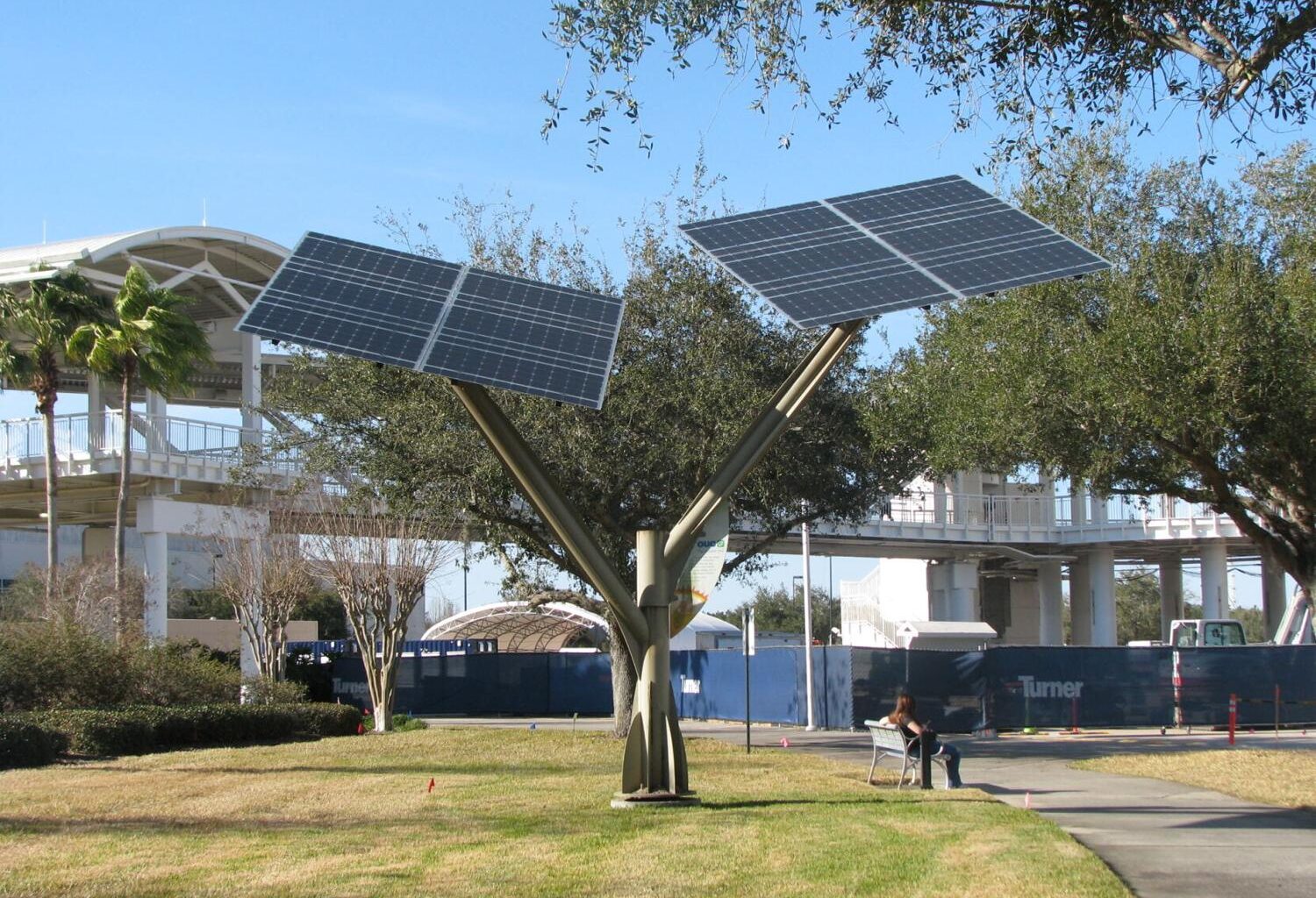
“Solar Trees” built around the Orange County Convention Center are an example of renewable energy structures that have saved the city thousands of dollars in energy costs and represent the city’s commitment to a green future.
Joseph Wiedeman
The bills would raise questions for Orlando, as in August 2017, the city council voted unanimously in favor of “to achieve 100% of all electricity consumed in the City of Orlando to come from renewable energy resources and associated technologies by the year 2050.”
Rep. Anna Eskamani (D-42), a UCF alumna and Florida House member representing Orange County, said she believes these bills would significantly undermine Florida’s ability to address climate change or invest in cost-saving sustainability projects.
Eskamani, the only declared candidate for the Orlando mayoral race in 2027, has previously testified in court to stop the construction of Alligator Alcatraz on the grounds of the harm it would cause to the Florida environment.
“This bill represents a broader trend of state preemption that strips local governments of their ability to govern effectively,” Eskamani wrote in an email.
After reaching out to the Orlando Office of Sustainability and Resilience, the city’s Public Information Officer, Ashley Papagni, said that the impact of the legislation was yet to be determined.
“We continue to closely monitor all proposed legislation and carefully review each bill to determine its impact on our community, residents and businesses,” Papagni said in an email.
“The city’s energy strategies are guided by sound economics, long-term cost savings, and reliability for our residents and businesses,” Papagni added, when asked about the city’s future energy policies.
Solar panels outside of UCF’s Garage B on Gemini Boulevard. Installed in 2011, the array is one of many sustainability projects UCF has worked on.
Joseph Wiedeman
Smith sat on the Environment and Natural Resources committee during the subsequent introduction of SB 1628. Smith openly questioned the nature of the proposal and said the bill’s impact would be “dramatic.”
“At a time when rising sea levels, stronger hurricanes, extreme heat and flooding are already costing Florida billions of dollars, this legislation would erase local resilience plans and mandate inaction,” Smith said. “Florida cannot ban its way out of climate change, and this bill keeps our state locked into fossil fuel and carbon-intensive energy in perpetuity.”