
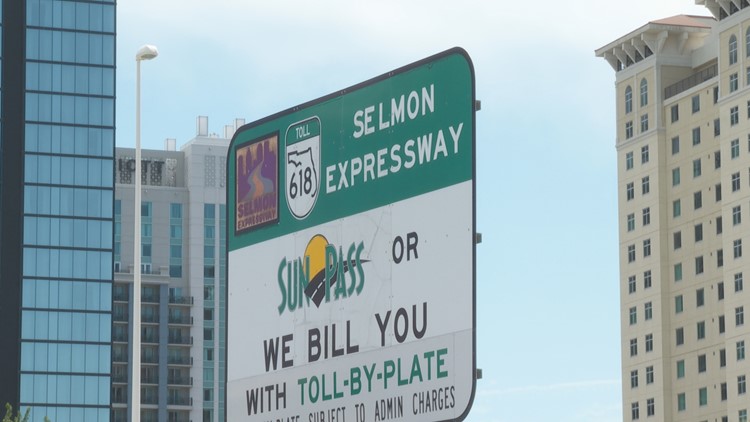
Members of Tampa City Council got a detailed update Thursday on the planned expansion of the South Selmon Expressway, as the long-discussed project moves closer to construction.
The Tampa Hillsborough Expressway Authority told council members crews are already positioning equipment and completing preliminary work, with construction expected to begin this spring.
THEA Executive Director Greg Slater said the $362 million project — fully funded through toll revenue, not taxes — will expand the expressway from two lanes in each direction to three between downtown Tampa and Gandy Boulevard.
“We’re in the design phase now getting ready to get out there,” Slater said. “You’ll start to see some preliminary activity around the expressway — surveyors, those types of things.”
To limit disruption in the downtown core, THEA has built in a $5 million incentive for contractors to start and finish work near the Tampa Convention Center early in the project.
“It’s a $5 million incentive that they start in the downtown area by the convention center and then get out of downtown,” Slater said. “We want to minimize that disruption.”
Beyond traffic improvements, Slater said the project includes 14 community-focused green spaces beneath the elevated roadway, featuring parks, dog parks, pickleball courts and outdoor gathering areas, along with enhanced stormwater management and noise-barrier walls in residential areas.
“What we’re trying to do is create sections of community space in the different neighborhoods and sections that the expressway goes through,” Slater said. “And activate that space underneath the expressway in an attempt to connect the communities on either side of it.”
Councilwoman Lynn Hurtak welcomed those additions, particularly the benefits extending beyond South Tampa.
“That’s really exciting,” Hurtak said. “And I want the public to know that not only are we getting some benefits in South Tampa to some of the underpasses — it’s really coming downtown as well.”
THEA also outlined plans to incorporate cameras, artificial intelligence and real-time traffic monitoring — what Slater described as a “downtown brain” — allowing the system to detect congestion early and adjust signal timing to improve traffic flow.
“If traffic starts to build on one of the ramps and it starts to back up, then we can start extending some of those green times and push that traffic through a little bit,” Slater said.
Some council members pressed THEA to plan for future transit needs. Councilman Bill Carlson urged the authority to preserve space for potential commuter rail or light-rail stations along the corridor.
“Please reserve space for train stations,” Carlson said. “Because we’re going to get that within the next few years, despite all the political challenges — and we’ve got to maintain that space.”
Not all council members were convinced roadway expansion is the long-term answer. Councilman Charlie Miranda said while he supports the project’s immediate goals, Tampa must rethink how it moves people as the city grows.
“We’re building for today’s necessity, not forever,” Miranda said. “And unless we change the model of transportation, we will fail.”
With design nearing completion, THEA says residents can expect to see more survey crews and construction equipment moving into place in the coming weeks. Community open houses have already begun, with additional meetings planned to keep neighbors informed ahead of construction.