
AI is the buzzword of the year, and you might feel like it’s taking over the world. But artificial intelligence isn’t just ChatGPT, odd videos, and unfortunate misinformation; one Central Florida hospital is using it to help treat you better.Inside HCA’s UCF Lake Nona Hospital, emergency room physician Jeylin Rodriguez-Fernandez practices medicine with a high-tech twist.”I just walk in the door, hit start, and put the phone in my pocket,” she said as she explained her process inside one of the exam rooms. “On my physical examination, I will look for any signs, and I have to actually verbalize what I’m seeing, what I’m doing.”She does that so her AI assistant in the room can listen. With the patient’s consent, an app on a phone uses artificial intelligence to record a verbatim transcript of the conversation. In real-time, it catches vitals, symptoms, and medical terms the doctor and patient say. It then uses all that information to create the patient’s chart, give possible diagnoses, and possible next steps. It even recognizes and translates different languages on its own.”Then I go to my computer, the note is there. I review the note… edit any errors there might be, and then I send my note,” Rodriguez-Fernandez said. She added that while the AI can make suggestions, any official diagnoses and treatment plans come from her. At the end of the day, the physicians are still the ones treating patients.And that is a sticking point for CEO Wendy Brandon.”You’re not going to be coming here and being cared for by robots,” Brandon said. “You are people being cared for by other people, and that will always be at the center of our work.”However, Brandon said an eye on tech was always part of the plan for UCF Lake Nona. She was a part of the design team before the hospital was built, five years ago. “In the early days, when it was basically a blank piece of paper and we were dreaming of the future… it was always about how do we make it easier for the caregiver to get to what they need quickly reduce the number of steps, the friction, the stress, so that this would be a place easier to work,” she said.That philosophy drove the design of the hospital, from the placement of waiting rooms near windows for natural light to a dedicated employee entrance away from patient entrances, in hopes of keeping anxiety low. The artificial intelligence helps in the workflow.”The power of AI to take infinite amounts of data and simplify it so that we can see what the real problem is and how to treat is beyond anything we’ve ever seen before,” Brandon said.The hospital uses three different AI “brains”: Ambient Documentation in the ER; “Timpani,” which helps with scheduling; and Nurse Handoff, which engineers and nurses developed in the hospital’s medical surgical unit.The hospital’s director of nursing operations, Robert Miguel Bueno Arias, said Timpani saves 8-10 hours of schedule planning a month, allowing them to be more active on the floor helping patients.According to HCA internal survey data of patients between 2024 and 2025, 14% gave “physician communication” the highest rating, saying they felt better informed about the care they were getting. Brandon says that’s a direct correlation to when they started using the tech.They’re not done either; a team of 600 doctors, data scientists, and more make up the system’s “Innovation Team,” researching and designing tech for all 192 of the system’s hospitals. But even with a focus on pushing medicine into the future, Brandon said it’s still all for people and by people.”There’s never a time when AI alone is going to solve our health care problems,” she said.
ORLANDO, Fla. —
AI is the buzzword of the year, and you might feel like it’s taking over the world. But artificial intelligence isn’t just ChatGPT, odd videos, and unfortunate misinformation; one Central Florida hospital is using it to help treat you better.
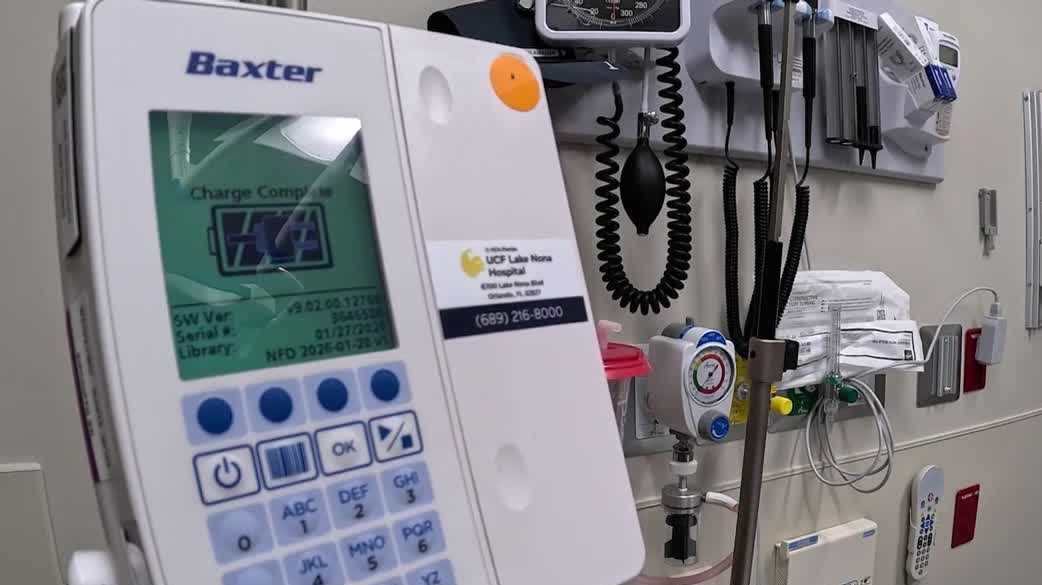
Inside HCA’s UCF Lake Nona Hospital, emergency room physician Jeylin Rodriguez-Fernandez practices medicine with a high-tech twist.
“I just walk in the door, hit start, and put the phone in my pocket,” she said as she explained her process inside one of the exam rooms. “On my physical examination, I will look for any signs, and I have to actually verbalize what I’m seeing, what I’m doing.”
She does that so her AI assistant in the room can listen. With the patient’s consent, an app on a phone uses artificial intelligence to record a verbatim transcript of the conversation. In real-time, it catches vitals, symptoms, and medical terms the doctor and patient say. It then uses all that information to create the patient’s chart, give possible diagnoses, and possible next steps. It even recognizes and translates different languages on its own.
“Then I go to my computer, the note is there. I review the note… edit any errors there might be, and then I send my note,” Rodriguez-Fernandez said. She added that while the AI can make suggestions, any official diagnoses and treatment plans come from her. At the end of the day, the physicians are still the ones treating patients.
And that is a sticking point for CEO Wendy Brandon.
“You’re not going to be coming here and being cared for by robots,” Brandon said. “You are people being cared for by other people, and that will always be at the center of our work.”
However, Brandon said an eye on tech was always part of the plan for UCF Lake Nona. She was a part of the design team before the hospital was built, five years ago.
“In the early days, when it was basically a blank piece of paper and we were dreaming of the future… it was always about how do we make it easier for the caregiver to get to what they need quickly reduce the number of steps, the friction, the stress, so that this would be a place easier to work,” she said.
That philosophy drove the design of the hospital, from the placement of waiting rooms near windows for natural light to a dedicated employee entrance away from patient entrances, in hopes of keeping anxiety low. The artificial intelligence helps in the workflow.
“The power of AI to take infinite amounts of data and simplify it so that we can see what the real problem is and how to treat is beyond anything we’ve ever seen before,” Brandon said.
The hospital uses three different AI “brains”: Ambient Documentation in the ER; “Timpani,” which helps with scheduling; and Nurse Handoff, which engineers and nurses developed in the hospital’s medical surgical unit.
The hospital’s director of nursing operations, Robert Miguel Bueno Arias, said Timpani saves 8-10 hours of schedule planning a month, allowing them to be more active on the floor helping patients.
According to HCA internal survey data of patients between 2024 and 2025, 14% gave “physician communication” the highest rating, saying they felt better informed about the care they were getting. Brandon says that’s a direct correlation to when they started using the tech.
They’re not done either; a team of 600 doctors, data scientists, and more make up the system’s “Innovation Team,” researching and designing tech for all 192 of the system’s hospitals.
But even with a focus on pushing medicine into the future, Brandon said it’s still all for people and by people.
“There’s never a time when AI alone is going to solve our health care problems,” she said.