
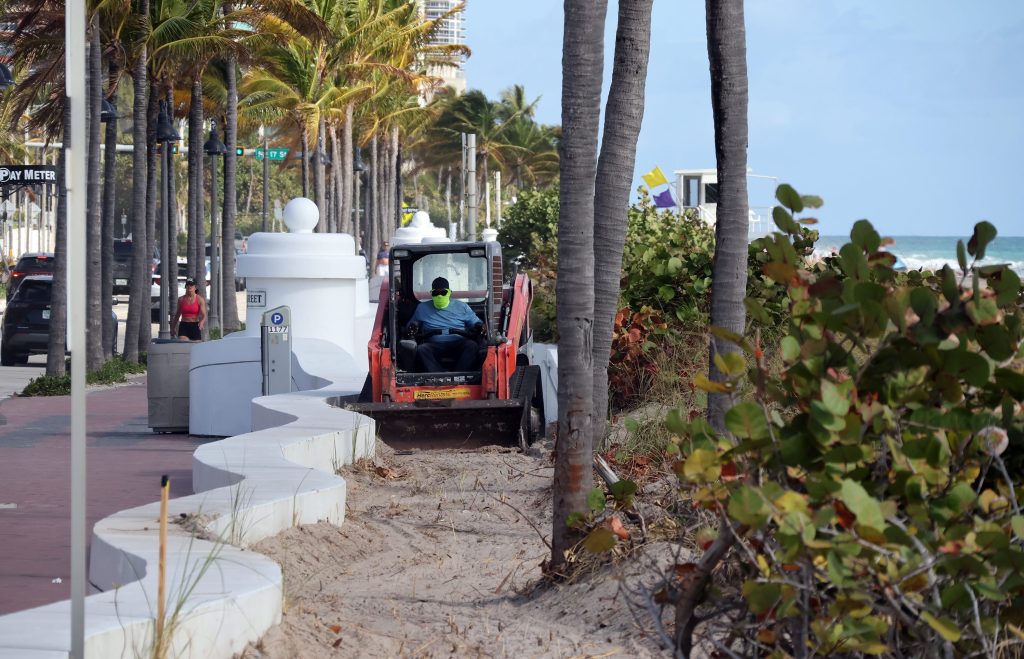
Q: The city of Fort Lauderdale has decided to clear an 8-foot path from the wave wall to the dune. This is a major clearing of mature dunes with sea grapes and sea oats. This destruction is taking place from Sunrise Boulevard north to NE 18th St. Do you know what’s going on there? — Craig Krentsa, Fort Lauderdale
A: Craig, it’s definitely jarring to see the sandy path Fort Lauderdale has cleared parallel to the beach between the concrete wall and the thick vegetation. But the city says it was necessary to get rid of invasive coin vines, which can choke the native plants that are essential to the coastal habitat and protect us from hurricanes and other storms.
The city is almost done with this clearing task for this year. It began a few months ago, at the end of sea turtle season, which runs from March 1 to Oct. 31. During the season, the enormous marine reptiles come ashore to lay their eggs, which hatch and make their way back to the ocean after about two months in the nest. Staffers perform the clearing work off-season to make sure not to disturb the delicate breeding grounds.
The city has permission from the state to do this work, (Florida Department of Environmental Protection permit 8042673-BO) and says it also works closely with Broward County and the Florida Fish and Wildlife Conservation Commission.
I had never heard of coin vines before, so I did some research and saw that they can actually be quite pretty, with pointed, shiny green leaves and little white flowers. Apparently their attractiveness is deceiving: The vines are aggressive and can quickly overtake any planting area, including beach dunes.
“It is imperative the coin vines are removed, if not, they will overpopulate and kill the sea oats,” said Carl Williams, the city’s parks and recreation director.
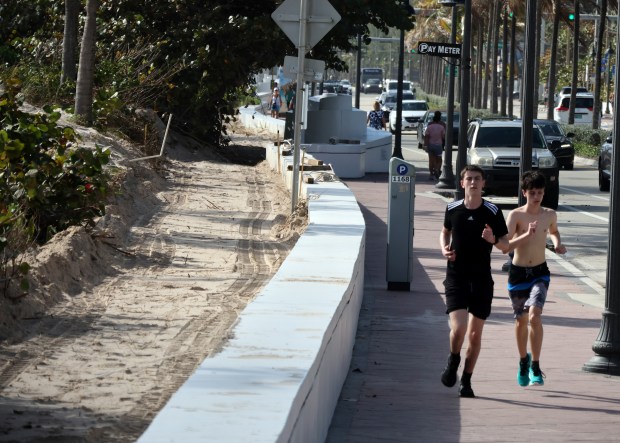 The area cleared by the City of Fort Lauderdale between the wave wall and the dunes at State Road A1A and Northeast 15th Court as seen on Wednesday, Feb. 18, 2026. (Joe Cavaretta/South Florida Sun Sentinel)
Sea oats and sea grapes stabilize the dunes and provide food for little beach animals such as birds and mice. They accumulate sand as they grow, creating the sandbanks that are essential for a healthy beach and protection of our coast.
There are actually several projects going on at once here. You may have noticed workers removing sand from the concrete wall by the sidewalk. Staff cleans up the sand that blows throughout the season to prevent winds from transferring it onto Fort Lauderdale Beach Boulevard. The city says their work also preserves the shape of the beach above the high-water line to help turtles figure out where the appropriate nesting areas are, lessening the risk of their nests being too close to high-traffic areas.
The path built by the city’s tractors, right next to the sidewalk on the north-south boulevard, created tire marks that look like an off-road vehicle came through and plowed down healthy vegetation. But City Commissioner Steve Glassman said he hasn’t fielded too many questions about the clearing.
“There has historically been no confusion on this subject and minimal to no concerns being brought to us,” he said. “This is a part of protecting the ecosystem through proper maintenance. Once people are educated about what we are doing, they understand.”
The work is scheduled to be completed by Feb. 28.
Got a question about life in South Florida? Write to Lois Solomon at AskLois@sunsentinel.com.
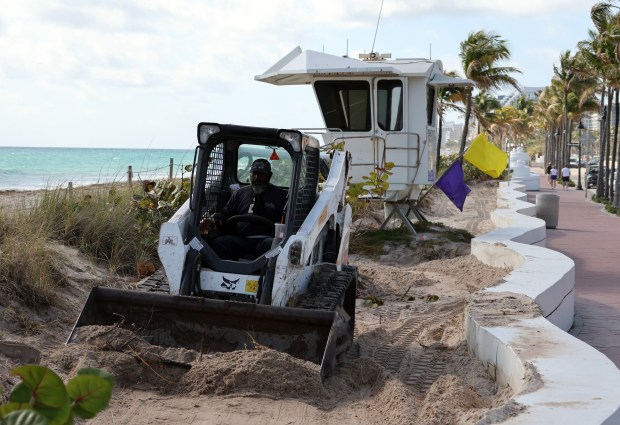 There are several projects happening on Fort Lauderdale beach, including removing sand from the concrete wall by the sidewalk. (Joe Cavaretta/South Florida Sun Sentinel)