
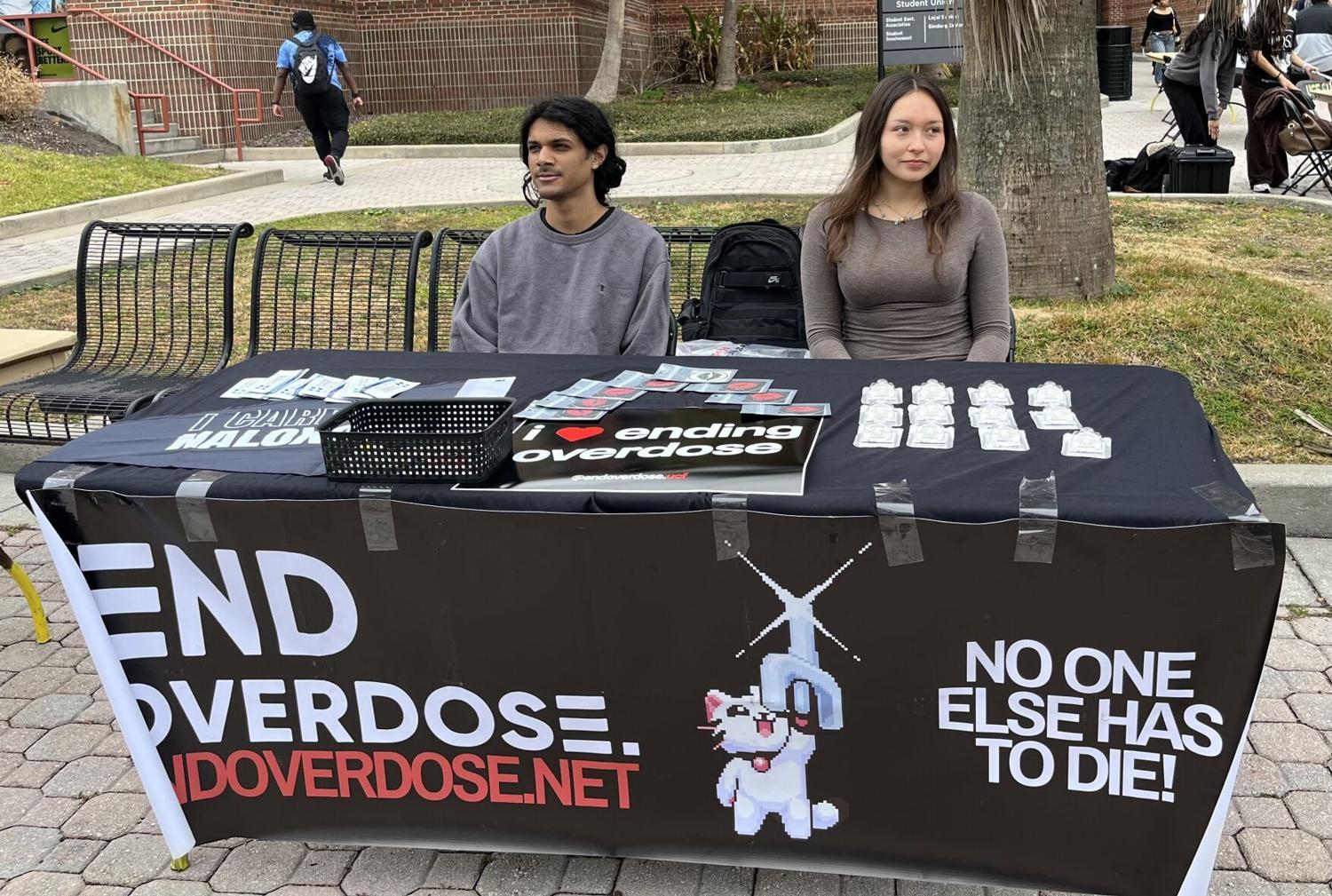
End Overdose at UCF, founded in spring 2026, is a new registered student organization on campus working to end the stigma surrounding overdose resources.
Alexander Jadoo, senior finance major, is the founder and president of End Overdose at UCF. He said the biggest hurdle to getting students access to overdose prevention resources is the stigma that it carries.
“I feel like a lot of people have trouble reaching out for resources like naloxone or fentanyl test strips,” Jadoo said. “They feel like it might be embarrassing or incriminating even to go and get fentanyl test strips.”
Naloxone, more commonly known as Narcan, is very important for students to carry at all times, Jadoo said. He explained that Narcan is the brand name while naloxone is the actual drug name.
“You want to be as quick as possible giving Narcan,” Jorge Lopez, licensed mental health therapist at UCF Health Services, said.
“Luckily, Narcan is not going to cause harm, so even if you aren’t sure what they took, giving Narcan can never hurt them,” Lopez said.
Jadoo and Lopez said that this is an important part of the education process.
End Overdose plans on visiting other RSO meetings to present demonstrations of how to administer naloxone and to identify signs of an overdose, Jadoo said.
“We’ll be attending their meetings and training them in how to respond to an opioid overdose emergency situation,” Jadoo said. “Identifying an overdose and the signs and symptoms, and then how to respond and what to do is crucial.”
There has been an increase in overdose-related cases due to the increase of fentanyl in our society, Lopez said. Fentanyl is causing overdoses for students who are not even taking opioid drugs, he said.
The UCF Police Department responded to nine overdose-related calls in 2025, Amanda Sellers, communications manager for UCF Public Safety, said. Sellers said the department has already responded to two related calls this year.
“Now, people who aren’t even regular users of a substance, they take an Adderall to study and they’re getting an overdose,” Lopez said.
Lopez explained accidental overdoses can happen when students unknowingly take fentanyl-laced pills.
“Any use of pills that you don’t know where they’re coming from, that alone puts you at risk of an overdose,” Lopez said.
Lopez said he wants students understand just how dangerous fentanyl is.
“It’s significantly more powerful than morphine and heroin combined,” Lopez said. “The amount of fentanyl it would take to cause a lethal overdose is enough to fit the tip of a pencil.”
Students understanding the signs of an overdose and acting quickly could save a life, Lopez said. He said to look for skin discoloration, unresponsiveness, irregular breathing, or a “snoring” sound.
He urges students to call 911 as soon as they see anything out of the ordinary, Lopez said.
“All UCFPD officers carry Narcan and are trained to recognize and respond to overdoses,” Sellers said in a statement via email. “Florida’s Good Samaritan Law provides immunity for individuals who call 911 for themselves or someone else who may be experiencing a drug or alcohol‑related overdose.”
Students can obtain free Narcan at the UCF Pharmacy at Student Health Services on the Main Campus.
Jadoo also provides free naloxone at his table outside the Student Union. He said he tables there along with other members of the RSO on Mondays from 11 a.m. to 1 p.m.
“It is okay to reach out for naloxone or fentanyl test strips, it is okay to get trained in overdose response scenarios,” Jadoo said. “I want everyone to feel comfortable with getting and doing these things because at the end of the day, it could save someone’s life.”