
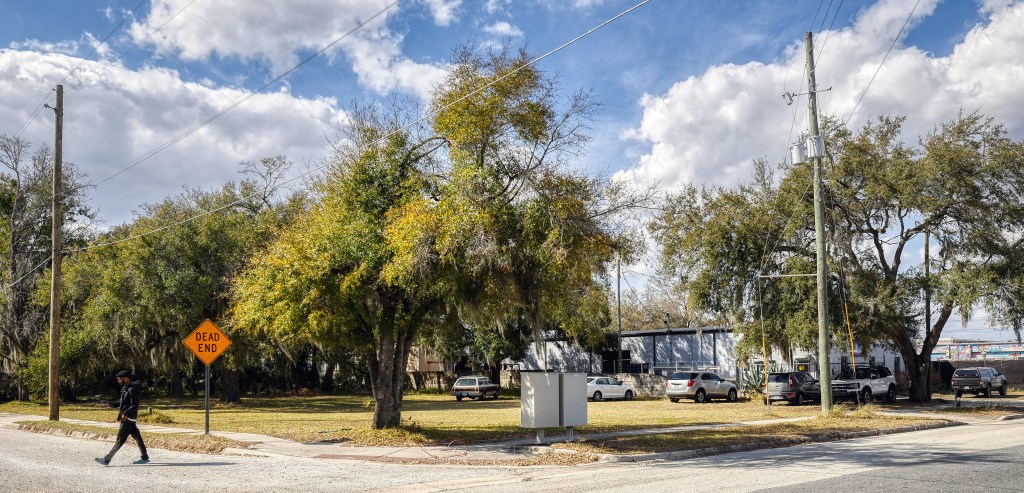
Orlando has a plan its leaders hope will boost home ownership in Parramore, a neighborhood with nearly twice as many vacant residential lots as it has single-family homes.
The city council is expected to weigh incentives to encourage the construction of single-family homes sold at or below $375,000. The builders would receive rebates on impact and permit fees, while homebuyers would get $45,000 in down payment assistance, with a further $10,000 given to first responders.
The city council is set to vote on the package, called the Orlando Unlocked Open Door Program, on Monday.
“The goal for me is building more home ownership,” said City Commissioner Shan Rose. “Home ownership is about building generational wealth and bridging the wealth gap in our community.”
The Parramore area, just west of I-4, is one of the region’s poorest neighborhoods, with a 2020 city report finding that roughly half of households are below the poverty line. The report, which studied Parramore and neighboring Holden, estimated there were 151 owner-occupied housing units there, or less than 6% of the total housing units.
The neighborhood is dotted with churches and a growing base of restaurants, as well as historic sites and the city’s sports hallmarks, the Kia Center, Camping World Stadium and Inter & Co Stadium. But throughout the neighborhood are vacant residential lots, about 300 with at least one on nearly every street.
Parramore, founded in the late 1800s as a segregated home for Black workers, had a population of more than 18,000 in the 1960s. By 2020 that number had dropped to roughly 6,000, with an even larger freefall in population prevented in part by the city’s massive investment in the Creative Village. Affordable and market rate apartments have risen there alongside a joint campus of the University of Central Florida and Valencia College.
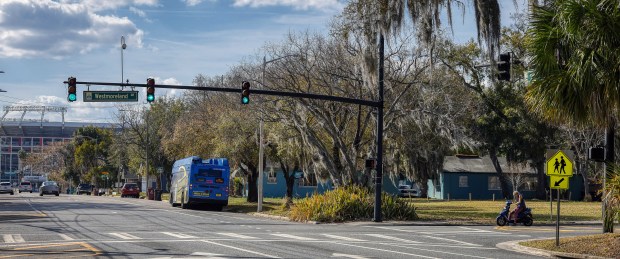 Vacant residential lot at the at the intersection of South Westmoreland Drive and West South Street in Parramore, on Thursday, February 19, 2026. (Ricardo Ramirez Buxeda/ Orlando Sentinel)
But single-family home construction has lagged. The city has recently completed construction on three homes that were appraised at $380,000 and are expected to be sold in the coming months, and five more homes are due to be completed in April or May.
Habitat for Humanity of Greater Orlando & Osceola County has also built 70 homes in the neighborhood over the past 40 years and at least 10 over the past 18 months. Its CEO Catherine Steck McManus said in a statement that the nonprofit was encouraged by the proposed incentive.
“As a homebuilder, we’ve seen how rising land costs in the greater Orlando area can affect our ability to acquire land to build affordable homes,” she said. “We’re hopeful that through ongoing conversations with public agencies, nonprofits, developers, community members, and funders we can find a way of aligning the moving parts of the housing system to work together, not against each other, to address the root causes of the housing crisis.”
This latest Orlando initiative is targeted at the so-called “missing middle” – households that make too much for traditional affordable housing, which has income caps for tenants, but also not quite enough to afford market-rate homes, said Lillian Scott Payne, Orlando’s Economic Development Director.
That typically includes young professionals working as teachers, police officers, firefighters, nurses and other similar fields.
“We’ve seen these lots just sitting here for many years, and the goal is to get housing on these lots,” she said. “We’re testing the waters to see if this is enough of an incentive to ultimately get some housing online.”
Home buyers must make no more than 120% of the area median income, which for a family of four is $126,480.
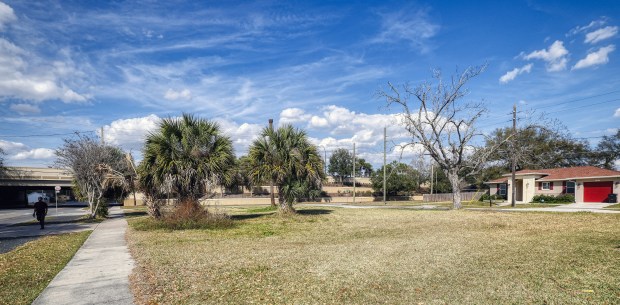 Vacant residential lot at the at the intersection of South Westmoreland Drive and Carter Street, across the street from the John H. Jackson Community Center in Parramore, on Thursday, February 19, 2026. (Ricardo Ramirez Buxeda/ Orlando Sentinel)
For a homebuilder, the average incentive would be about $19,000, with funding coming from fines collected on code enforcement violations and from permit fees.
Lee Steinhauer, the government and legal affairs director for the Greater Orlando Builders Association, said the incentive is a good start to lower the cost to build and bolster the ability for people to buy. But he added the city could go further by expediting permits and approvals to lower building expenses.
“You combine those two elements and it starts to become attractive for a builder to build in that area,” he said.
Rose, who lives in the neighborhood in a home built by the city years before her election, said if the incentive results in even 10% of the lots being developed, it would be an accomplishment.
“As long as we get some homes built, it’s a success for us,” she said. “This is the city’s long-term commitment to increasing homeownership, so residents have a stake in their community and shows our commitment to change.”