
A strong cold front will end Florida’s run of 80-degree heat, bringing a freeze threat to parts of the state and fueling heightened wildfire danger amid dry, windy conditions.
Published Feb 20, 2026 1:11 PM CST
|
Updated Feb 21, 2026 5:03 AM CST
Fast-moving brush fires have torn through bone-dry vegetation across Florida this February.
Sweeping changes are coming to Florida as near-record heat will be swapped by much colder air this weekend into early next week. An ongoing lack of rain, some wind and dry brush will raise the risk of wildfires once again.
Orlando, Jacksonville and other communities across northern Florida will soar close to record highs on Saturday ahead of a strong cold front, with temperatures climbing well into the 80s. The front will trigger a few severe thunderstorms Saturday afternoon and evening across the Florida Panhandle.
After the severe threat diminishes, a couple of showers will trail the cold front from central Florida Saturday night into Sunday, then shift into southern Florida by Sunday morning. The showers will do little to ease the dry conditions.
Behind the front, gusty northwest winds will usher in a big cooldown and quickly dry out any dampened brush once again.
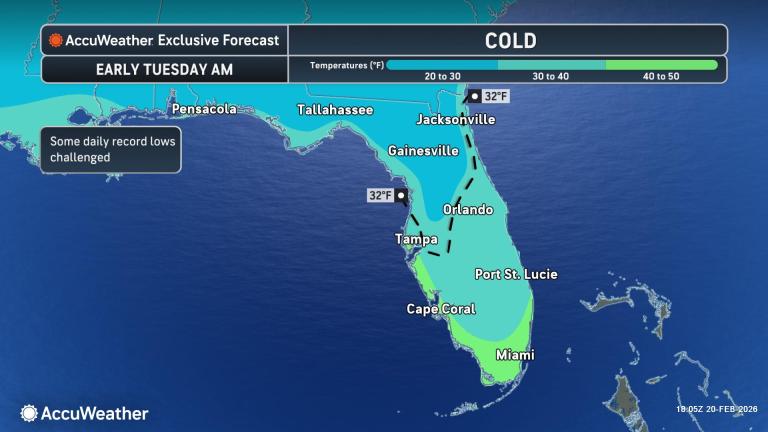
The coldest stretch in the front’s wake will occur from Monday night into Tuesday morning. Temperatures will dip below freezing from north of Orlando into the Florida Panhandle, prompting home gardeners and agricultural interests to cover sensitive plants or bring them indoors. A light frost is possible Tuesday morning across interior central Florida, but it is not expected to impact the citrus crop.
In the coldest spots in the early morning, AccuWeather RealFeel® Temperatures could dip into the 20s.
Visitors to the theme parks around Orlando should dress in layers from Sunday through Tuesday. As the front pushes south toward Miami, high temperatures will trend downward from the 80s on Sunday into the 60s by Monday.
A combination of ongoing drought, low relative humidity and gusty winds will fuel a high fire risk across central and northern Florida Sunday. Dry northwest winds will allow the threat to expand across much of southern Florida Monday. The elevated fire risk comes less than a week after a brush fire destroyed a plant nursery in Kissimmee, Florida.
The use of open flames, power equipment, or anything that may produce sparks and burning embers is strongly discouraged Sunday through Tuesday, experts advise. Cigarette butts should be properly extinguished.
The fire risk will be exacerbated by an intensifying drought.
The second-highest drought category, extreme drought, has expanded by 62% across Florida over the past month. Through Feb. 19, Jacksonville is experiencing its 18th-driest start to the year on record with 1.75 inches of rain, while Orlando is having its 13th-driest start with 1.14 inches.
The Keetch-Byram Drought Index — a key indicator of wildfire potential — is high across most of the state and in the very high to extreme category across southern Florida.
The winds will relax on Tuesday, easing the fire threat a bit, but the humidity will remain low, so extra care should still be exercised.
Wednesday will be somewhat more humid, which should significantly reduce the fire risk. However, meaningful rain is not expected until late next week or next weekend, allowing the drought to continue full-throttle.
The fire risk is not expected to ease anytime soon. A higher-than-average brush fire risk is expected in Florida throughout the spring season, according to AccuWeather’s long-range team of meteorologists.