
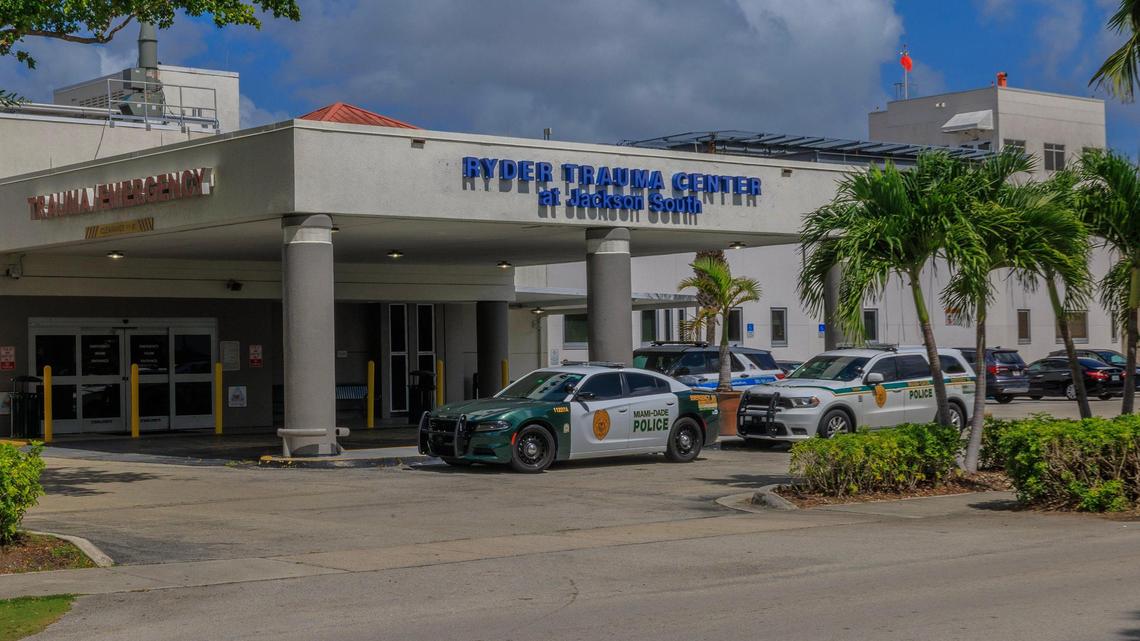
Ryder Trauma Center at Jackson South Medical Center on July 11, 2025.
Pedro Portal
pportal@miamiherald.com
READ MORE
Florida’s Tax Gamble
Florida’s proposed property tax cuts can have many hidden costs. The Herald Editorial Board explores how.
To the list of organizations and communities that could suffer if Florida does away with property taxes, add one more: Jackson Health System.
Miami-Dade County’s safety-net hospital system could lose as much as $100 million a year in operating money if there’s a full roll-back of taxes, Jackson CEO Carlos Migoya told the Editorial Board.
The prospect of taxpayer-funded organizations like Jackson being harmed in the rush to dump property taxes — without studying the issue — isn’t something lawmakers in Tallahassee are advertising. They’re busy trying to please Gov. Ron DeSantis and eyeing November’s elections; they tend to gloss over details. But if we’re going to take such a drastic step, shouldn’t there be — as Florida Tax Watch has recommended — an accompanying comprehensive tax reform plan that spells out all of the impacts on our communities?
Jackson’s mission is something special: to provide top-tier healthcare to every person, regardless of their ability to pay and whether they have insurance. That’s critical to this community — and Miami-Dade voters know it. They have voted twice to boost Jackson’s funding: once in 2013 to authorizer $830 million in bonds for renovations and equipment upgrades, and in 1991 with a half-cent sales tax to help pay for Jackson Memorial Hospital and Ryder Trauma Center. The roughly $300 million the system receives from the county in a year is one of its many sources of funding but an important one.
The system is comprehensive: It includes seven hospitals, two nursing homes, a transplant center, urgent care offices, doctors’ offices and clinics. It also has a partnership with the University of Miami Miller School of Medicine and serves as a teaching hospital. During the worst of the pandemic, it was Jackson leading the way.
Now weigh that against the undeniable allure of getting rid of property taxes, or at least reducing them. Floridians are understandably frustrated: Property values go up, governments get more revenue (and spend it) and, meanwhile, the necessities for regular people cost more and more. Also, wages don’t keep up.
Something’s got to give. Why not property taxes?
But the lawmakers pushing this idea owe it to their constituents to paint the real picture of what would happen if at least 60% of voters approve deep tax cuts in November.
And the real picture is this: Property taxes pay for a huge amount of services and systems we care about and need, from public safety to parks. Cutting that funding is a serious matter with long-term consequences.
As we’ve told you in a previous editorial, eliminating property taxes could backfire on the municipalities that rely most heavily on tax revenue from homesteaded properties. That means Miami suburbs like Pinecrest, Miami Shores and Coral Gables would get hit especially hard.
There’s also the possibility that the tax-cutting proposals the Legislature is considering could do additional damage to the 32 Florida counties (mostly in Central and North Florida) that have been designated as “fiscally restrained” — potentially forcing them to depend on the state to make up the financial difference. The governor has shrugged off the issue, calling the potential shortfall of as much as $300 million nothing more than “budget dust,” and saying the counties would eventually have to manage on their own.
Of course, term-limited DeSantis won’t be governor when that “budget dust” becomes real.
Millions of dollars may seem like pocket change to DeSantis. But for Jackson Health, the cuts could impact its operating budget, possibly affecting its ability to expand, Migoya said. In his almost 15 years leading the system — he’s retiring this spring — he has put the once-nearly-bankrupt system on much more solid financial footing.
“Everyone in this community has a Jackson story, whether it’s themselves, a family member or friend whose life was saved,” he said.
The residents of Miami-Dade County have, for decades, demonstrated an admirable — and rare — unity when it comes to a public health system that cares for everyone. Cutting property taxes sounds great on the surface but dig a little deeper, and you’ll find the true cost. It’s more than we should be willing to pay.
BEHIND THE STORY MORE What’s an editorial?
Editorials are opinion pieces that reflect the views of the Miami Herald Editorial Board, a group of opinion journalists that operates separately from the Miami Herald newsroom. Miami Herald Editorial Board members are: opinion editor Amy Driscoll and editorial writers Isadora Rangel and Mary Anna Mancuso. Read more by clicking the arrow in the upper right.
What’s the difference between an op-ed and a column?
Op-Eds, short for “opposite the editorial page,” are opinion pieces written by contributors who are not affiliated with our Editorial Board.
Columns are recurring opinion pieces that represent the views of staff columnists that regularly appear on the op-ed page.
How does the Miami Herald Editorial Board decide what to write about?
The Editorial Board, made up of experienced opinion journalists, primarily addresses local and state issues that affect South Florida residents. Each board member has an area of focus, such as education, COVID or local government policy. Board members meet daily and bring up an array of topics for discussion. Once a topic is fully discussed, board members will further report the issue, interviewing stakeholders and others involved and affected, so that the board can present the most informed opinion possible. We strive to provide our community with thought leadership that advocates for policies and priorities that strengthen our communities. Our editorials promote social justice, fairness in economic, educational and social opportunities and an end to systemic racism and inequality. The Editorial Board is separate from the reporters and editors of the Miami Herald newsroom.
How can I contribute to the Miami Herald Opinion section?
The Editorial Board accepts op-ed submissions of 650-700 words from community members who want to argue a specific viewpoint or idea that is relevant to our area. You can email an op-ed submission to oped@miamiherald.com. We also accept 150-word letters to the editor from readers who want to offer their points of view on current issues. For more information on how to submit a letter, go here.
—