
So much is happening at the state and national levels to radically limit voting and other important rights for women and people of color. We need to strongly push back on the Florida Legislature and the U.S. Congress.
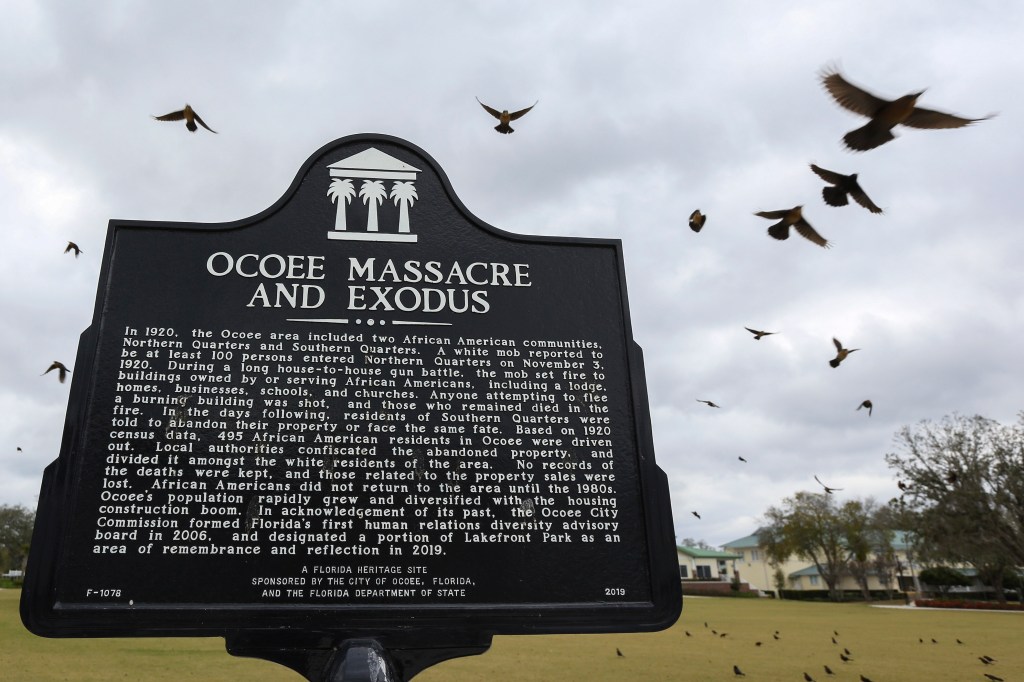
In Florida, we like to tell ourselves that we are a place of sunshine — a place where people come to build new lives, raise families and chase opportunity. But there are chapters of our history that cast a long, unbroken shadow, one that too many Floridians were never taught, and that some leaders would prefer we forget. One of those is the Ocoee Massacre. On November 2, 1920, in the small town of Ocoee, the single deadliest Election Day massacre in modern American history unfolded. And for nearly a century, the state looked away. We cannot allow ignorance of the Ocoee Massacre that resulted from a Black man trying to vote, or we will continue patterns of the past.
The Ocoee Massacre was not a spontaneous outburst of violence. It was a coordinated act of racial terror designed to stop Black citizens from voting. When Mose Norman, a prosperous Black farmer, attempted to cast his ballot, white mobs retaliated with brutal force. They hunted Black residents, burned homes, destroyed churches, lynched July Perry and drove the entire Black community out of Ocoee. By the next census, only two Black residents remained. This was not just violence. It was political and racial violence. It was the deliberate erasure of a community to preserve white political power.
And yet, for generations, Florida schools did not teach this history. Families who survived were silenced. The state did not acknowledge the massacre until 2020-2021 in HB1213, requiring Ocoee Massacre instruction in schools and the creation of the Ocoee Massacre scholarship fund. Even today, as we fight to protect honest education, there are successful and pending efforts to sanitize or suppress the truth about slavery and racial violence in Florida. That is not an accident. It is a continuation. It is a pattern. As a note, the state of Florida never issued an apology or go on record to condemn what happened.
The Ocoee Massacre was not an isolated incident. Racial violence in Florida was common, like the murders of Henry and Harriette Moore, voting and social justice activists. The Ocoee Massacre is not simply a story about the past. It is a warning about the present.
When lawmakers restrict what teachers can say about race, they are not protecting children, whether white or black; they are protecting a narrative. When the Florida Legislature passes laws that make it harder to vote, especially for Black and brown communities, they are echoing the same logic that fueled the mobs of 1920: that some people’s voices matter more than others. And when they attack Black history, block diversity programs, censor books and criminalize protest, they are building new tools to enforce old hierarchies.
The Ocoee Massacre teaches us that democracy is fragile — and that silence is complicity.
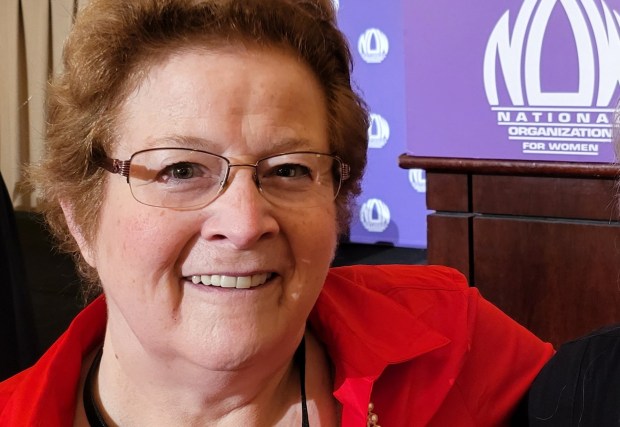 Debbie Deland is president of the Florida National Organization for Women.
But it also teaches us something else: that truth-telling is a form of resistance. When we name what happened in Ocoee, we honor the families who were driven from their homes. We honor children who grew up in exile. We honor the generations who carried the trauma without recognition or justice. And we commit ourselves to building a Florida where such violence can never be repeated.
That requires more than remembrance. It requires action.
It means defending the right to vote with the U.S. Congress and the Florida Legislature, not just in theory, but in practice. Contact your representatives to oppose the SAVE Acts. It means protecting teachers who tell the truth. It means rejecting policies that target marginalized communities. It means confronting the uncomfortable reality that the fight for multiracial democracy is ongoing, and that Florida is once again at the center of that struggle. Speak out.
The Ocoee Massacre and all the other Florida racial violence are not just historical events. They are mirrors. And the question it asks us is simple: Will we look away, or will we finally face who we have been so we can become something better? We can’t change if we don’t know the patterns of our past.
Florida cannot build a just future on a foundation of denial.
Debbie Deland is the president of the Greater Orlando National Organization for Women.