
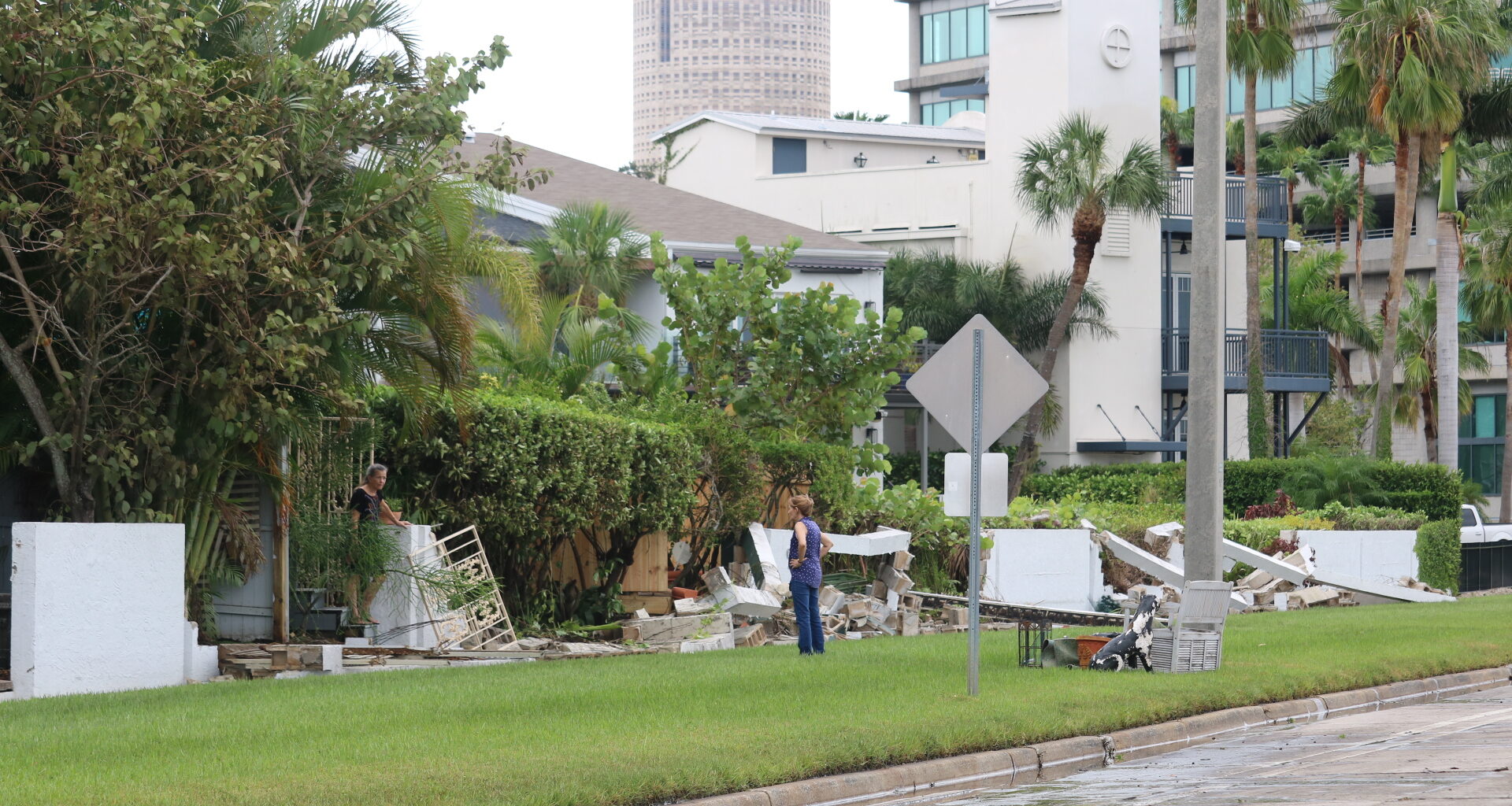
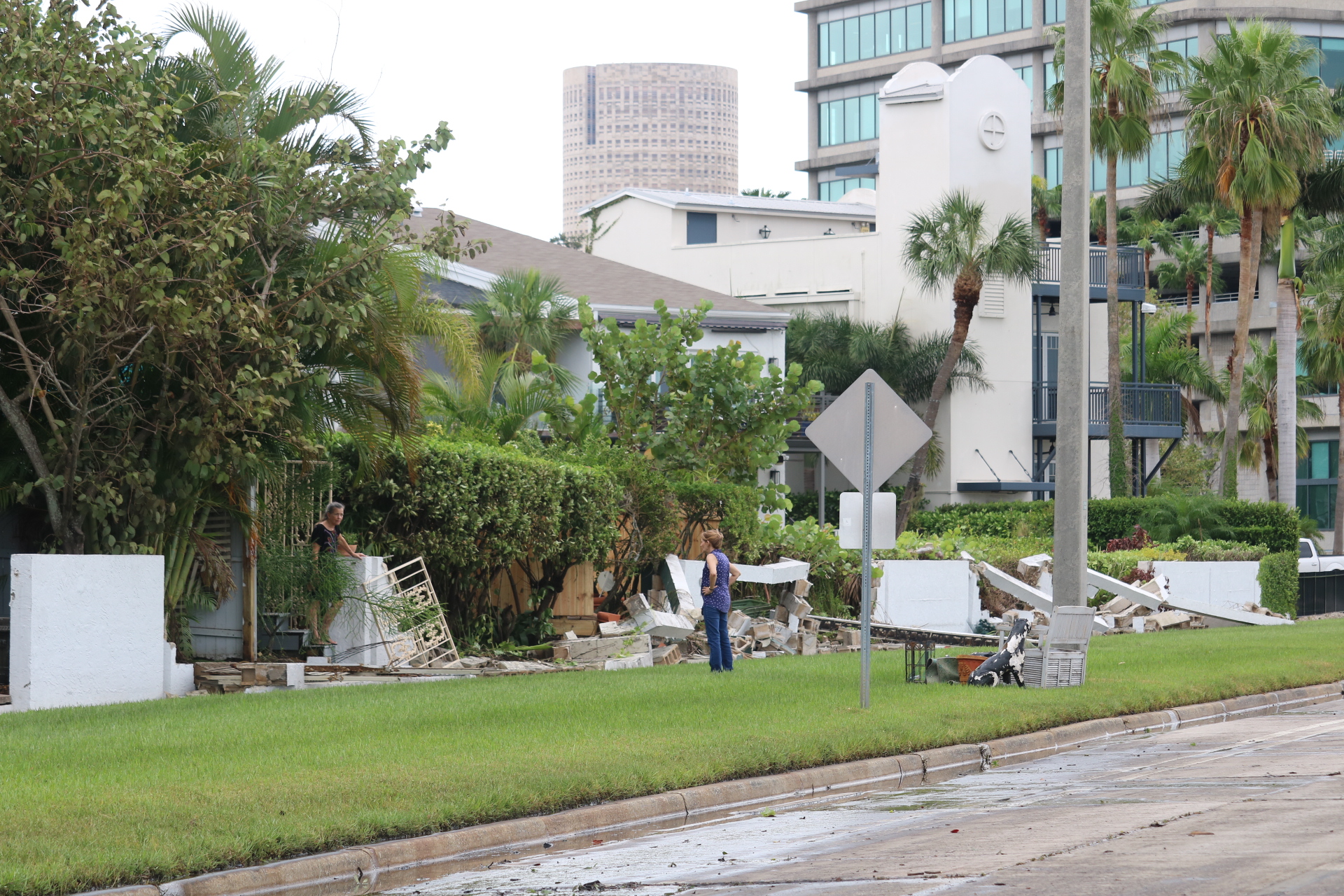
Bayshore Blvd. Tampa, September 27th after the pass of Hurricane Helene by Leah Burdick
Tampa leaders held a hearing this week about the devastating impacts of extreme weather in the state. Residents shared their personal stories to help create more sustainable solutions to prepare for next hurricane season.
Around 20 residents shared firsthand experiences of dealing with extreme weather in Florida.
Jeff Berardelli is a meteorologist for WFLA and he started the panel off by sharing how climate change is impacting Florida.
“Back in the 1970 we used to average around 60 days a year that were over 90 degrees and now it’s 120. As far as the heat index goes, how about days where the heat index is above 100 degrees? It’s about triple to quadruple what it used to be 50 years ago, just to give you an idea of how the climate has changed heat wise,” Berardelli said.
Tanner Loyd, a Tampa resident, said his apartment complex faced structural damage.
“I remember feeling overwhelmed by the damage and worried about the replacement costs, and it’s still something we are seeing today with car and home insurance and utility bills. I also feel frustrated that there is so much denial in the current administration about climate change and its impacts on people’s lives,” Loyd said.
He said restoring natural barriers and implementing sustainable development policies could help protect communities against intense weather.
Rick Cole is a St. Pete Beach resident who lost more than 80% of his belongings, including his car.
“We are living in a very dangerous time when it comes to climate, especially here in Florida. We ended up monitoring our coastline,” Cole said
Tampa Mayor Jane Castor said the city has been working on infrastructure upgrades to prepare for future storms. Castor said the city has a stormwater plan thats been in action to help neighborhoods from being flooded. She also shared the city is considering multiple action plans that will help the city be more resilient in future storms.
However, residents voiced concerns about the costs of climate change disasters and what they call a lack of awareness in the government.