
SOMETHING WE’RE MONITORING VERY CLOSELY. IN THE MEANTIME, PEOPLE ARE ASKED TO AVOID THIS AREA. YOUR YARD PROBABLY HAS NOT FULLY RECOVERED FROM THE LAST ICY BLAST, BUT WITH ANOTHER ONE COMING, IT’S IMPORTANT TO PROTECT THOSE PLANTS AGAIN. A LOCAL NURSERY SAYS PREPARATION TODAY CAN MAKE ALL THE DIFFERENCE. WEEKS FROM NOW, THE LAST TIME A LOT OF PEOPLE COVERED AND THEY STILL SAW DAMAGE. AND SO I DON’T WANT THEM TO FEEL LIKE IT’S A LOST CAUSE TO COVER AGAIN BECAUSE THEIR PLANTS. OVER THE LAST WEEK OR SO, WHEN IT’S BEEN WARM, HAVE STARTED RECOVERING. THIS WEEK WILL MARK THE SECOND ICY BLAST IN JUST WEEKS FOR CENTRAL FLORIDA AND LAURA COSGROVE WITH THE APP AND BERRIES GARDEN, SAYS IT’S JUST AS IMPORTANT TO PROTECT YOUR PLANTS TODAY, EVEN IF THEY’RE ALREADY LOOKING DEAD. THE ONE THAT HAS BEEN SEEMS TO BE THE MOST DRAMATIC AND AND AS SEEMS TO BE EVERYWHERE, AS A PLANT CALLED THE AUTOGRAPH PLANT, ALSO ECCLESIA CROTON IS ALSO A VERY POPULAR HEDGE PLANT IN CENTRAL FLORIDA, AND WHILE THEY ARE COLD SENSITIVE, DEPENDING ON WHERE THE PLANT IS IN YOUR YARD, WHAT KIND OF EXPOSURE THEY GOT AND WHETHER THEY WERE COVERED, THEY COULD BOUNCE BACK. TROPICAL OR SEMI-TROPICAL PLANTS SHOULD BE COVERED AS WELL AS ANY POTTED PLANTS. IF YOU DON’T HAVE A FIBERGLASS BLANKET, EXPERTS SAY USE BATH TOWELS OR BED SHEETS MADE OF NATURAL FIBERS. COSGROVE SAYS BEFORE YOU PULL OUT YOUR GARDENING SHEARS, WAIT A FEW WEEKS. ONCE THINGS WARM UP, THEN YOU CAN START CHECKING YOUR PLANTS, LOOKING FOR SIGNS OF LIFE, LOOKING FOR HOW FAR BACK THE THE COLD DAMAGE IS. AND. AND IF YOU DO DECIDE YOUR PLANTS NEED A TRIM, CUT BACK UNTIL YOU SEE THE
As Central Florida faces its second icy blast in weeks, Apenberry’s Gardens stresses the importance of protecting plants from the cold. Laura Cosgrove from Apenberry’s Gardens said, “The last time a lot of people covered, and they still saw damage. And so I don’t want to feel like it’s a lost cause to cover again, because their plants, over the last week or so, when it’s been warm, have started recovering. So we want to protect them. Still protect them.”Cosgrove emphasized that even plants that look dead should be protected, noting that the autograph plant, also known as Clusia, has been dramatically affected by the cold. Croton, a popular hedge plant in Central Florida, is cold-sensitive, but depending on its location, exposure, and whether it was covered, it could bounce back.She advised covering tropical or semi-tropical plants, as well as any potted plants. If fiberglass blankets are unavailable, bath towels or bedsheets made of natural fibers can be used. Cosgrove recommended waiting a few weeks before pruning plants, once the weather warms up. “Then you can start checking your plants, looking for signs of life, looking for how far back the cold damage is,” Cosgrove said.For those considering trimming their plants, cutting back until green is visible will help them start producing new growth as it warms up.
ORLANDO, Fla. —
As Central Florida faces its second icy blast in weeks, Apenberry’s Gardens stresses the importance of protecting plants from the cold.
Laura Cosgrove from Apenberry’s Gardens said, “The last time a lot of people covered, and they still saw damage. And so I don’t want to feel like it’s a lost cause to cover again, because their plants, over the last week or so, when it’s been warm, have started recovering. So we want to protect them. Still protect them.”
Cosgrove emphasized that even plants that look dead should be protected, noting that the autograph plant, also known as Clusia, has been dramatically affected by the cold.
Croton, a popular hedge plant in Central Florida, is cold-sensitive, but depending on its location, exposure, and whether it was covered, it could bounce back.
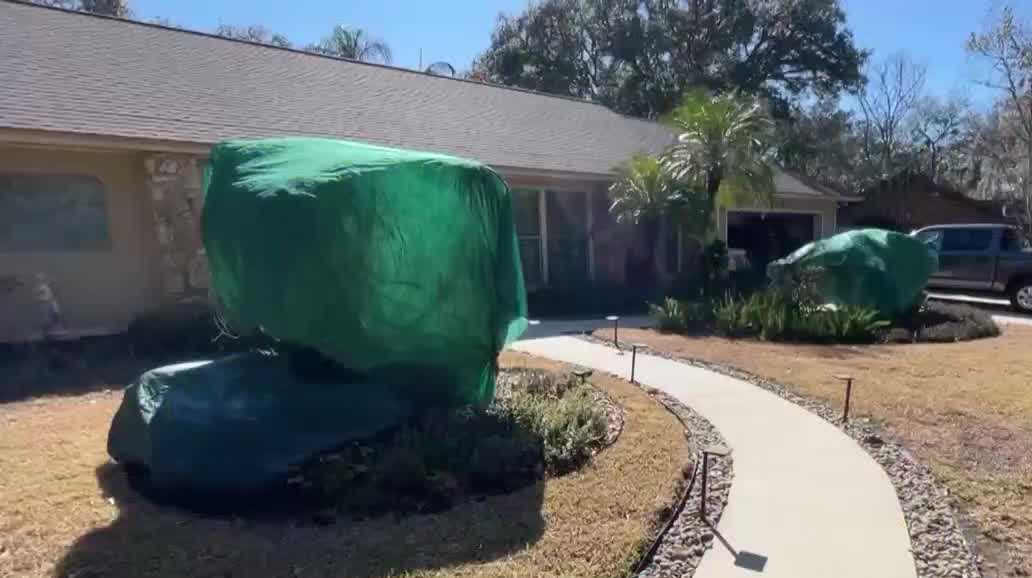
She advised covering tropical or semi-tropical plants, as well as any potted plants. If fiberglass blankets are unavailable, bath towels or bedsheets made of natural fibers can be used.
Cosgrove recommended waiting a few weeks before pruning plants, once the weather warms up.
“Then you can start checking your plants, looking for signs of life, looking for how far back the cold damage is,” Cosgrove said.
For those considering trimming their plants, cutting back until green is visible will help them start producing new growth as it warms up.