
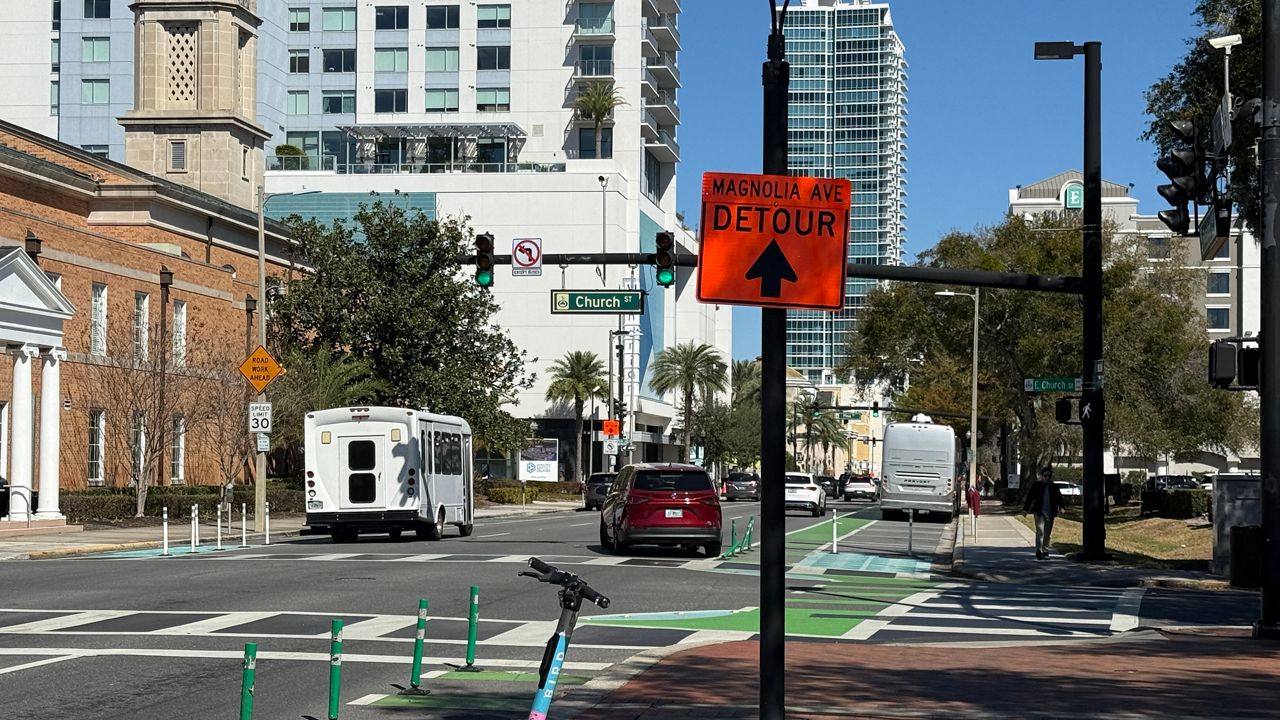
ORLANDO, Fla. — Detours ahead. That’s the message from Orlando city leaders as they work to improve transportation and traffic flow in downtown Orlando.
What You Need To Know
Crews are working now to convert Magnolia Avenue from a one-way to a two-way street with more pedestrian access
Downtown Orlando officials say detours and delays could peak in 2027 during Orange Avenue and Rosalind Avenue projects
They will meet with business owners during projects and encourage people to visit downtown Orlando
The city will spend millions of dollars on several projects to improve mobility and create entertainment zones downtown, but the work could slow down commuters at different times over the next two years.
One of the projects took another step forward this week. City officials selected the contractor for the Lake Eola Gateway Project, a plan to have a welcoming entrance to the Lake Eola Park.
Mayor Buddy Dyer eased some residents’ concerns by clarifying that the historic Lubbe House on the corner of Lake Eola Park will not be demolished as part of the project.
A few blocks away, crews will work over the next six months to convert the one-way Magnolia Avenue into a two-way corridor through the heart of downtown. Pedestrians will eventually be able to take a stroll and look at art displays or check out a farmers’ market.
Jack Daryanani is owner of the Taco Kat Restaurant in downtown Orlando. He hopes the changes on Magnolia Avenue will boost business.
“More pedestrian traffic is always a welcome sign for a local business owner,” he said.
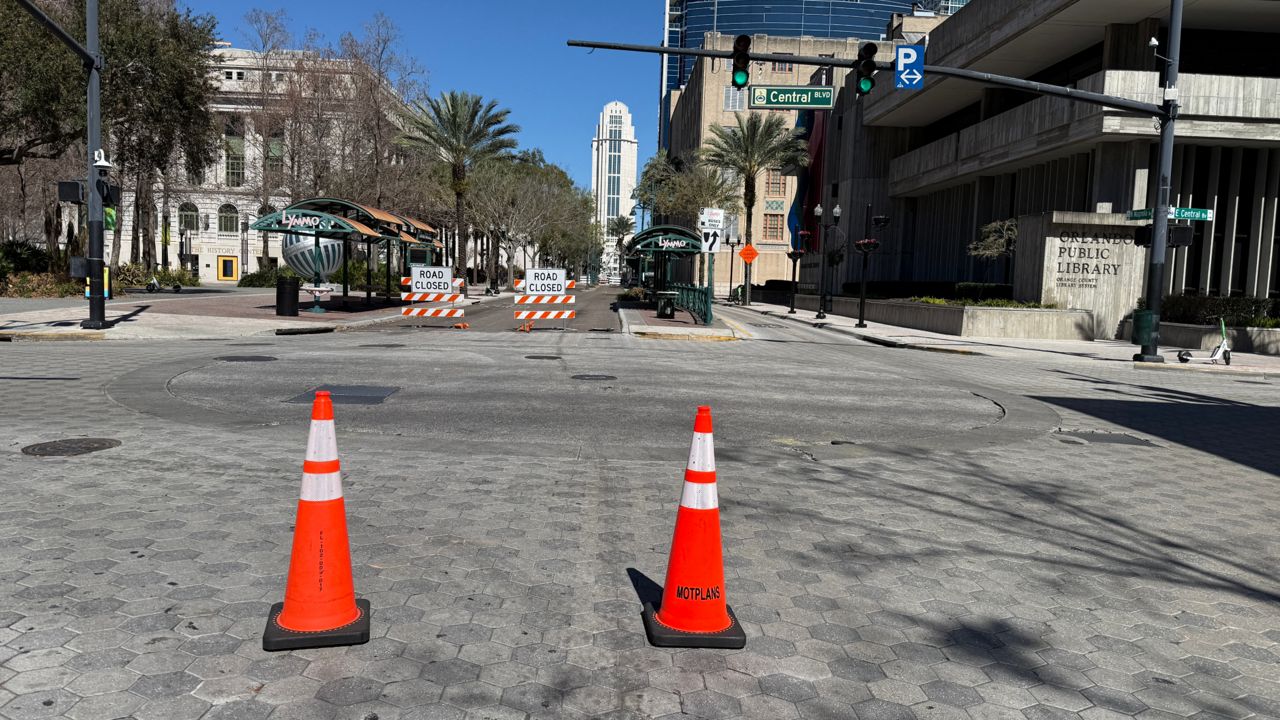
The city will spend millions of dollars on several projects to improve mobility and create entertainment zones downtown, but the work could slow down commuters at different times over the next two years. (Spectrum News/Keith Landry)
David Barilla is executive director of the Orlando Downtown Development Board & Community Redevelopment Agency, leading the changes there. Barilla said the city is doing the Magnolia project two blocks at a time.
“So we can shut it down, move through those two blocks as quickly and feasibly as possible,” he said. “Also reduce the impacts on those businesses that front that corridor.”
The detour signs for Magnolia Avenue are the first of several that drivers will see over the next two years as Orlando completes $160 million in downtown projects.
The Canopy Project will transform the space underneath Interstate 4 into a public park for entertainment and exercise. The city will convert Church Street into a festival street for occasional concerts.
Downtown Orlando is also working to transform Orange Avenue and Rosalind Avenue from one-way streets into two way-streets with more parking, so people can spend more time downtown. Barilla says there will be detours and delays over the next two years.
He adds, “2027 is where you’ll probably start see the work on Orange and Rosalind. That is the vast impact on our transportation networks that we’ll see the most detours and workarounds.”
Daryanani knows there will be some speed bumps, but he supports the city’s effort to improve traffic flow and pedestrian options downtown.
“It’s very important to make it walkable, approachable and kudos to the city for getting this thing started,” Daryanani said.
The Downtown Orlando group is sending workers to meet with business leaders to hear what they say about the Magnolia Avenue project and then the other ones. They will also have a marketing campaign to encourage people to visit downtown businesses while the road projects are going on.