
Backyard apartments are reshaping the Central Florida housing market.Sloan Waranch thought she’d end up in a typical rental: an apartment, a condo, maybe a small house. A garage apartment was not on her list. Then she found one in Orlando and gave it a fitting name.”I actually didn’t really consider like a garage apartment, but I actually call it my casita,” Waranch said.Her “casita” is actually an accessory dwelling unit, or ADU, a small home built on the same lot as a primary residence. They can be backyard cottages, garage apartments, in-law suites, or granny flats. In Central Florida, they are moving from niche to mainstream as cities and counties look for ways to add housing without bulldozing neighborhoods or building towering complexes.”I feel like I’m kind of in a treehouse,” Waranch said. “There’s so much light. There’s so much plants and trees. It’s like a great space to be creative.”For this artist, the setup is practical too.”The idea that I can just park in my garage and walk up to my apartment is really nice,” Waranch said.The appeal of ADUs is not just charm. In a market where rent and homeownership can feel out of reach, these small units can create a rare overlap: a more affordable place to live in a desirable neighborhood, plus monthly income that helps a homeowner keep up with rising costs.Tommy Liles, an Orlando Realtor and licensed home inspector, says that is the heart of the pitch he’s hearing from buyers and homeowners.”You’re buying a house and you’re trying to figure out, ‘How can I buy in this market with costs being so high?'” Liles said. ADUs, he said, can help “offset some of those costs.”He argues the math can work in ways that surprise people.”The rental potential could be greater than the cost of either the difference in market value, what you pay to purchase that home, or what it costs to build one,” Liles said.Liles is not just selling the concept. He says his own family is planning to build an ADU above their garage after sitting down with a lender.”We ran the numbers,” he said. With construction costs and a home equity line of credit, he said the rent could do more than cover the added expense and “make a substantial monthly contribution into our existing mortgage, lowering it by about half.”Orlando leaders see ADUs as a way to expand housing choices for people who make too much to qualify for traditional income-restricted affordable housing, but still cannot comfortably afford market rents.”If you don’t qualify for regular affordable housing developments, it’s a naturally occurring type of affordable housing,” said Jason Burton, an Orlando city planner.On Feb. 23, 2026, the Orlando City Council approved a new incentive program designed to get more ADUs built. Burton said the city will offer financial help to homeowners who rent at “workforce housing” rates, defined as 120% of the area median income and below.The incentives include a $10,000 construction rebate and waived impact and permitting fees. Burton said that can add up to “15 to $20,000 worth of incentives.”There is a key condition: Homeowners have to offer those workforce rents for 12 of the first 24 months to qualify. There is also another pathway. If the tenant is 62 or older, Burton said the incentives apply automatically.The city is also working on a second piece that could lower costs even more: a library of pre-approved ADU plans residents could download online.”We want to make it easier to build these types of units,” Burton said, describing the process as intimidating for many homeowners. Pre-approved plans could cut down on design costs and streamline permitting.The growth is already showing up in the numbers.Orlando’s rules have been evolving for years, and the city says the pace of construction has picked up since reforms in 2018.From 2007 to 2018, Orlando reported 321 ADUs were built. In the seven years after the 2018 changes, the city reports 520.Gary Baron owns multiple rental properties with ADUs and says the concept is part of what gives some Orlando neighborhoods their character.”Downtown Orlando has a lot of these, and that’s kind of the charm of downtown,” Baron said.He also frames ADUs as a way to stretch a mortgage or help cover bills, especially for homeowners who live on-site and rent out the extra unit.His advice for anyone considering ADUs is straightforward.”Make sure the zoning is correct. Screen your tenants well,” Baron said. “And enjoy all the extra money coming in every month.”Screenings should also apply to contractors. The city of Orlando recommends homeowners look at public permit records to find contractors who have successfully completed ADU builds recently.WESH 2 News previously investigated a case involving a contractor hired in 2023 to build an ADU who failed to complete the job. MORE: Central Florida contractor facing trial, lawsuit and state investigationFor Waranch, the story is personal: a place that feels like her own, in a neighborhood she likes, with the kind of light and greenery she did not expect from a “garage apartment.””I love it,” she said.For Orlando, it is part of a broader bet that the next wave of housing may not come from massive developments, but from the backyards, garages, and side lots already woven into the city.
ORLANDO, Fla. —
Backyard apartments are reshaping the Central Florida housing market.
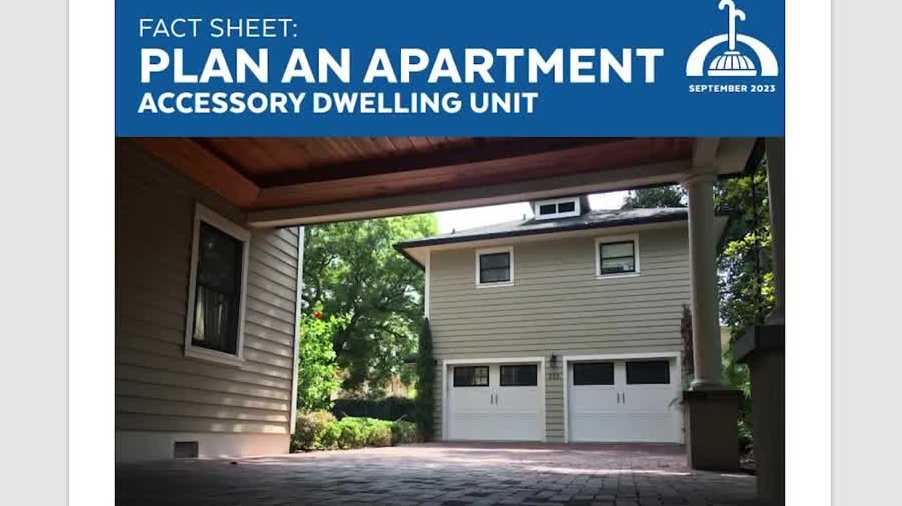
Sloan Waranch thought she’d end up in a typical rental: an apartment, a condo, maybe a small house. A garage apartment was not on her list. Then she found one in Orlando and gave it a fitting name.
“I actually didn’t really consider like a garage apartment, but I actually call it my casita,” Waranch said.
Her “casita” is actually an accessory dwelling unit, or ADU, a small home built on the same lot as a primary residence. They can be backyard cottages, garage apartments, in-law suites, or granny flats. In Central Florida, they are moving from niche to mainstream as cities and counties look for ways to add housing without bulldozing neighborhoods or building towering complexes.
“I feel like I’m kind of in a treehouse,” Waranch said. “There’s so much light. There’s so much plants and trees. It’s like a great space to be creative.”
For this artist, the setup is practical too.
“The idea that I can just park in my garage and walk up to my apartment is really nice,” Waranch said.
The appeal of ADUs is not just charm. In a market where rent and homeownership can feel out of reach, these small units can create a rare overlap: a more affordable place to live in a desirable neighborhood, plus monthly income that helps a homeowner keep up with rising costs.
Tommy Liles, an Orlando Realtor and licensed home inspector, says that is the heart of the pitch he’s hearing from buyers and homeowners.
“You’re buying a house and you’re trying to figure out, ‘How can I buy in this market with costs being so high?'” Liles said. ADUs, he said, can help “offset some of those costs.”
He argues the math can work in ways that surprise people.
“The rental potential could be greater than the cost of either the difference in market value, what you pay to purchase that home, or what it costs to build one,” Liles said.
Liles is not just selling the concept. He says his own family is planning to build an ADU above their garage after sitting down with a lender.
“We ran the numbers,” he said. With construction costs and a home equity line of credit, he said the rent could do more than cover the added expense and “make a substantial monthly contribution into our existing mortgage, lowering it by about half.”
Orlando leaders see ADUs as a way to expand housing choices for people who make too much to qualify for traditional income-restricted affordable housing, but still cannot comfortably afford market rents.
“If you don’t qualify for regular affordable housing developments, it’s a naturally occurring type of affordable housing,” said Jason Burton, an Orlando city planner.
On Feb. 23, 2026, the Orlando City Council approved a new incentive program designed to get more ADUs built. Burton said the city will offer financial help to homeowners who rent at “workforce housing” rates, defined as 120% of the area median income and below.
The incentives include a $10,000 construction rebate and waived impact and permitting fees. Burton said that can add up to “15 to $20,000 worth of incentives.”
There is a key condition: Homeowners have to offer those workforce rents for 12 of the first 24 months to qualify. There is also another pathway. If the tenant is 62 or older, Burton said the incentives apply automatically.
The city is also working on a second piece that could lower costs even more: a library of pre-approved ADU plans residents could download online.
“We want to make it easier to build these types of units,” Burton said, describing the process as intimidating for many homeowners. Pre-approved plans could cut down on design costs and streamline permitting.
The growth is already showing up in the numbers.
Orlando’s rules have been evolving for years, and the city says the pace of construction has picked up since reforms in 2018.
From 2007 to 2018, Orlando reported 321 ADUs were built. In the seven years after the 2018 changes, the city reports 520.
Gary Baron owns multiple rental properties with ADUs and says the concept is part of what gives some Orlando neighborhoods their character.
“Downtown Orlando has a lot of these, and that’s kind of the charm of downtown,” Baron said.
He also frames ADUs as a way to stretch a mortgage or help cover bills, especially for homeowners who live on-site and rent out the extra unit.
His advice for anyone considering ADUs is straightforward.
“Make sure the zoning is correct. Screen your tenants well,” Baron said. “And enjoy all the extra money coming in every month.”
Screenings should also apply to contractors. The city of Orlando recommends homeowners look at public permit records to find contractors who have successfully completed ADU builds recently.
WESH 2 News previously investigated a case involving a contractor hired in 2023 to build an ADU who failed to complete the job.
MORE: Central Florida contractor facing trial, lawsuit and state investigation
For Waranch, the story is personal: a place that feels like her own, in a neighborhood she likes, with the kind of light and greenery she did not expect from a “garage apartment.”
“I love it,” she said.
For Orlando, it is part of a broader bet that the next wave of housing may not come from massive developments, but from the backyards, garages, and side lots already woven into the city.