
Feb. 25, 2026, 12:07 a.m. ET
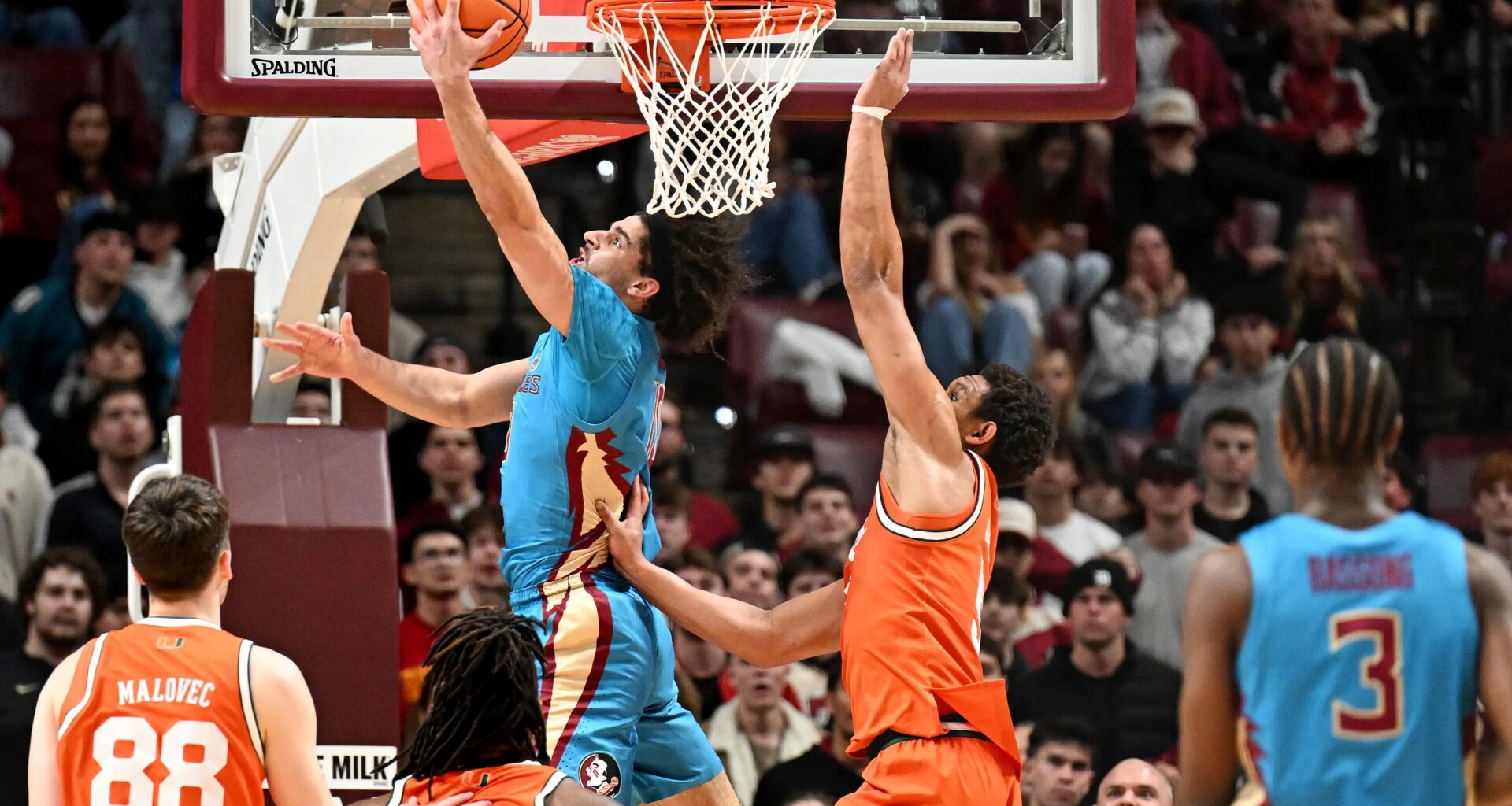
Florida State’s remarkable three-game winning streak came to an abrupt halt Tuesday night as Miami dominated the glass and controlled the game from start to finish, defeating the Seminoles 83-73 at the Tucker Center. Lajae Jones provided a bright spot for Florida State with 21 points on 8 for 14 shooting, but the Seminoles’ inability to rebound and their struggles from three-point range on the night (29%) doomed any upset hopes.
The loss drops FSU to 14-14 overall and 7-8 in ACC play, snapping what had been the program’s most encouraging stretch under first-year head coach Luke Loucks while raising questions about whether the Seminoles can recover their momentum heading into the final week of the regular season.
Miami’s 42-23 rebounding advantage wasn’t just a statistical anomaly—it was the singular factor that dictated the outcome from opening tip to final buzzer. The 19-rebound differential represents one of Florida State’s worst performances on the glass all season and completely nullified any offensive rhythm the Seminoles tried to establish.
Florida State’s leading rebounder, Chauncey Wiggins, managed just 5 boards, a team-high that speaks volumes about the Seminoles’ collective failure on the glass. Jones, typically FSU’s anchor on the boards at 6 rebounds per game, couldn’t provide his usual contribution in this critical area.
Robert McCray V, coming off an ACC Player of the Week honor for his performances against Boston College and Clemson, delivered his quietest game in weeks.
While he contributed 6 assists, tied for the team lead with his typical playmaking production, he finished with just nine points, failing to provide the scoring punch that fueled FSU’s recent winning streak.
The absence of McCray’s typical offensive aggression created a leadership void that Florida State couldn’t fill. The void extended beyond scoring. Florida State’s defensive communication broke down repeatedly, with Miami guards finding open looks off screens and backdoor cuts that should never have materialized.
The energy and connectivity that fueled FSU’s comeback victories over Boston College, Virginia Tech, and Clemson simply didn’t manifest against a Miami team that came to Tallahassee with purpose.
Florida State’s loss to Miami raises critical questions about the sustainability of their recent success. Were the recent victories genuine signs of program growth under Loucks, or were they merely a fortunate stretch against struggling opponents?
The final three regular-season games and the ACC Tournament will define whether Loucks’ first season is viewed as a modest success or a disappointing rebuilding year. A strong finish to the regular season, combined with at least one ACC Tournament victory, would position FSU as a program trending upward.
Another loss like Tuesday’s performance would raise questions about the sustainability of their mid-season surge.

Follow us @FSUWire on X and like our page on Facebook to follow ongoing coverage of Florida State news, notes, and opinions.