
This year’s South Beach Wine and Food Festival (SOBEWFF) featured over 105 events, celebrating 25 years of America’s largest gourmet gathering on the beach. Included in the star-studded line-up of culinary and industry experts were Chef JJ Johnson, the James Beard Award-winning chef, TV personality, and owner of Field Trip, as well as serial entrepreneur Kevin Kelley of Kitchen + Kocktails by Kevin Kelley, which recently opened its newest location in Miami.
These restaurateurs are revolutionizing the way Americans enjoy Black cuisine, beginning with the highest quality of ingredients and ending with a presentation that elevates the dish from ordinary to exceptional.
The culinary tradition in the United States remains a largely white-led industry. According to Escoffier School of Culinary Arts, about 10% of the American workforce is employed in restaurants, including culinary experts and chefs. That 10% is a huge factor in the wage gap between white and Black employees across the country.


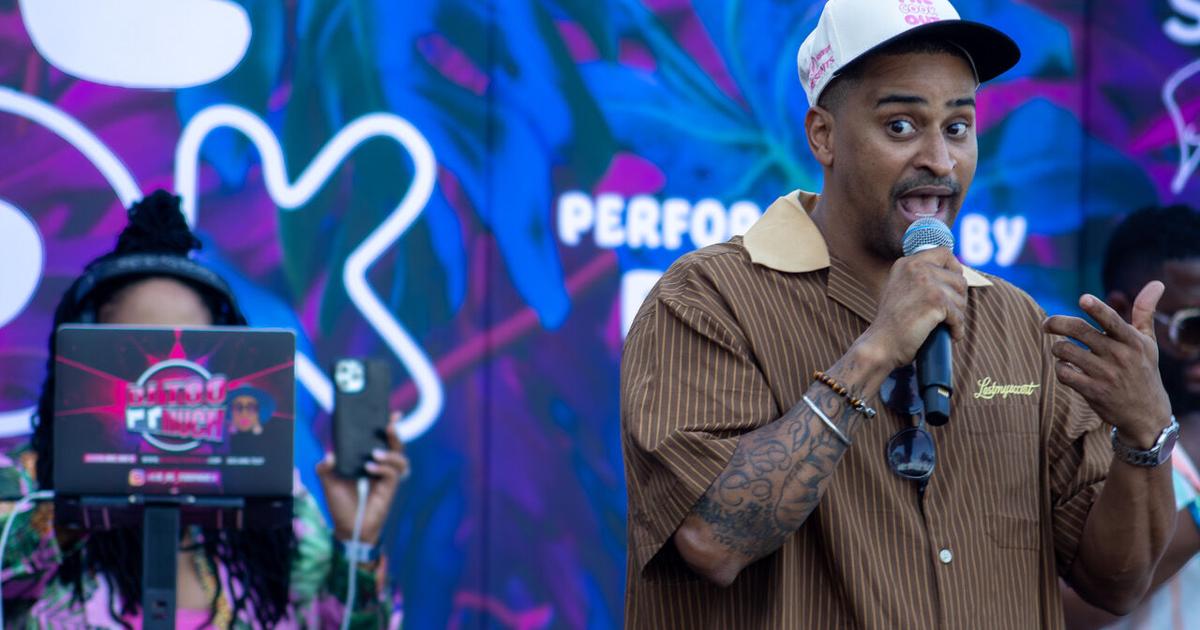
Chef JJ Johnson at the Cookout on Saturday, Feb. 21, 2026.
(Elisabeth Campbell for The Miami Times)
“I think a lot of Black chefs nowadays are starting to take a big chance and say our food is worth X amount of money, hoping that people will pay for it,” said Johnson. “What people do is they will suppress certain types of food by putting a price tag on it. When we see oxtails and raviolis, we can charge $50, but when we put oxtails on rice and peas, it should be $16.95.”
This disparity in pricing often comes down to who does the food preparation. Many Black chefs are expected to charge less for the same item their counterparts of other races can charge more for.

Chef Shawn Osbey’s food at the SOBEWFF.
(Elisabeth Campbell for The Miami Times)
“There is a misconception about who’s cooking the food and what it should cost, and I’m hoping that’s starting to come to an end with the movement around a lot of Black chefs in the United States cooking their style of food at the highest level,” said Johnson. “I’ve always said if, just in your zip code, you shop 25% towards Black-owned businesses in your regular cadence of shopping, you will see a big change in the Black community.”
Elevating Black chefs to a platform where they are often underrepresented is important to both Johnson and restaurant owner Kelley, who believes that making a concerted effort to shop Black is the first step in giving Black chefs and restaurant owners the recognition they deserve.

Italian Vice at the SOBEWFF.
(Elisabeth Campbell for The Miami Times)
“That’s the start, you know, being intentional about saying, this is a Black chef. This is a Black restaurant,” said Kelley. “Just as our people need opportunity individually in different workplaces, Black restaurants need opportunities as well. One of the things that’s unique with Black restaurants is that oftentimes the staff that we hire have not had the most experience, because the big restaurants don’t usually hire diverse staff. We give anyone and everyone an opportunity, regardless of what you look like.”

Chef Irie (Hugh Sinclair)’s food at the SOBEWFF.
(Elisabeth Campbell for The Miami Times)
Kelley doesn’t just hire diversely; he serves diversely. He hopes to appeal not only to Black diners but to diners of all races who simply want to feel at home.
“I think we’re creating the example that you can have the best of Southern food without going to dangerous parts of town, without having to go to buildings that may not be first class,” said Kelley. “Our staff worked very, very hard so that we can give our customers buildings that they will be proud of. They work very, very hard, so that they could have premises that would make people feel great about eating Southern food.”

PurpleLit Oyster Company at the SOBEWFF.
(Elisabeth Campbell for The Miami Times)
Both Chef JJ and Kelley work to amplify underrepresented voices through food. They use cuisine to break boundaries, build bridges, and pave a way forward into the future. In reclaiming and celebrating the beauty and brilliance of African American culinary traditions, both restaurateurs tell the story of their heritage and the resilience and creativity inherent within it.
“I think that we’re going to see more recognition of Black chefs,” said Kelley. “I think that Black-owned restaurants will be given more opportunities in the future, because when it comes down to it, what’s good is good. I think that there are a number of fantastic chefs and fantastic restaurants that are open. I see the future of Black-owned restaurants as no different than the evolution of opportunity for Blacks in other professional fields.”
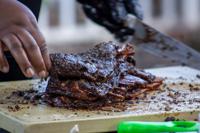
Chef JJ Johnson’s food at the SOBEWFF.
(Elisabeth Campbell for The Miami Times)
Each dish on their respective menus represents a piece of African American history and tradition, from people passionate about reconstructing historical cuisine and paying homage to culturally significant ingredients and techniques.
“We’re all from different places,” said Johnson. “We just happen to fall within the same circle of food. I think that people need to come to realize that African American food is the foundation of American food. I’m just paying homage to the people that should have been paid due respect over the years, and I’m using my culture to do it.”
Close
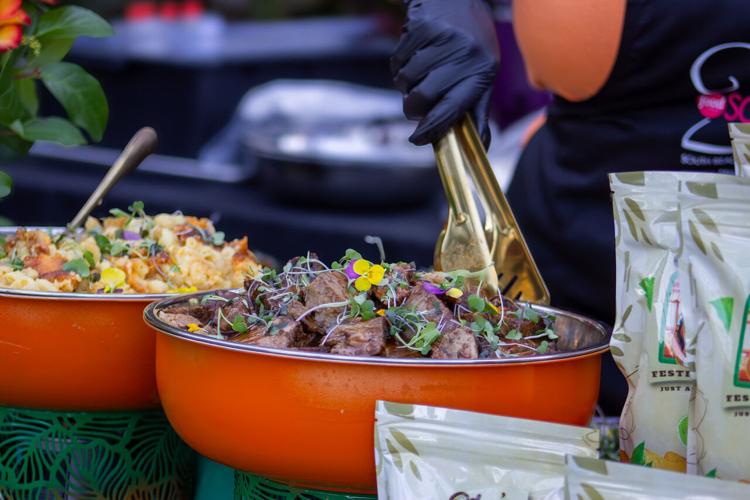
Chef Wayne Sharpe’s food at the SOBEWFF.
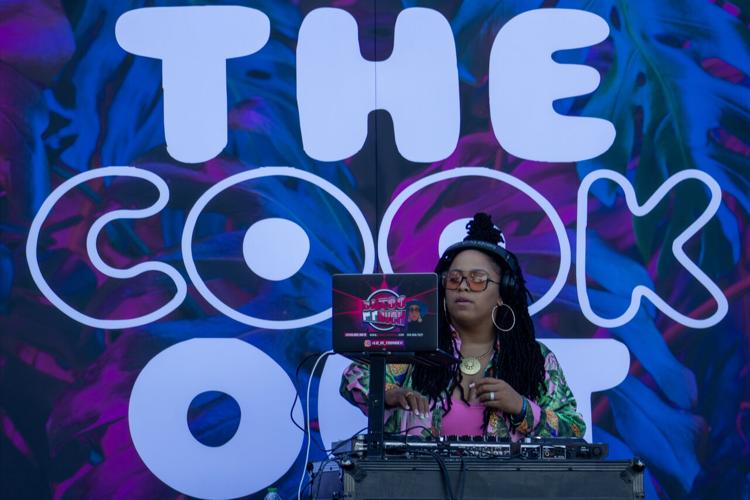

DJ Too Much at the Cookout on Saturday, Feb. 21, 2026.
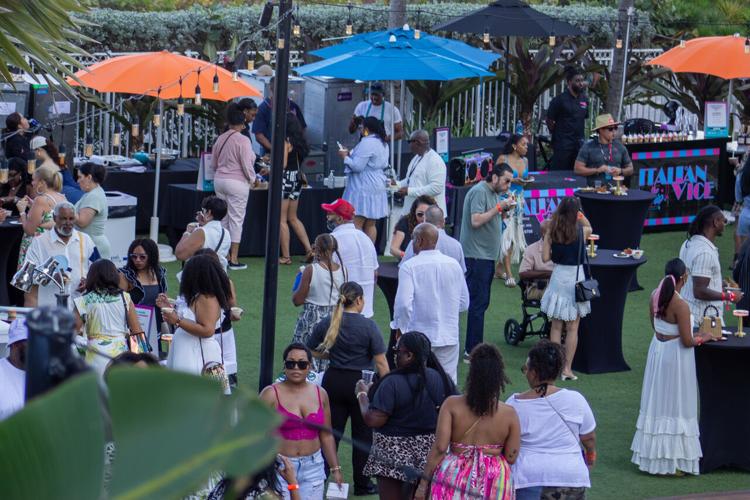

Guests at the 2026 SOBEWFF.
Chef Wayne Sharpe’s food at the SOBEWFF.
DJ Too Much at the Cookout on Saturday, Feb. 21, 2026.
Guests at the 2026 SOBEWFF.