
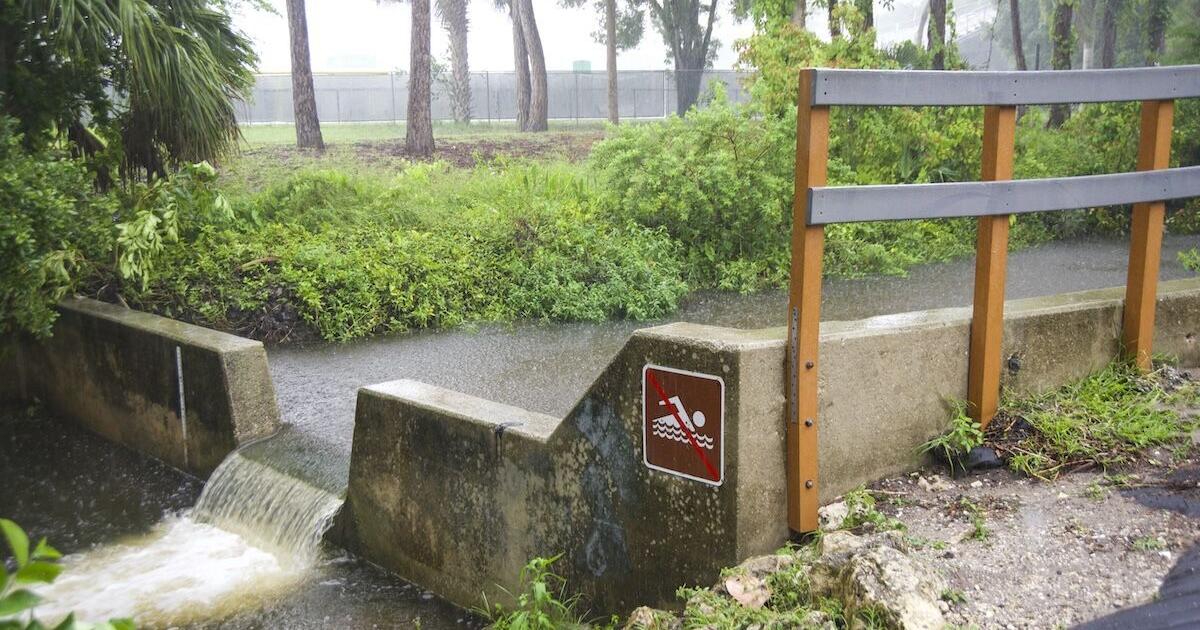
The Department of Agriculture awarded Fort Myers a $6 million grant to help clean up polluted canals and creeks throughout the city.
The funding is part of ongoing efforts to address elevated bacteria levels in waterways, such as Manuel’s Branch and Billy’s Creek, which flow through commercial and residential neighborhoods and parks before reaching the Caloosahatchee River.
“We believe there could be real water quality improvements associated with that project,” said Fort Myers Environmental Compliance Manager Justin Mahon, who announced the grant at a City Council workshop Feb. 23.
After water-quality testing in 2024 and 2025 by the nonprofit Calusa Waterkeeper detected potentially dangerous levels of human fecal bacteria in Manuel’s Branch, the Fort Myers Environmental Advisory Board discussed the issue at a January meeting. The board asked city staff to provide regular updates to Council on pollution monitoring and mitigation efforts in the canal system.
Elevated bacteria levels have been a problem for decades, according to a Waterkeeper report and city staff. Testing for HF183, a human DNA marker, and sucralose, an artificial sweetener, indicated human wastewater in canals. Exposure to fecal pollution can increase the risk of eye, ear, throat, skin and gastrointestinal illnesses. Testing by Lee County and the city also measures nitrogen, phosphorus and other pollutants.
A sewage spill of more than 180,000 gallons into Manuel’s Branch in 2020 prompted increased monitoring. Fort Myers adopted a pollution-reduction plan based on Florida Department of Environmental Protection standards, but the measures proved insufficient. City testing over the past year shows that Manuel’s Branch and other canals exceed the DEP’s E. coli threshold for recreational freshwater — 410 colony-forming units in 10% or more of samples during any 30-day period.
“That’s what they want to see in any system in the state,” Mahon said. “We are far above that, but that is the number that’s set.”
Testing indicates bacteria levels remain stable but elevated in Fort Myers canals, suggesting there is no single major source of contamination, Mahon said. Instead, pollution likely results from multiple factors, including trash, stormwater runoff, legacy pollutants in creek-bed sediment and wildlife.

Billy’s Creek, another Fort Myers urban waterway, has long faced water-quality concerns similar to those found in Manuel’s Branch, according to Calusa Waterkeeper.
Evan Williams
The city conducts monthly water-quality testing and has implemented trash removal and other mitigation measures. The USDA Natural Resources Conservation Service grant will support more intensive cleanup efforts. The grant contract was executed in April 2025, and work is scheduled from April through November in Manuel’s Branch, Billy’s Creek, Canal Street, Carrell, Ford Street, Shoemaker and Ballard canals.
Planned work includes removing trash and debris that support bacteria growth, trimming tree canopies to increase bacteria-killing ultraviolet light exposure and dredging canals to remove sediment and restore water flow.
City staff also met with Calusa Waterkeeper representatives Feb. 17 to discuss next steps for cleanup in Manuel’s Branch, Mahon said. The city requested assistance with ongoing trash removal efforts, including an Adopt-A-Canal program and a walk-the-watershed event. Officials also committed to reevaluating watershed goals through a 2026 Stormwater Master Plan update.
Fort Myers City Manager Marty Lawing said the city plans to work with Calusa Waterkeeper on water-quality testing and seek guidance from Florida Gulf Coast University experts.
“I think the paradigm has changed a little bit and if everybody pulls in the right direction, we’ll see some progress,” Lawing said.
The city launched a citizen trash reporting tool and an interactive water-quality dashboard, available on its website.