
Written by Genevieve Bowen on February 25, 2026

Advertisement
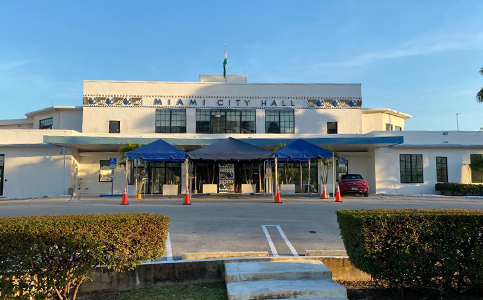
As Miami voters head to the polls this summer, they could shorten Mayor Eileen Higgins’ current term as part of a push to align city elections with statewide and countywide ballots, boosting turnout and cutting election costs.
On Feb. 26, the Miami City Commission is set to vote on a resolution directing the city attorney to draft a charter amendment for the Aug. 18 special election. The measure would move the next mayoral election from November 2029 to August 2028, shortening Ms. Higgins’ term from four years to three, and shift all future elections to even-numbered years in sync with larger contests.
Miami has struggled with low turnout in off-year elections, with participation historically hovering around 10% to 15%. Previous attempts to move elections to even years stalled after legal challenges, but supporters say aligning with statewide contests could raise turnout to more than 70%, while also saving the city millions in election costs.
The proposal also addresses the practical costs of standalone elections. The city estimates the 2025 general municipal election cost roughly $882,000, with the December runoff adding another $625,000. Holding elections alongside countywide contests reduces the need for separate ballots, polling staff, security and election equipment, allowing the city to reinvest those funds into other services.
If approved, runoff elections would also shift to the Tuesday after the first Monday in November, matching countywide schedules. The charter amendment would also adjust qualification periods and election administration timelines, ensuring a smooth transition while keeping Miami in compliance with state election laws.
On Jan. 8, the commission voted 4-1 to send a related charter amendment to the Aug. 18 ballot that would allow voters to decide whether future commission elections shift from odd- to even-numbered years. Commissioner Miguel Gabela voted against the measure, saying it could confuse voters and make it harder for challengers to compete.
At that same meeting, Ms. Higgins requested a separate charter amendment for her own office – which is the focus of the Feb. 26 vote – to shorten her first term so the next mayoral election occurs in 2028.
Supporters, including Commissioner Damian Pardo, said the change is about engagement.
“In even years, we get 70% of people voting [because] people know there’s an election,” Mr. Pardo said. “Our districts are small enough that we’re still knocking on doors … if they realize there’s an election, they’re going to talk with us. It’s better engagement.”
Mr. Pardo added that recent polling shows voters care more about turnout than a one-year term shift. He cited municipalities such as Key Biscayne and South Miami as successful examples.
The city’s move follows a legal precedent established last year when courts blocked the city from unilaterally shifting elections without voter approval. A 2025 lawsuit by then-mayoral candidate Emilio T. González challenged an earlier attempt to move elections, with courts ruling that only a charter amendment approved by voters could make the change.
If the commission approves the measure this week, the city attorney will draft the ballot language for the mayoral term amendment alongside the commission election measure. Questions must be submitted to the Miami-Dade supervisor of elections by May 22 to appear on the Aug. 18 ballot.