
1 / 3
SANIBEL-CAPTIVA CONSERVATION FOUNDATION
2 / 3
SANIBEL-CAPTIVA CONSERVATION FOUNDATION
3 / 3
SANIBEL-CAPTIVA CONSERVATION FOUNDATION
[expand]
close
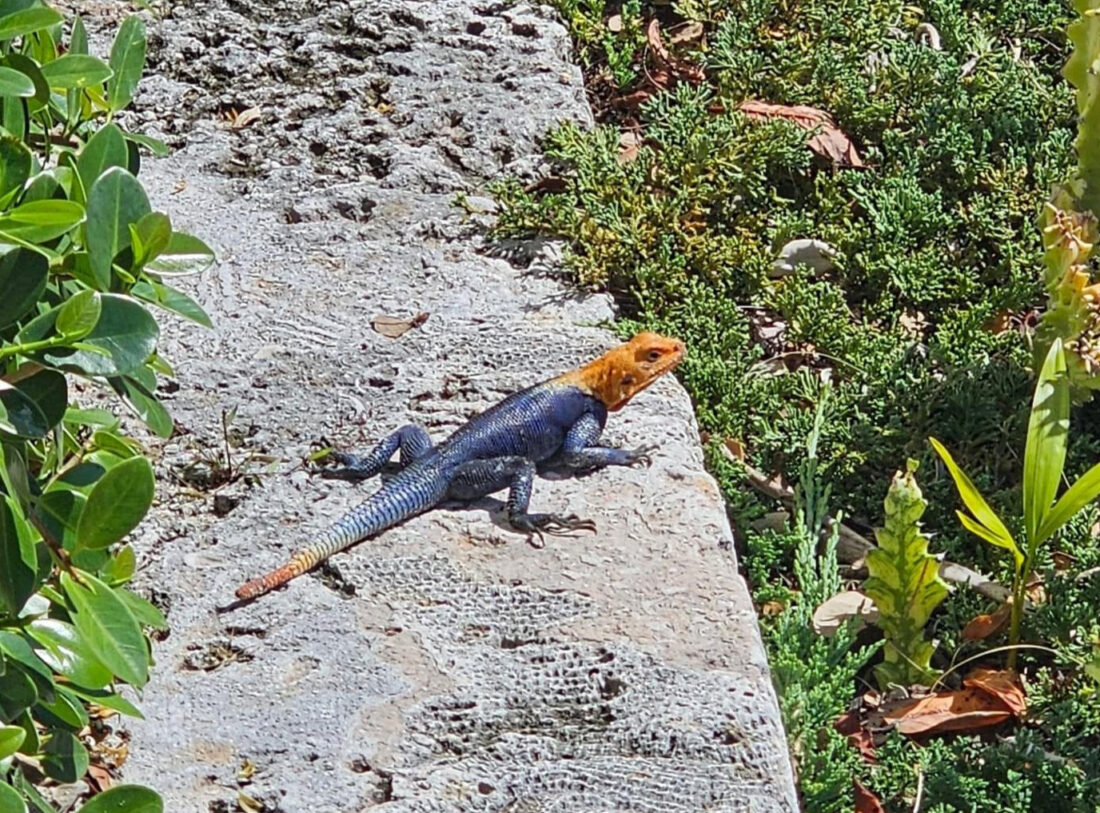
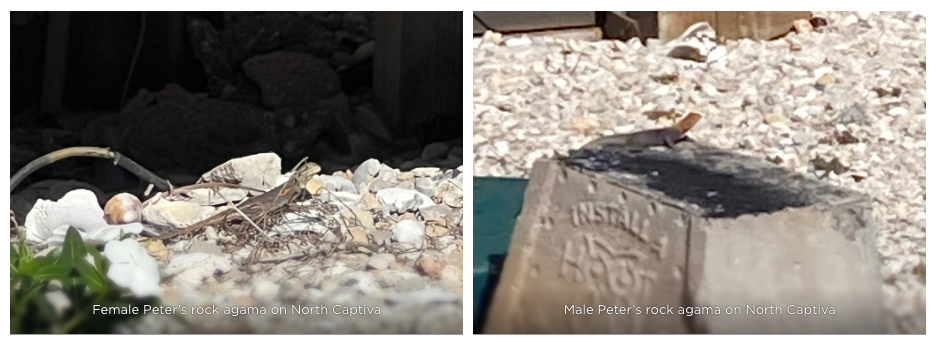
Recently, Sanibel-Captiva Conservation Foundation (SCCF) biologists documented Peter’s rock agamas (Agama picticauda), an invasive exotic species from Africa, on North Captiva for the first time.
Their presence marks the latest in the expansion of invasive exotics — flora and fauna — that the SCCF is tracking.
“Because North Captiva is an isolated island with no causeway or bridge, they were most likely accidentally brought there through the commercial plant trade,” SCCF Wildlife & Habitat Management Director Chris Lechowicz said. “We expect rapid expansion of this species on an island with low lizard diversity.”
Peter’s rock agama was first found on Sanibel in May 2006. The males are brightly colored lizards with an electric blue body, and red/orange heads and tails, which makes many people take a second look because they look foreign to the area.
This species is common in southeastern Florida and Port Charlotte from previous introductions. It likely arrived on the island in plants brought from nurseries from the east coast that are infested with this species.
“They remained mostly localized to one area on the west end of the island until Hurricane Ian. After the hurricane, they had a major expansion phase and now are found throughout much of Sanibel,” he said.
CAUSES OF RAPID INVASIVE EXPANSION
Invasive species have been a hot topic in the southeastern United States for the last couple decades due to the rapid expansion of exotic plants and animals. What many do not realize is that the word invasive can refer to both non-native and native species.
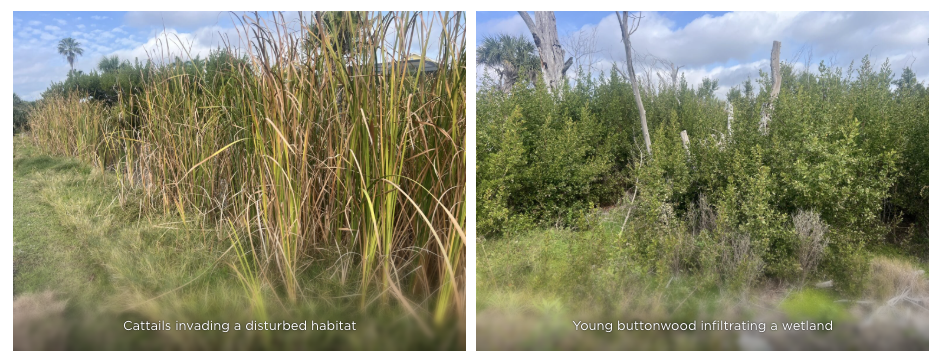
Even native species, such as cattails, buttonwood and moonflower vine, can be considered invasive and take over an area in the right conditions.
“This usually occurs when the habitat experiences a change in its usual conditions — either natural or unnatural — such as storm surges, hydrological alterations, natural fire regime changes or mechanical vegetation clearing,” Lechowicz said.
This can be seen along roadsides where native vines have covered areas where dead vegetation was cleared or where, in the absence of fire, shrubby vegetation such as salt bush and stinking camphorweed begin to dominate transitional wetlands.
CHANGES IN WILDLIFE GET SPOTLIGHT
Invasive exotic wildlife species tend to get more attention from the media because of the possible danger to native fauna or people and just the foreign nature of the species, such as vivid coloring, size or behavior. Examples of this include the Burmese python, Argentine black-and-white tegu and lionfish.
“The public tends to focus more on these species because they are more relatable than an invasive grass or groundcover plant,” he said.
In modern times, exotic expansion is inevitable to some degree because we move both items and ourselves quickly and efficiently across long distances. Stowaways occur more than we realize.
“It is easier to prevent invasive exotics from entering an area, rather than eradicating them after they are established, so a strong effort should be put into the prevention stage,” Lechowicz said.
The invasion curve shows that the real chance to completely eradicate an exotic species is only after the introduction phase and before the rapid increase stage gets out of control. Species that have surpassed this point will likely never be completely eradicated, but can be suppressed to the point that they’re not increasing.
Report sightings of excessive or suspected invasive exotics to info@sccf.org.