
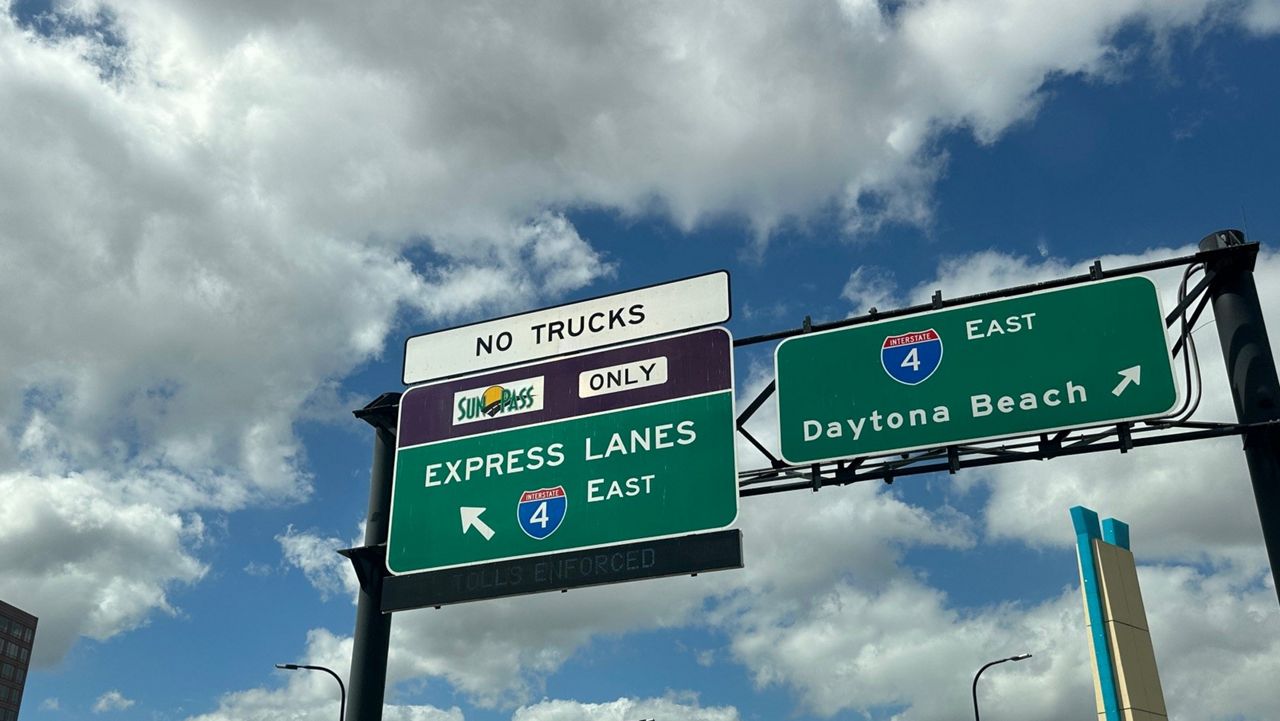
ORLANDO, Fla. — Four years since the debut of I-4 Express, the Florida Department of Transportation is highlighting the improvements for drivers.
What You Need To Know
Since FDOT opened I-4 Express four years ago, there have been more than 70 million recorded trips
More than $115 million in toll revenue has been collected on I-4 Express, between fiscal years 2022 and 2025
Since the express lanes debuted, drivers in the free lanes of I-4 are saving an average of five or more minutes per trip
FDOT has found lane-blocking crashes have dropped by 33%
Kitty Khanna doesn’t often use the toll lanes, but when she must make a delivery from her downtown Orlando flower store, she’ll sometimes take I-4 Express to avoid delays.
“Definitely, the traffic is better overall. No doubt. It lessens the traffic,” said Khanna.
Since I-4 Express debuted four years ago, there have been more than 70 million recorded trips in the toll lanes.
Last year, that broke down to, on average, 65,400 trips on a weekday.
More than $115 million in toll revenue has been collected on I-4 Express between fiscal years 2022 and 2025.
FDOT spokeswoman Britney Jones says state law dictates the use of the toll money.
“Revenue from I-4 Express is dedicated to project costs and future operating expenses,” Jones said. “Any additional funding goes toward future projects in the county or counties in which the toll revenues were collected.”
While FDOT can change the price if there’s more traffic in the express lanes, the base price is typically 50 cents per toll segment.
But when you have to drive on I-4 every day, like Khanna, that can add up. After all those years of I-4 Ultimate construction, she says that doesn’t sit right with her.
“I have lived through six, seven years of expansion time, all that inconvenience and dust and busting my tires to get this road done. But then, when it is done, I am asked to pay money, which I am not very happy about it,” Khanna said.
That’s why Khanna often stays out of the I-4 Express lanes.
“If I plan my time, I don’t have to use it unless I’m in a crisis mode,” the owner of Leaf and Blossom Company said.
But even if Khanna drives in those free general-use lanes, Jones says, it has had a benefit for all I-4 users.
“Drivers in the general use lanes are saving an average of five or more minutes per trip, adding up to more than three hours a month for a regular commuter, even without using the express lanes,” said Jones.
Speeds in those free lanes have also gone up. During the morning and afternoon rush, the average speed is 12 miles per hour higher than in 2019, prior to the express lanes opening.
“Naturally, the traffic gets diluted now because there is extra space,” said Khanna.
It also means fewer crashes. FDOT has found that since I-4 Express opened four years ago, lane-blocking crashes have dropped by 33%.
“Fewer blocked lanes mean less congestion, quicker response times for emergency service providers, and a safer, more predictable trip for drivers along the I-4 corridor,” said Jones.
Khanna would like to see some relief for locals and businesses that need to take the I-4 Express.
“They should have some kind of a rebate to the residents or the people who use this road every day,” she told us.
But the tolls, according to FDOT, help keep those managed lanes flowing, to give drivers a reliable commute.
FDOT is certainly pleased with I-4 Express.
Currently, a westbound lane of I-4 Express is under construction from Universal Orlando down to Disney World.
FDOT is also building I-4 Express lanes in both directions in Polk and Osceola counties.
Plus, the agency is evaluating plans for potential I-4 Express lanes in Seminole and Volusia counties.