
Jimmy and Johnny Hammonds are brothers who sit at the center of an unusual federal criminal case involving the sale of exotic primates.
Jimmy, known widely as “the Monkey Whisperer,” has in the past drawn national attention and legal trouble over allegations of illegal monkey sales.
Johnny, according to prosecutors, was involved in one such sale in 2024. He cooperated with the government against his brother. So the government offered a deal: He could avoid a criminal conviction through a pretrial diversion program.
It was a resolution thatSenior U.S. District Judge Virginia Hernandez Covington could not stomach. In a hearing last month, she demanded to know more about what she said was an inappropriate outcome to a serious criminal case and accused the government of “giving this guy a pass.”
After the judge voiced her objections, U.S. Attorney Greg Kehoe rescinded the deal, defense attorneys said.
“Now, because of the court’s intervention, Mr. (Johnny) Hammonds must choose between pleading guilty to two felonies or going to trial,” Assistant Federal Defender Samuel Landes wrote in a court paper. “He should not have to make that choice.”
He asked for the charges to be dismissed. He also asked for the judge to recuse herself.
Last week, she did.
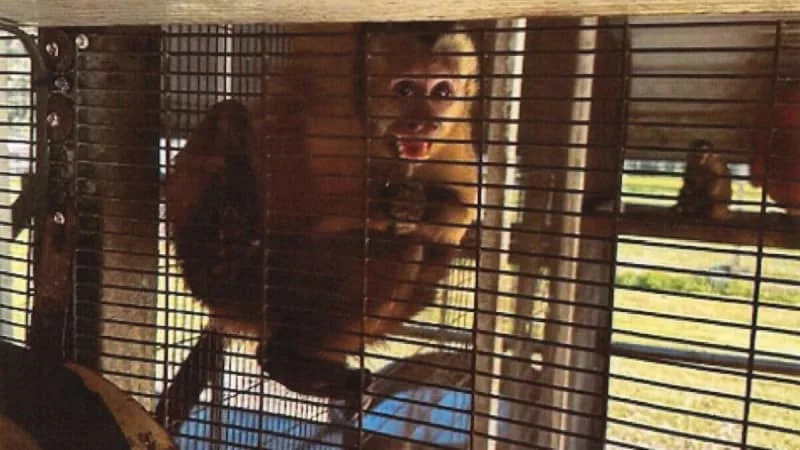
Jimmy Hammonds, 62, had for years run a business at his Manatee County home called The Monkey Whisperer Ranch. The enterprise specialized in breeding and selling exotic animals.
He drew national attention in 2020 when he was accused in the illegal sale of a capuchin monkey to the rapper Chris Brown.
Wildlife officials brought further charges against Hammonds related to the sale of two cotton-top tamarins, another exotic primate.
He pleaded guilty in 2022 to violating federal laws designed to protect wildlife. He got five years’ probation and paid a $90,000 fine.
In 2024, federal agents received information that Hammonds was still selling primates on the black market. An undercover agent with the U.S. Fish and Wildlife Service reached out to him on Facebook. Hammonds, prosecutors said, immediately offered numerous animals for sale.
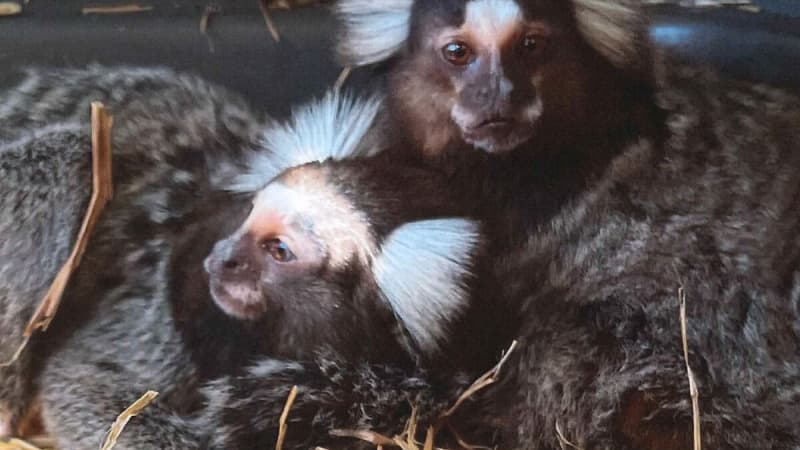
They negotiated the purchase of two marmosets, known as “pocket monkeys,” for $7,000. Hammonds enlisted his brother to assist with the sale.
Johnny Hammonds, 60, owned the marmosets and kept them at their mother’s home in St. Petersburg, court records state. On Oct. 24, 2024, Jimmy sent Johnny to a gas station off Interstate 75 just north of the Georgia state line.
Johnny brought with him the two marmosets, named Teko and Tia, and exchanged cash with the undercover agent, according to court records. Wildlife agents later examined the animals and found both were malnourished and had body deformities.
The brothers were charged with violating the Lacey Act, a law that prohibits the sale of certain wildlife.
Last fall, Jimmy Hammonds pleaded guilty.
Johnny Hammonds, meanwhile, applied for a pretrial diversion program. Such programs, which allow defendants to avoid criminal consequences in return for things like drug treatment or community service, are common in state court, but less so in the federal system.
In a January court hearing in Johnny Hammonds’ case, Judge Covington said she had rarely seen pretrial diversion offered in more than two decades as a judge. She was particularly disturbed by a report that more than a dozen animals that wildlife agents seized from the Monkey Whisperer had since died.
“I’m really perplexed as to why the United States Attorney’s Office is giving this guy a pass,” the judge said, according to a transcript of the hearing quoted in court records.
She alluded to Johnny Hammonds having tested positive weeks earlier for methamphetamine.
“Last time I checked, it’s still against the law to use drugs,” she said. “And you’re giving this pass to somebody who at least is tangentially responsible for 17 animals dying and you seem to think it’s OK. Well I don’t.”
Assistant U.S. Attorney Erin Favorit explained that Johnny Hammonds had a minor role in the crime and that he’d provided testimony against his brother, which helped secure the Monkey Whisperer’s guilty plea. She said the pair had a “toxic” relationship.
“The Monkey Whisperer is hateful and horrible and manipulative and downright disgusting to his brother,” Favorit said. “He will do mostly anything his brother asks and that’s how he got into this situation.”
The prosecutor added that she would never send someone responsible for 17 animal deaths to a diversion program.
The judge remained perplexed. She said she wanted Kehoe, the U.S. attorney, to attend a future hearing and explain the decision. She mentioned that she once worked for Kehoe as a prosecutor and trusted his word.
She added that she didn’t want to “cross the line of being involved in plea negotiations because a judge should not do that.” But she reiterated that she was against the diversion program and was allowed to say so.
“This is a lot worse than the way it’s been portrayed to me,” she said. “And if you’re not going to stand up for it, I will stand up for it. It should be your office, not me. That’s what I expect from a prosecutor.”
The next day, the federal public defender got a call from Kehoe, who rescinded the pretrial diversion offer, the court record states.
In a hearing a week later, the judge was told the diversion program was no longer an option.
“Please let Mr. Kehoe know, or whoever made that decision, that I appreciate their considering my feelings on the case,” she told Favorit.
Thereafter, the prosecutor prepared a plea agreement at Johnny Hammonds’ request that would have him admit to a misdemeanor charge, according to a court paper filed by the defense. But the U.S. Attorney’s Office rejected it.
The only options Johnny Hammonds had left were to go to trial or plead guilty to two felonies.
Last week, the defense asked for the case to be dismissed and for Covington to excuse herself from it.
The judge issued an order recusing herself. She wrote that she only wanted an explanation for the pretrial diversion, not to alter the decision. She noted that it was the U.S. attorney’s decision to make, not hers.
Nevertheless, she concluded, “it appears that a disinterested observer might question the court’s impartiality in this case.”
The legal dustup canceled what was to be the sentencing this week for the Monkey Whisperer.
A sentencing memo filed by his attorney, Frank McDermott, disputed that any of the animals at his ranch were mistreated. He asserted that they were healthy and well fed when agents took them.
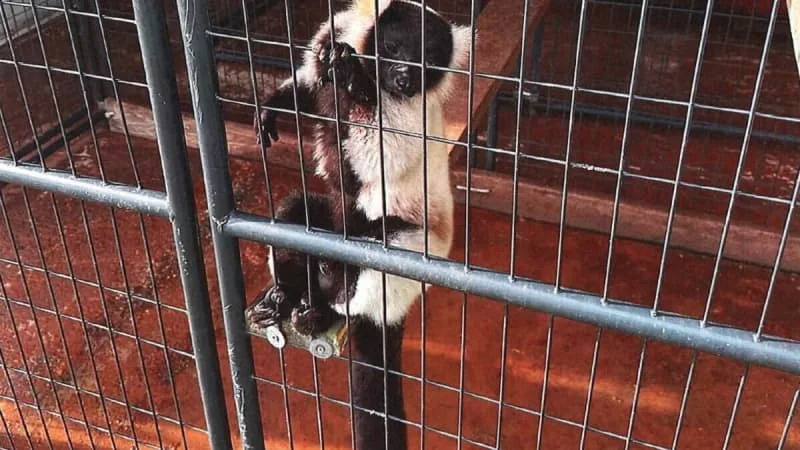
His legal troubles left the Monkey Whisperer struggling financially, his attorney wrote. The hard physical demands of feeding and caring for the animals took a toll on his health. He was looking to get rid of all his wildlife when he got in trouble the second time.
Agents counted 71 animals at his property when they came to arrest him in November 2024, the document states. They included marmosets, kangaroos, wallabies and a deer. He was told to continue to feed and care for them. None were confiscated.
Several animals died in the months that followed due to frigid winter temperatures, the memo states. He had taken measures to keep them safe and warm, including using heat lamps and blankets. Still, he gave the rest of his animals over to federal agents that spring.
In a letter to the court, the Monkey Whisperer apologized for breaking the law. He said he is officially retired from the animal business.
“I never thought I would ever get in trouble with these little monkeys,” he wrote.