
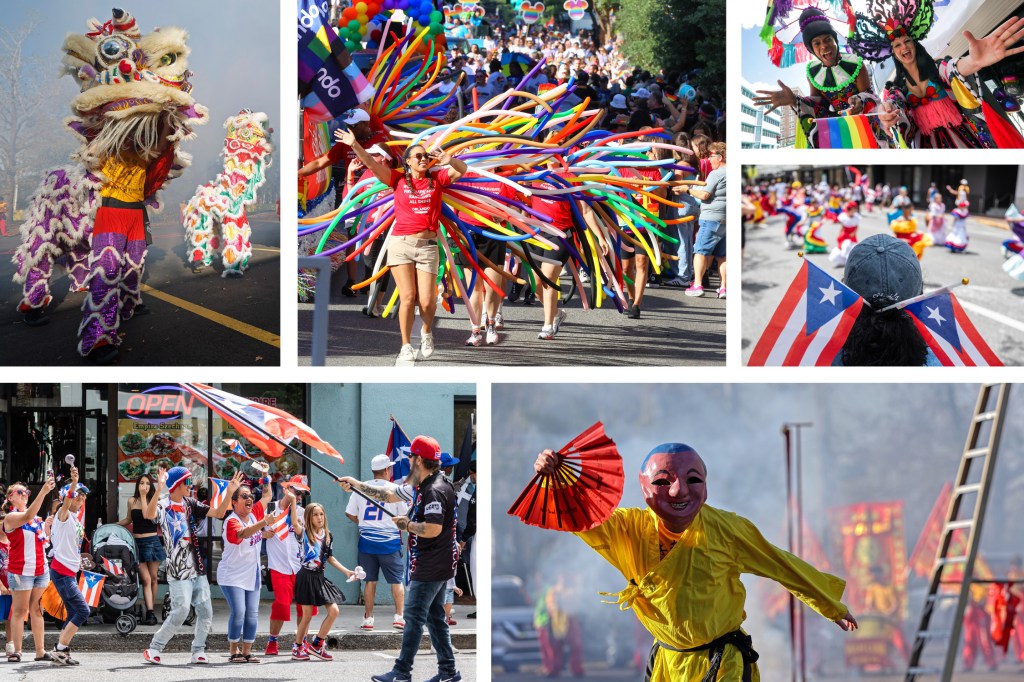
A sweeping Senate bill seeking to rid Florida’s cities and counties of spending on “diversity, equity and inclusion” programs could impact local events ranging from Pride parades to St. Patrick’s Day and other festivals celebrating a host of cultures, officials fear.
There is even concern it could undermine Orlando’s planned memorial for the victims of the Pulse nightclub shooting, although the bill’s sponsor insists the Pulse memorial is specifically protected in the legislation.
“This is not who we are as Floridians,” Fort Lauderdale Mayor Dean Trantalis said during a discussion of the bill at a city commission meeting.
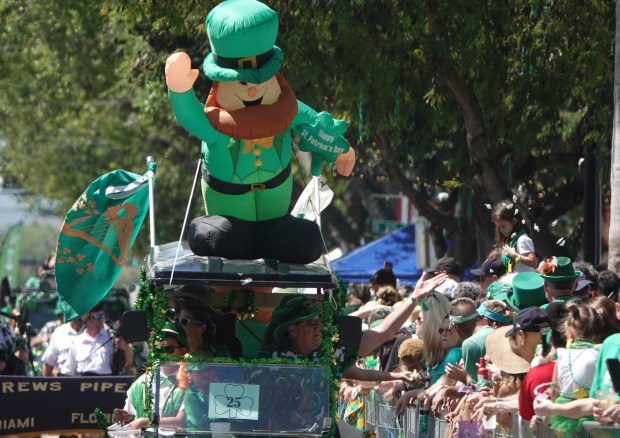
Joe Cavaretta / South Florida Sun Sentinel
South Florida’s St. Patrick’s Day Parade in Hollywood on Sunday, March 10, 2019. Local leaders are concerned about a bill that could prevent city and county funding of such events. (Joe Cavaretta / South Florida Sun Sentinel)
The legislation, SB 1134, is more directly targeted at local efforts to diversify workforces and host trainings with DEI principles and would restrict local governments’ ability to use funds “by employees, contractors, volunteers, vendors, or agents to promote diversity, equity, and inclusion initiatives.”
Orlando city officials are worried that clause could be interpreted in a way that could be detrimental to the construction or maintenance of the planned memorial at the site of the 2016 Pulse shooting that killed 49 and wounded 53. Conceptual drawings show rainbow lighting and potential references to the birth countries of all the victims, the majority of whom were Hispanic.
City Commissioner Tom Keen, who served as a state House representative in 2024, said he was in Tallahassee meeting with the Orange County delegation last week and specifically advocated against the Senate bill in an effort to spare the Pulse Memorial.
However, there may already be some protection for the memorial. The bill’s language would exclude celebrations of state and federal holidays or construction and maintenance of national memorials and monuments, which are designated by Congress. The planned National Pulse Memorial received such a designation in 2021.
The bill’s sponsor, state Sen. Clay Yarborough, R-Jacksonville, said that clause should ease the city’s worries and insisted that plans at the Pulse site wouldn’t run afoul of his proposal.
“We have added a provision specifically that says anything that is recognized as a national memorial or through an Act of Congress like Pulse was — there’s a list in the U.S. code that has, I think, six memorials, including Pulse — that would be covered,” he said. “So there shouldn’t be any issue with that.”
The House Commerce Committee is expected to take up a similar bill Thursday afternoon.
Kyle Shephard, Orlando’s Director of Governmental Affairs, confirmed the city’s lobbying team is trying to get the bill amended to further clarify that Pulse would be spared.
“We have worked and will continue to work with legislative leaders to ensure that the National Pulse Memorial is not unintentionally impacted by the bill,” he said in a statement. “The city is appreciative of this Legislature’s funding support for the memorial and we look forward to continuing work with our local, state, and federal partners to build a place of reflection for the families of the 49 lives taken at Pulse and the survivors.”
Last year, the state issued a grant to the city for $394,000 toward the memorial.
While Orlando Commissioner Patty Sheehan shared the concerns about Pulse, she also bristled that it would prevent city sponsorship of some of the largest and most popular parades and festivals held in the city — and would even allow the governor to remove officials from office who do so.
“It’s like the crosswalks,” she said, comparing the bill to the state removing “nonstandard” road markings such as Blue Lives Matter and student artwork along with LGBTQ rainbows like the one outside Pulse. “They wanted to kill the rainbow crosswalks, so they got rid of all crosswalks.”
Orlando sponsors multicultural events such as Come Out With Pride, Lunar New Year and Puerto Rican Day parades.
“I think these kinds of events add so much to our community. We should be celebrating our unique culture,” Commissioner Patty Sheehan said. “I know that our lobbyists are working hard to stop this legislation and it’s just ridiculous. If you don’t value diversity, equity and inclusion, then don’t go to the parade.”
The bill also allows a city or county resident to sue any government that violates the legislation and be awarded damages and court costs.
Yarborough said the bill was meant to crack down on what he deems as wrongful spending by cities and counties on so-called DEI programs. He contends his bill won’t prevent local festivals from occurring, but instead prevents local governments from spending money to promote or sponsor them. However, they would still be allowed to issue permits and provide public safety protection.
Orlando’s Downtown Development Board spent $20,000 sponsoring last year’s Come Out With Pride parade, which drew more than 200,000 people. It also sponsored smaller bashes, like the $4,350 spent on The Pantastic-Steelpan Jamboree, put on by the Caribbean American Passport Multicultural Initiative. Such sponsorships are common around the state, particularly for signature events that draw crowds to a city or town for festivals and parades.
In Fort Lauderdale, commissioners also expressed concerns about the bill’s potentially sweeping effect on what cities and counties can do.
“We do proclamations for almost every ethnicity, every cultural group [and] LGBTQ group. You name it, we do proclamations,” Commissioner Steve Glassman said. “That’s going to be a tough balancing act for a city like Fort Lauderdale. But these bills are steamrolling ahead in Tallahassee.”
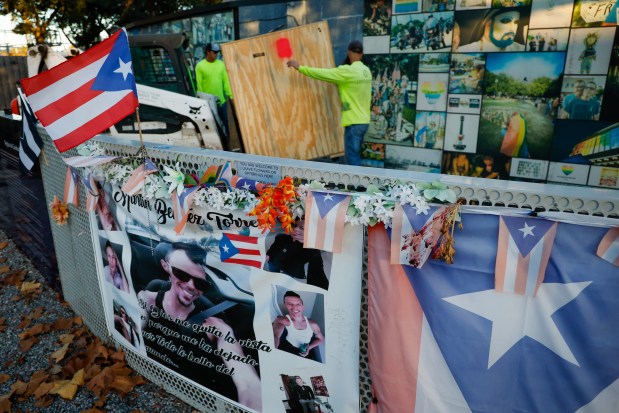 A crew begins the process of removing items from the Pulse Nightclub site on Monday, December 22, 2025, as the effort to demolish the site—where the mass shooting occurred in June 2016—begins, making way for a permanent memorial. Items being removed and stored include chandeliers, large posters, a cash register and other interior decorative items. (Rich Pope/ Orlando Sentinel)
With the 10th anniversary of the Pulse shooting approaching in June, Orlando is weeks away from finally beginning to build a memorial after years of controversy and delays. The famed sign outside the nightclub building is expected to be removed around March 10, with demolition of the building expected on March 18.
On March 5, the city is hosting a public meeting for the design team to reveal their work and seek feedback. The design, which is considered 30% complete, was created through a public advisory board that wrapped up its work last year. The group included families and survivors, as well as other community members.
It includes a reflecting pool on the same ground as the nightclub dance floor, 49 columns, a water wall and rainbow lighting.
Sun Sentinel staff writer Susannah Bryan contributed to this report.