
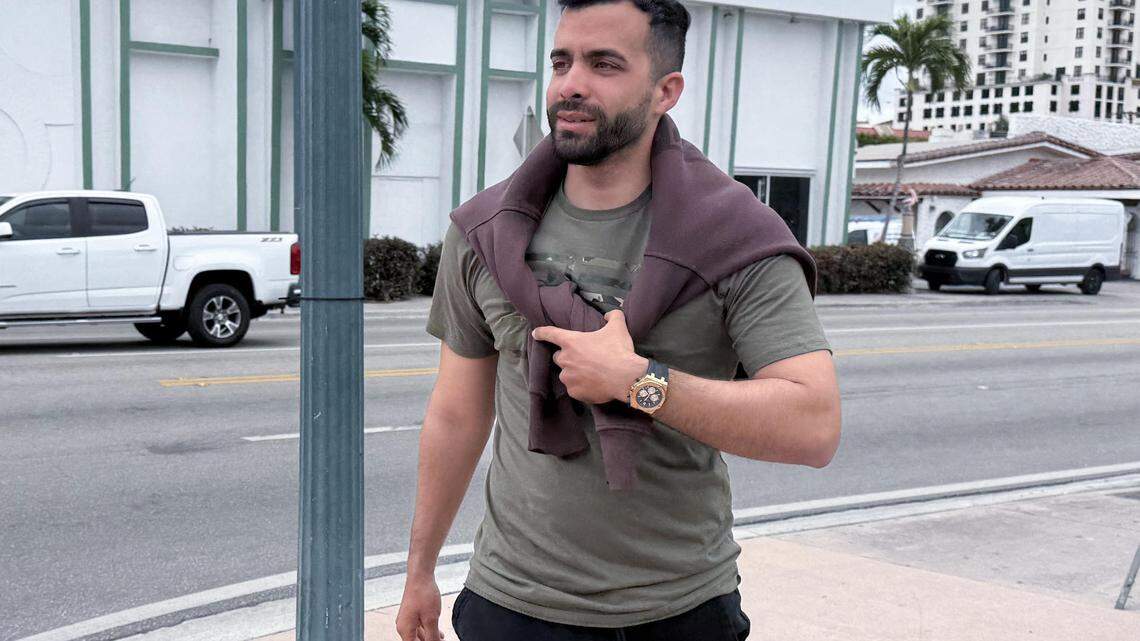
A Miami-based man, Roberto Azcorra Consuegra, denied being aboard a Florida-registered speedboat after a deadly shootout with Cuban forces that killed four people.
When Roberto Azcorra Consuegra’s phone rang last night, relatives from Cienfuegos, Cuba, called with alarming news: his name had appeared on a list published by the Cuban regime accusing individuals of involvement in an alleged “terrorist attack” on the island.
But that’s impossible, he said. He was at his home in South Florida.
Azcorra , 31, said in an interview with the Miami Herald that he left Cuba in 2017 and has never returned. He has since been granted political asylum in the United States.
“I left Cuba because of political persecution,” he said. “Since I was a child in school, I was against the regime. I left as soon as I was discharged from the mandatory military service.”
Azcorra said he still has his parents, grandparents and other relatives living in Cuba, and fears they could face retaliation.
“I’m scared,” he said. “I don’t know the regime’s intentions for naming me as detained if I’m here in Miami. I’m afraid it could be some kind of retaliation against my family over there. I don’t know if they made a mistake or released the wrong list.”
In a separate interview with journalist Mario J. Penton, Azcorra said he left Cuba by boat in 2016, first landing in the Bahamas, where he was detained for about a month before traveling to Bimini and eventually reaching the U.S.
Cuba’s Interior Ministry said four men were killed and several others injured in an exchange of gunfire after authorities intercepted a Florida-registered speedboat they described as part of a planned “terrorist infiltration.” Among those killed was Michel Ortega Casanova, according to Cuban officials.
But, Azcorra , denied any involvement.
According to Azcorra , he recognizes some of the people included on the list, though mostly by their aliases or from photos circulating on social media.
He said he has attended anti-regime protests in Miami, including demonstrations in Little Havana near Versailles Restaurant and along Calle Ocho, where many Cuban exiles gather.
He said that he had socialized with some of the named individuals but claimed they never shared any plans to go to Cuba or carry out any actions on the island.
“They never told me anything about a plan to go to Cuba or to ‘free’ it,” he said. Azcorra maintains he has had no involvement in any violent plot and remains uncertain why Cuban authorities would include his name.
The government said 10 armed people — Cuban nationals living in the United States — were aboard the vessel. Authorities reported that five officers on a Cuban coast guard boat approached the speedboat to request identification when men onboard opened fire, wounding the commander of the Cuban vessel. Cuban forces returned fire, resulting in four deaths.
Officials said they seized assault rifles, handguns, Molotov cocktails, bulletproof vests, telescopic sights and camouflage uniforms from the boat.
Cuban officials have not released additional evidence beyond their account of the confrontation and the weapons allegedly seized. The incident adds to longstanding tensions between Havana and members of the Cuban exile community in the United States.
This story was originally published February 26, 2026 at 4:29 PM.
Miami Herald
Milena Malaver covers crime and breaking news for the Miami Herald. She was born and raised in Miami-Dade and is a graduate of Florida International University. She joined the Herald shortly after graduating.