
Home » AIRLINE NEWS » Travellers Stranded at Orlando International Airport in Florida, US as 233 Flights Are Delayed and 18 Cancelled, Disrupting American Airlines, Delta, JetBlue, and More Across Miami, Atlanta, New York, and Providence
Published on
February 26, 2026
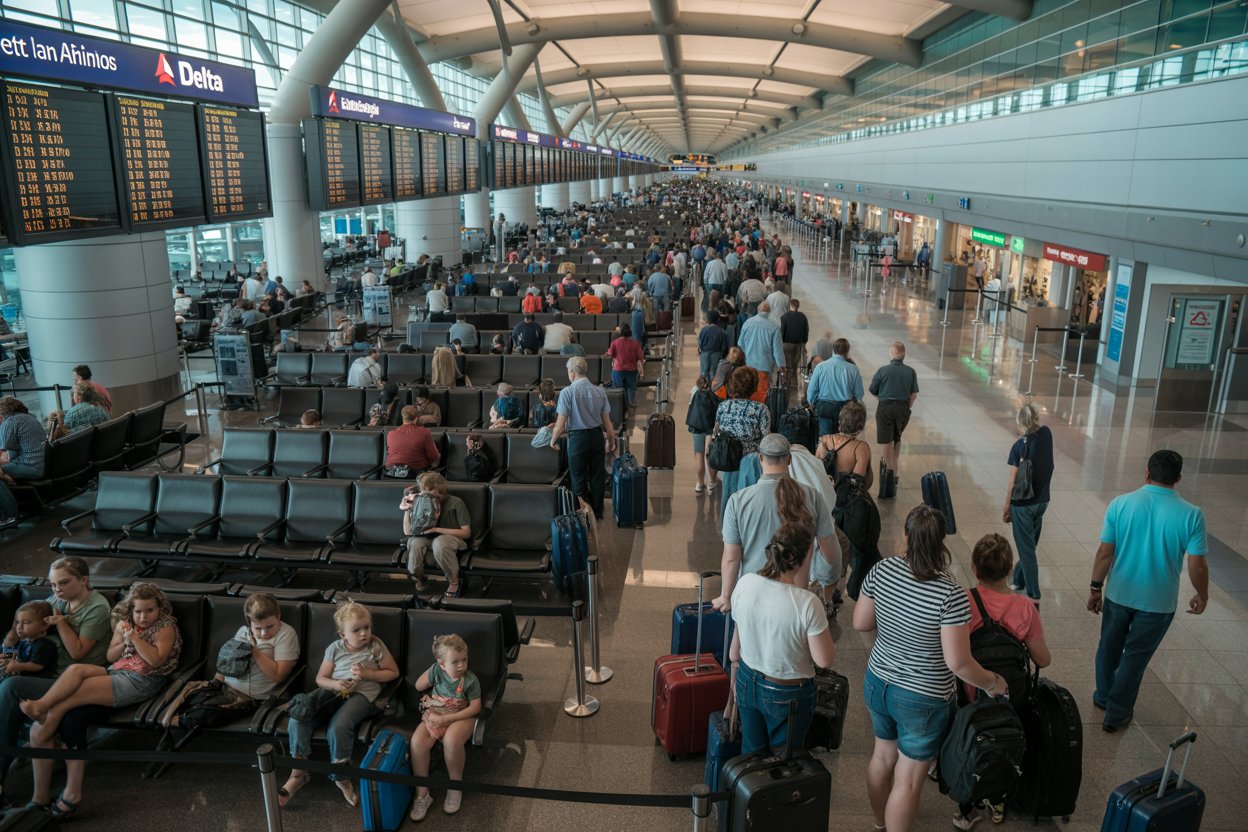
Image generated with Ai
What was supposed to be a smooth travel day for many turned into frustration and uncertainty as Orlando International Airport (MCO) experienced 233 flight delays and 18 cancellations, sparking travel upheaval for thousands of passengers bound for destinations across the United States and international hubs. Families on holiday, business travellers and holidaymakers alike found themselves stuck in terminals, rebooking flights and seeking answers from exhausted customer service lines. The human impact of this disruption was visible in weary eyes and tired children trying to nap on airport benches, while airline staff worked tirelessly to support weary flyers with alternative schedules and accommodations.
FLIGHT STATISTICS SHOW MAJOR OPERATIONAL DISRUPTION AT MCO
According to real‑time tracking and operational summaries from flight data services, Orlando International recorded over 233 delays and 18 cancellations during the most recent reporting period. These disruptions affected both departures and arrivals, touching carriers large and small across domestic and international networks. Orlando’s role as one of the busiest airports in the USA makes it particularly susceptible to cascading effects when flight schedules go awry. With over 57 million passengers served annually, MCO’s scale magnifies the impact of even moderate disruption.
CAUSES BEHIND THE DELAYS AND CANCELLATIONS AT ORLANDO
A combination of winter weather lingering in the northern United States, operational pressure and network ripples from other busy hubs contributed to the high number of delays and cancellations at Orlando. Weather systems moving through the East Coast and Midwest have already caused an uptick in cancellations across multiple airports, and smaller delays can quickly snowball into large backups at major gates and runways. Delays of this magnitude can also stem from air traffic flow controls implemented by the Federal Aviation Administration — particularly when airports face heavy inbound and outbound traffic, necessitating more spacing between aircraft for safety reasons.
PASSENGERS SHARE STORIES OF CONFUSION AND FRUSTRATION IN ORLANDO TERMINALS
Travellers caught in the turmoil shared stories of constantly shifting departure boards and repeated announcements of gate changes. Some families reported being stuck at Orlando for hours, missing connecting flights and rebooking late‑night alternatives. One couple recounted standing in long lines to speak with airline representatives, while others expressed fatigue and concern over missing important commitments at their destinations. The frustration was echoed in social posts and personal messages, as passengers tried to secure backup flights via airline apps and ticket counters.
Advertisement
Advertisement
AIRLINES AND AIRPORT AUTHORITIES RESPOND TO THE CHALLENGES
Major carriers operating at MCO — including American Airlines, Delta Air Lines, Southwest, JetBlue, Spirit Airlines, Frontier and others — have issued statements emphasising safety and support for affected travellers. Airlines have implemented waivers to allow free rebooking for those with cancelled flights and have boosted customer service personnel at the airport to help passengers adjust plans. In some cases, travel credits or hotel vouchers were offered to travellers whose cancellations left them stranded overnight.
Airport authorities confirmed that crews worked around the clock to clear runways, manage gates and coordinate with air traffic control to help ease further delays. Safety remains a top priority, with de‑icing procedures, pilot briefings and weather forecasts guiding decisions on whether flights proceed or are re‑scheduled.
Advertisement
Advertisement
IMPACT ON CONNECTING FLIGHTS THROUGH MAJOR U.S. HUBS
The disruptions at Orlando did not occur in isolation. With its extensive connections to U.S. travel hubs, issues at MCO can ripple across flights bound for Miami, Atlanta, New York, Chicago and Dallas. Passengers attempting to connect through those cities reported mixed messages, further delays and sometimes cancellations for onward flights. This network effect highlights how travel systems remain interlinked: disturbance in one major airport can quickly trigger schedule conflicts elsewhere.
FAA AND GOVERNMENT TRAVEL ADVISORIES AMID DISRUPTION
The Federal Aviation Administration (FAA) provides real‑time status tools for airports such as Orlando International but stresses that passengers should check directly with their airlines for flight‑specific updates. Airports experiencing heavy delays often receive added attention from regulators to balance safety and flow control measures.
Advertisement
Advertisement
Travel advisory channels also recommend that passengers travelling during high‑traffic periods remain vigilant about flight statuses, arrive early, and prepare for sudden schedule changes, especially in winter months when weather disruptions are more likely.
ECONOMIC AND TOURISM CONSEQUENCES FOR ORLANDO AND BEYOND
Orlando is not only a major travel gateway but also a significant tourism destination, drawing millions to theme parks, beaches and cultural sites each year. Major delays and cancellations can ripple economically as travellers adjust plans, postpone visits or incur extra costs for food, hotel stays and transportation. Local hospitality operators often adapt to last‑minute guests, while others worry about cancellations to reservations at hotels and attractions.
TIPS FOR TRAVELLERS IN HEAVILY DISRUPTED FLIGHT SCENARIOS
Travel experts recommend passengers use airline apps and airport tools like live flight trackers to stay informed about delays and cancellations in real time. Always check your flight before leaving for the airport, arrive early and have contingency plans — such as knowing nearby flights or alternate airports that can help you reach your destination if the primary route falls through. Keeping necessary documents, receipts and contact information helps if you need to claim rebooking or refunds later.
HUMANISING THE TRAVEL TURMOIL IN ORLANDO
For many stuck at Orlando International Airport, what began as anticipation for family holidays or work trips became a test of patience and resilience. Children dozed on chairs with blankets pulled tight, while adults hesitated between frustration and empathy for overwhelmed airline staff — many of whom worked tirelessly to help visitors navigate the chaos. A group of friends heading for a long‑delayed departure shared laughter mixed with exasperation as they waited for updates, while lone travellers made tentative phone calls to reschedule plans back home.
When the winds of disruption finally eased and flights resumed, weary travellers boarded with mixed relief and lingering irritation. Yet amid the queued lines and ticker‑tape announcements of delays and cancellations, nearly every traveller at MCO shared a sense of solidarity — an understanding that in modern aviation, unexpected disruptions can touch any journey, but patience and planning can help steer the path forward.
