
I am an eighth grade teacher at a Title I middle school in Fort Lauderdale. I have worked in Broward County Public Schools since 2017, beginning as a paraprofessional before becoming a certified teacher. I was a career changer. I did not enter education expecting to become wealthy. I entered expecting stability, purpose and the ability to build a life anchored in public service.
Like many teachers, I accepted that my salary would be lower than in other professions requiring similar levels of education. But there was an unspoken agreement that balanced this reality. Broward County Public Schools offered consistency, participation in the Florida Retirement System and health care coverage that ensured we could live and age with dignity. These structural supports made a long-term career in teaching seem possible.
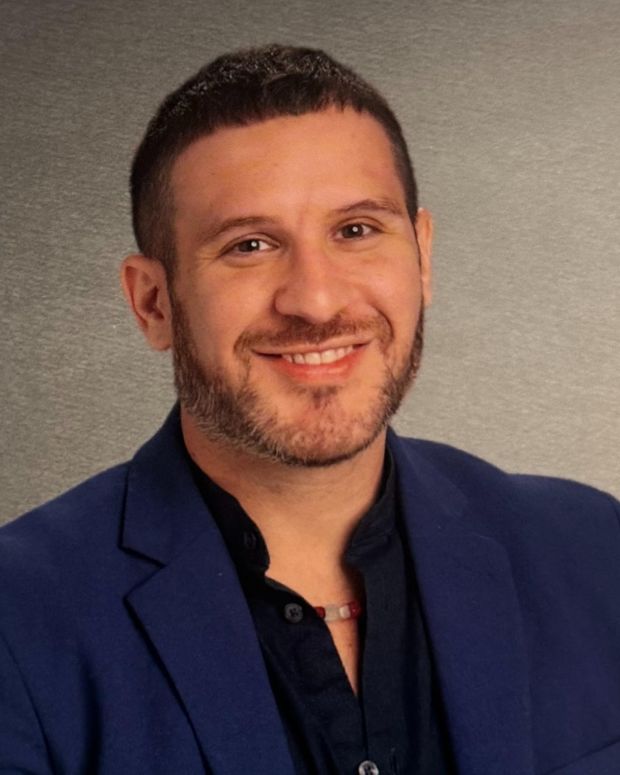 Brian Bender is an eighth grade teacher in Broward County Public Schools. (courtesy, Brian Bender)
That is why the district’s decision to declare an impasse in contract negotiations, and its proposal to begin charging teachers monthly premiums for health insurance while offering zero raises, feels like more than a financial adjustment. It feels like the breaking of that unspoken contract.
To the public, a $45 to $100 monthly insurance premium might not sound significant. But the issue is not the dollar amount alone. It is what the decision represents. Teachers have absorbed rising costs of living in South Florida for years while negotiating for modest raises that rarely keep pace with inflation. I live in a studio apartment that costs $1,300 a month. Groceries, insurance and gas rise steadily. Teachers work on a 10-month schedule, but in order to get paid in the summer months, money is withheld from our paychecks, resulting in smaller checks when costs are already sky high.
If voter-approved referendum funding that supplements teacher salaries is not renewed in 2027, I will personally lose approximately $5,000 per year while doing the same job. That reality would be difficult in any profession. In education, it threatens long-term stability.
The situation is made worse by the fact that, while referendum funds were intended to support classroom teachers, it was later revealed that highly paid district administrators who do not work with students were also receiving portions of that money. When the public learned this, it understandably damaged trust. Many teachers now worry voters may hesitate to renew the referendum, not because they do not value education, but because confidence in how the money is managed has been weakened. The consequences of that erosion in trust fall most directly on classroom teachers, even though we were never the source of the problem.
I have pulled students aside who missed weeks of school only to discover they were living in motels with parents struggling to keep their jobs. These are not stories of neglect. They are stories of families under financial strain. For students like these, school provides stability. Teachers are part of that stability.
Morale among teachers is fragile. There is constant uncertainty about compensation, benefits and long-term viability. Younger teachers increasingly question whether they can afford to build a life here. Some leave the district. Others leave the profession entirely.
When experienced teachers leave, students lose continuity and mentorship that cannot be easily replaced. Public education does not collapse suddenly. It erodes gradually as educators are pushed out by financial pressure and institutional uncertainty.
Teachers understand that school board members inherited financial challenges they did not create. But leadership requires protecting the people who sustain the system. If financial corrections are necessary, they should begin with structural accountability at the highest levels, not by diminishing the stability of classroom teachers.
I remain committed to my students and to the work of public education. But commitment alone cannot sustain a profession indefinitely.
This is not just about insurance premiums or raises. It is about whether teaching in Broward County remains a profession people can build their lives around or one they are eventually forced to leave.
Brian Bender is an eighth grade teacher in Broward County Public Schools and serves on the Fort Lauderdale Education Advisory Board. He writes in his personal capacity.