
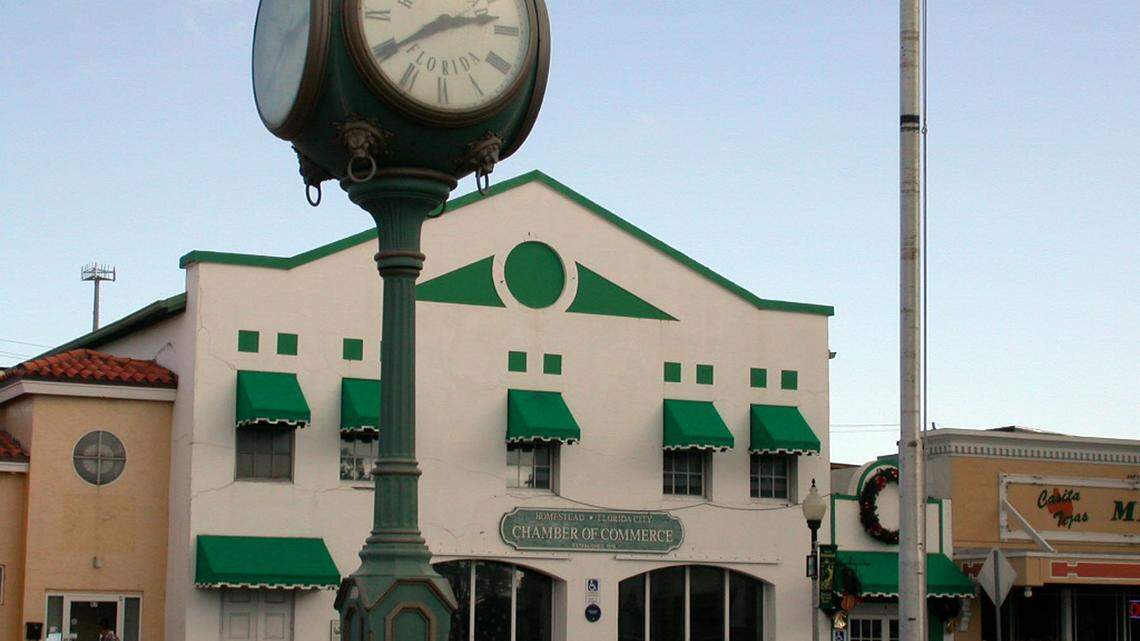
The hands of time will change soon.
We’ll spring ahead in South Florida in March for the start of daylight saving time. And we’ll “fall back” and return to standard time in November — that’s when we can reclaim our lost hour of sleep.
Here’s what to know about changing the clock:
When is daylight saving time? A street clock in Homestead. Miami Herald File
Time change: Daylight saving time starts at 2 a.m. Sunday, March 8, 2026.
Sleep: Springing ahead means you’ll lose an hour of sleep when the time changes. You can make it up on Nov. 1, when we turn the clocks back again.
Pro tip: Move your manually controlled clocks ahead an hour before going to sleep on Saturday night, March 7.
What does the time change do to morning and evening light? Get ready to spring ahead in March. Miami Herald File
Sunrise and sunset when we change the clocks:
▪ When we move the clocks forward at 2 a.m. Sunday, March 8, sunrise in Miami will be at 7:37 a.m. and sunset will be at 7:26 p.m.
Monthly sunrise and sunset times until November:
▪ April 8: 7:04 a.m. sunrise, 7:40 p.m. sunset
▪ May 8: 6:39 a.m. sunrise, 7:55 p.m. sunset
▪ June 8: 6:28 a.m. sunrise, 8:11 p.m. sunset
▪ July 8: 6:35 a.m. sunrise, 8:15 p.m. sunset
▪ Aug. 8: 6:50 a.m sunrise., 8:01 p.m. sunset
▪ Sept. 8: 7:03 a.m. sunrise, 7:32 p.m. sunset
▪ Oct. 8: 7:16 a.m. sunrise, 6:59 p.m. sunset
When does daylight saving time end?
▪ Nov. 1: 6:29 a.m. sunrise, 5:39 p.m. sunset.
Why do we tinker with the clock? The kinetic clock at the Fort Lauderdale Museum of Discovery & Science in 2006. Marsha Halper Miami Herald File
Saving energy: Daylight saving time is all about a desire to save energy by extending sunlight later in the day during spring and summer. A study conducted by the U.S. Department of Energy found that the four-week extension of daylight saving time in 2008 saved about 0.5% of the nation’s electricity per day, or 1.3 trillion watt-hours — which is enough to power 100,000 households for an entire year.
Safety: Studies have also shown that the extra hour of daylight has resulted in safer roads, lower crime rates and economic benefits.
Disruptions: Other concerns about daylight saving time have included disruptions to harvesting schedules for farmers, interference with religious observances based on solar and lunar time, and potential delays in reworking computer systems programmed to switch twice a year.