
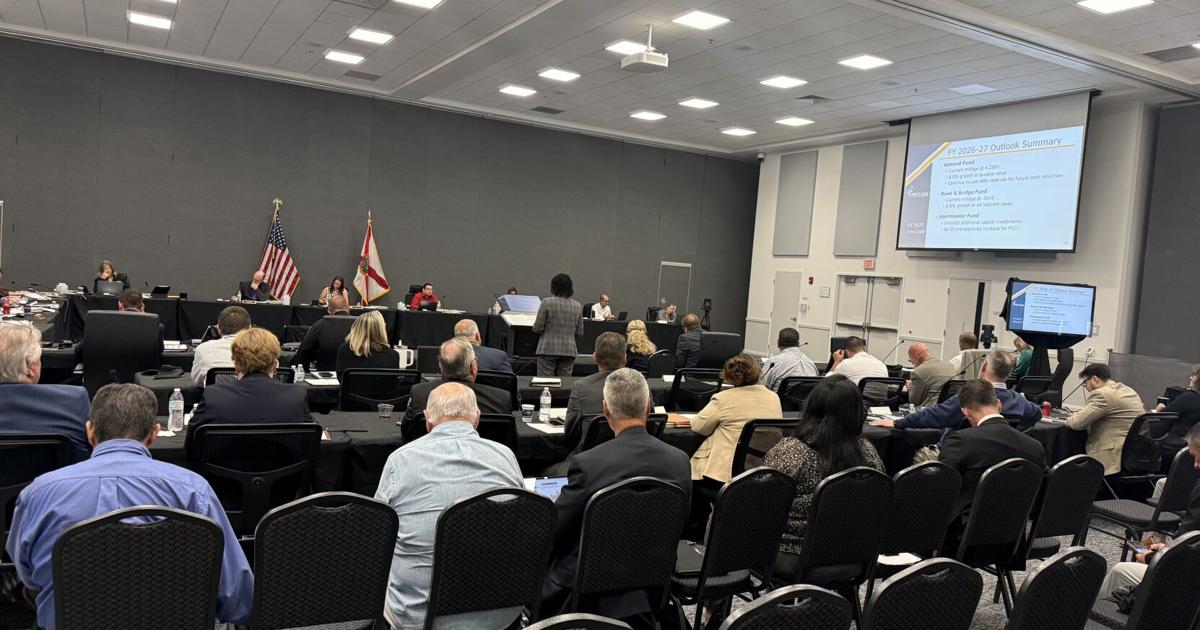
PORT ST. LUCIE — Port St. Lucie’s Winter Workshop offered an early look at the City’s financial outlook for the 2026 to 2027 fiscal year. The tone was measured and forward looking, with an emphasis on conservative planning as growth begins to moderate.
City staff opened by announcing that Port St. Lucie has once again received the Distinguished Budget Award from the Government Finance Officers Association.
This marks the 37th consecutive year the City has earned that recognition. In addition, the City received special honors for its performance measures, strategic goals, and budget process. Officials described the awards as a reflection of long-standing fiscal discipline and transparency.
The financial projections themselves tell a story of continued growth, though at a slower pace than in recent years.
For the upcoming fiscal year, the City is forecasting an eight percent increase in taxable property values, bringing total taxable value to an estimated $27.7 billion. That growth is expected to generate roughly $9.7 million in additional ad valorem revenue. Total property tax collections are projected to reach approximately $132 million.
The operating millage rate is expected to remain at 4.2991. Council members noted that the City has reduced its millage rate for 10 consecutive years and intends to maintain the current rate moving forward. While the rate remains steady, rising property values mean overall revenue will continue to increase.
Beyond property taxes, the City predicts modest growth in other revenue sources. Sales tax revenue is projected to increase by about two percent. Electric franchise fees and utility taxes are expected to grow by four percent. State revenue sharing is forecast to rise by two percent. General fund revenues overall are projected to increase by approximately 10.5 million dollars compared to the current fiscal year.
Economic indicators present a mixed but stable picture. National economic growth remains positive and inflation has eased to 2.7 percent. Florida’s unemployment rate remains slightly below the national average. Locally, however, building permits have declined compared to prior years, particularly in single family and multifamily construction. Commercial development has shown more resilience.
Housing data reflects a cooling market. Closed sales in the county are up slightly year over year, but median single family home prices are down about one percent. Inventory levels are nearing what economists describe as a balanced market. These trends suggest that rapid post pandemic growth is stabilizing.
City officials also acknowledged areas of uncertainty. Legislative proposals under consideration at the state level could impact property tax revenues in future years. Inflation continues to place pressure on operating costs and capital projects. In recent years, the City has utilized reserves to help fund major capital improvements and land acquisitions for parks and public spaces.
Port St. Lucie maintains a reserve policy of 20 percent, and staff emphasized that financial stability remains a priority. Long range planning includes continued investment in public safety, infrastructure expansion, and implementation of the Parks and Recreation Master Plan. With the City’s population growing by 27 percent over the past five years, service demands continue to evolve.
The Winter Workshop was not a final vote on the budget. Rather, it was an opportunity for Council to confirm priorities and set a tentative millage direction before the formal budget process begins.
The overall message was steady and pragmatic. Growth is continuing, but at a more moderate pace. Revenues are increasing, though projections remain cautious. The months ahead will bring refinement of these numbers, along with additional public discussion.
For residents, the workshop signals the beginning of another important budget season, one that will shape how Port St. Lucie balances growth, services, and long-term fiscal responsibility.