
The demand for help with buying food continues to rise in Central Florida, with more people showing up at food pantries amid rising grocery prices.
Second Harvest Food Bank of Central Florida said its school-based pantries have handed out 30% more meals in the last six months than they did a year earlier. A food pantry in Lake County recently put out a “critical shortage” notice, urging residents to donate canned goods and other items because so many more people were showing up needing food.
The organizations attribute the spike in demand to rising costs, saying food is usually the first budget item families try to squeeze when “non-negotiables” –– like rent, mortgage or insurance bills –– also cost more.
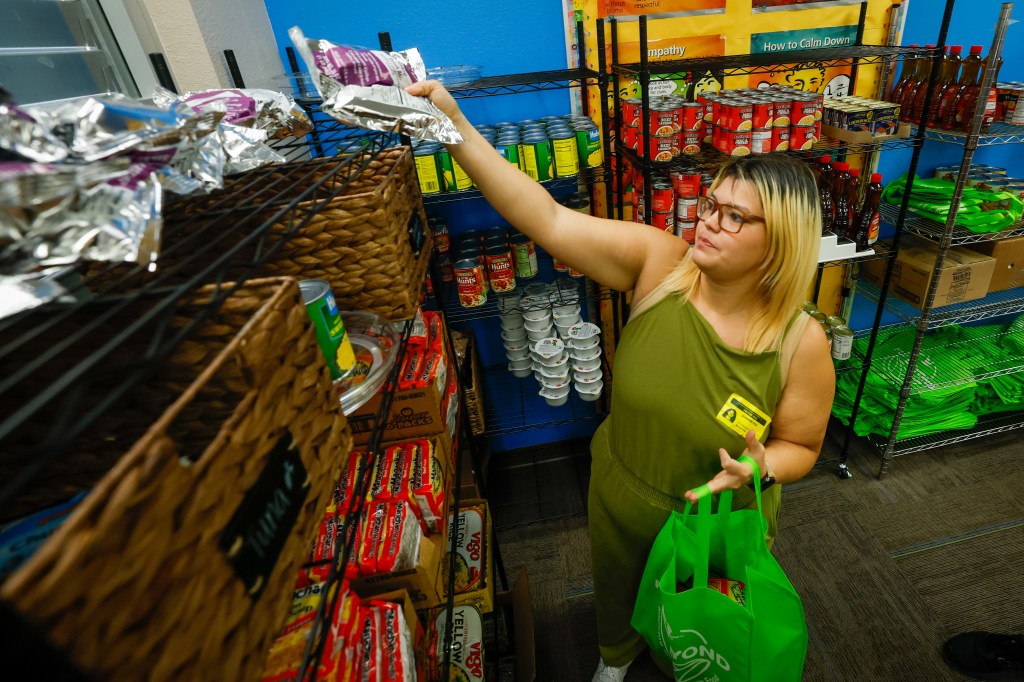
Roxanne Williams, an Orlando mother of five, relies on food stamps to help feed her family, but higher grocery prices have made shopping more of a challenge.
“A pack of meat that was $5 is now about $8,” Williams said. “It’s very stressful because now you’re digging into your light money to feed your kids. You’re digging into your gas money. You’re going to pantries and standing in long lines.”
Williams, whose children are ages two to 12, said she is constantly calculating every dollar and every cent to see what’s affordable. She was shopping recently at United Against Poverty’s grocery center, where qualifying members can get food at a discount. She also goes to food banks.
“You have to cut everything. You have to cut going out. You have to cut trying to have fun with your kids,” she said.
Food prices rose by more than 2% in 2024 and nearly 3% in 2025, according to the U.S. Department of Agriculture. They rose even more sharply from 2020 to 2023 and are expected to be up another 3% this year.
Second Harvest tries to alleviate some parents’ grocery-price stress by offering food pantries at schools, and more and more parents are accepting the free offerings
The food bank has distributed over 478,000 meals at 90 school campuses from August until January –– a 30% increase from the prior year. It recently opened three new pantries –– at Chestnut Elementary School, Sunset Elementary School and Tohopekaliga High School –– in Osceola County with the help of a $75,000 donation from the Poinsette Foundation.
There are 58 schools in Central Florida on a waitlist to open similar pantries.
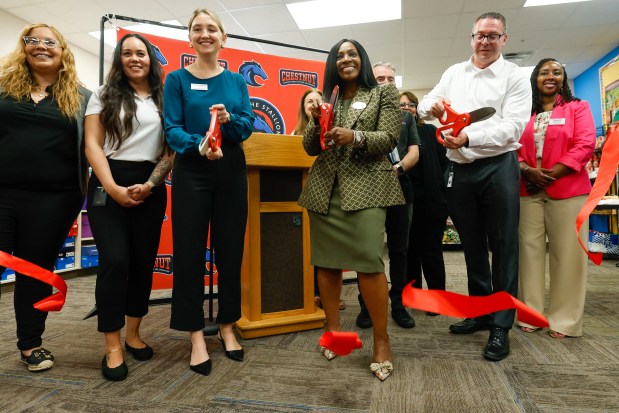 From center left to right, Briana Rebello, schools partnership manager with Second Harvest Food Bank of Central Florida; Mia Poinsette, director of the Poinsette Foundation; and Gary Bressler, Chestnut Elementary School principal, cut the ribbon at the school’s food pantry on Friday, February 27, 2026. The pantry is the result of Second Harvest Food Bank of Central Florida’s $75,000 donation, which will go toward its school program aimed at reducing food insecurity. (Rich Pope/Orlando Sentinel)
“It’s one less thing that parents have to worry about and one less stop that they have to make if they were maybe going to go to one of our other feeding partners,” said Briana Rebello, the school partnerships manager at Second Harvest.
It certainly feels that way for Diamond Vega, whose nine-year-old son attends Chestnut Elementary. Vega and her son, Julian, come in to shop for the basics like rice and beans, though the fourth grader will also try to sneak in some of the pantry’s sweeter offerings like animal crackers.
Though the items in the pantries may vary by school, Chestnut offers pasta, rice, beans, pancake mix, carrots, and canned ravioli. It also includes some snacks like protein bars, yogurt, cereal, and fruit snacks.
It’s made all the difference for Vega, who said health issues keep her from working and affording the food her family needs.
“I can have a dinner every day at my house with the food pantry, and it’s something that helped me a lot,” she said.
Second Harvest serves as a regional supplier for food banks across Central Florida.
Some smaller pantries say they are now struggling to keep food on their shelves. Higher grocery prices push more people to seek free food – but also make it harder for others to afford extra items to donate.
At Lake Cares, a food pantry in Mount Dora, about 500 more families a month are now showing up for help, said Kelsey Gonzalez, the group’s executive director.
“We’re getting donations, and it’s going right off the shelves and back out,” she said.
Coming off the high of holiday donations, Gonzalez said the pantry’s shelves are looking “bare.”
The Mount Dora Area Chamber of Commerce put out a plea on Monday urging residents to donate food, such as rice, cereals, pasta, canned proteins and non-perishable items.
The food pantry gives out around 100,000 pounds of food every month. Gonzalez said many of the families seeking assistance are working but not able to afford all the basics.
“They’re really struggling with having to make the tough decision of ‘Do I pay my rent? Do I keep the roof over my head for my family? Or do I put meals on the table?’” she said.
Michael Cuglietta of the Sentinel staff contributed to this story.