
Orlando police are set to enhance their crime-fighting capabilities with the introduction of drones, following the city council’s approval of nearly $7 million for their purchase from Axon. The “drone as a first responder” program will make Orlando the second agency in Central Florida to adopt this technology.Police Chief Eric Smith emphasized that the drones are intended to assist first responders, not replace them.”What it does is it gives me eyes on the scene. If there is a shooting going on, the drone will be overhead. It can see what is going on. It can vector officers in. It shows them, ‘Hey, they are shooting from this angle, you need to come onto this road,'” Smith said.The drones are expected to significantly reduce response times for priority one calls, which include violent crimes like shootings and armed robberies. While it currently takes officers an average of six minutes to arrive on the scene, the drones will allow them to see what’s happening in half that time.”There’s an officer who’s looking through the drone cameras, and he is basically assisting the officers on the ground to get there in the most safest way possible. Helping them to get there to move civilians out of the way, block off roads, things of that nature,” Smith said.The plan is to deploy 11 drones across nine locations in the city, with roughly 20 to 30 police officers who are Federal Aviation Administration-licensed pilots controlling them. Addressing concerns about privacy, Smith assured that the drones will not be invasive or use facial recognition.”These are normal drones you see fly every day. They really shouldn’t catch your eye. They are only going to be used for in-progress calls. Things that are going on. They are not just going to be randomly flying around looking into people’s backyards. There is none of that stuff, no surveillance kind of things,” he said.Smith said the first drones should arrive in April, with the full fleet up and running by the end of May, marking a new era of policing in the 21st century.
ORANGE COUNTY, Fla. —
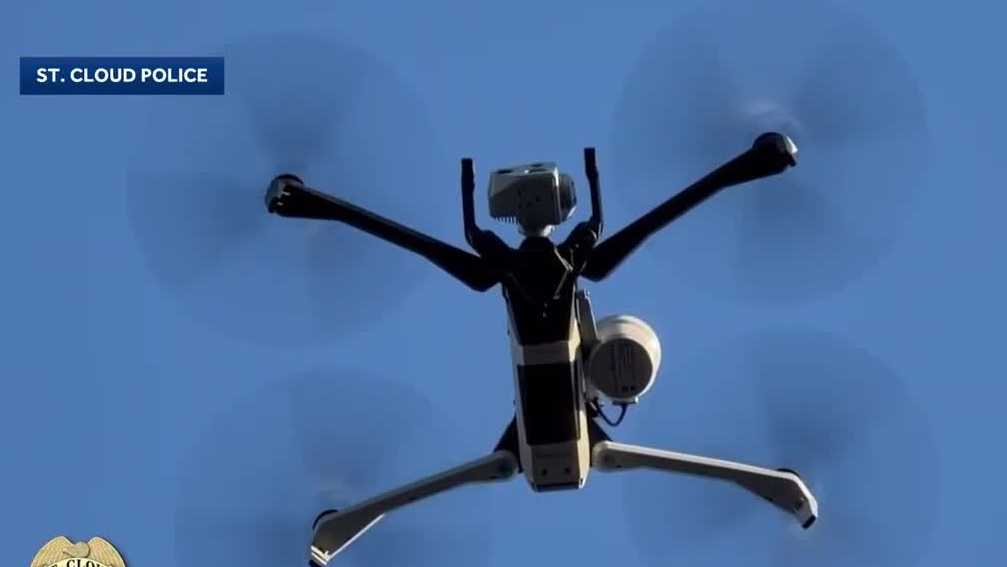
Orlando police are set to enhance their crime-fighting capabilities with the introduction of drones, following the city council’s approval of nearly $7 million for their purchase from Axon. The “drone as a first responder” program will make Orlando the second agency in Central Florida to adopt this technology.
Police Chief Eric Smith emphasized that the drones are intended to assist first responders, not replace them.
“What it does is it gives me eyes on the scene. If there is a shooting going on, the drone will be overhead. It can see what is going on. It can vector officers in. It shows them, ‘Hey, they are shooting from this angle, you need to come onto this road,'” Smith said.
The drones are expected to significantly reduce response times for priority one calls, which include violent crimes like shootings and armed robberies. While it currently takes officers an average of six minutes to arrive on the scene, the drones will allow them to see what’s happening in half that time.
“There’s an officer who’s looking through the drone cameras, and he is basically assisting the officers on the ground to get there in the most safest way possible. Helping them to get there to move civilians out of the way, block off roads, things of that nature,” Smith said.
The plan is to deploy 11 drones across nine locations in the city, with roughly 20 to 30 police officers who are Federal Aviation Administration-licensed pilots controlling them. Addressing concerns about privacy, Smith assured that the drones will not be invasive or use facial recognition.
“These are normal drones you see fly every day. They really shouldn’t catch your eye. They are only going to be used for in-progress calls. Things that are going on. They are not just going to be randomly flying around looking into people’s backyards. There is none of that stuff, no surveillance kind of things,” he said.
Smith said the first drones should arrive in April, with the full fleet up and running by the end of May, marking a new era of policing in the 21st century.