
A plan by Orange County to widen a two-lane road near the environmentally-sensitive Econlockhatchee River has riled officials in neighboring Seminole County who said they were kept in the dark about the project, though the thoroughfare sits partially in their county.
“For them to just assume that they are going to be building a road in Seminole County without us even weighing in on it, is kind of preposterous, in my opinion,” Seminole Commissioner Bob Dallari said at Tuesday’s commission meeting. “I don’t think the road needs to be widened. They want us to help pay for it. But it’s not in our plans, and they need to go through the proper channels to do this.”
Seminole’s four other commissioners agreed and voted to send a letter to Orange County stating their opposition to the project.
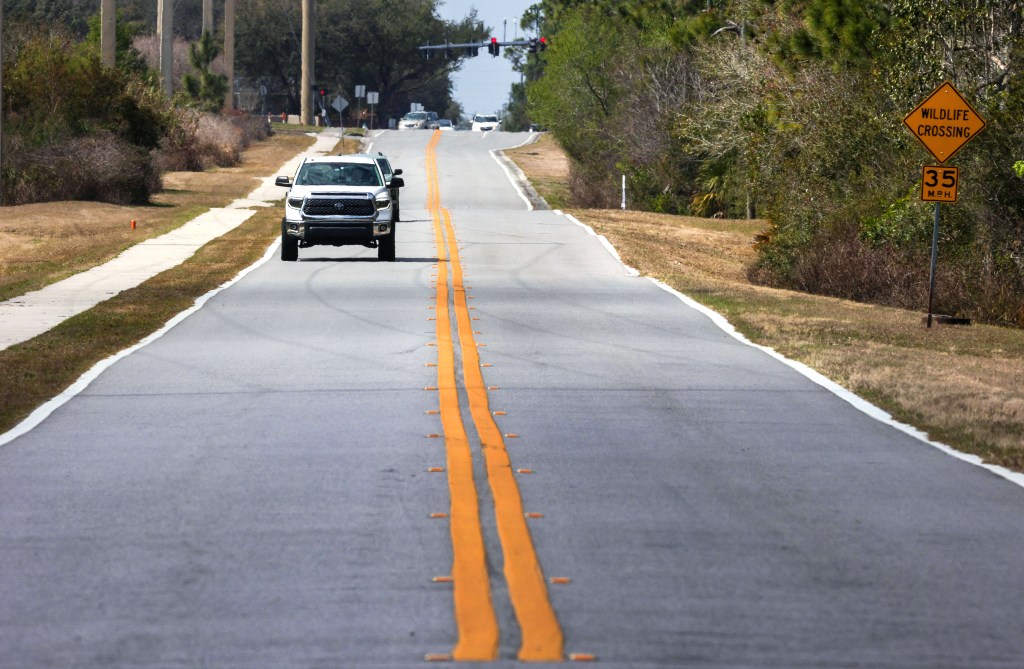
McCulloch Road stretches from Alafaya Trail to just past North Tanner Road, northeast of the sprawling University of Central Florida campus. The east-west thoroughfare serves as the dividing line between both counties, with Seminole maintaining the northern half and Orange the southern portion.
Orange wants to widen a one-mile stretch of McCulloch between Lockwood Boulevard and North Tanner Road to accommodate the growing number of vehicles accessing new homes and sporting events at UCF.
Orange officials said they are surprised by Seminole’s opposition given that representatives discussed the project in early 2024 and then later at a regional transportation meeting. But they said they will try to meet with their counterparts to figure out a solution.
McCulloch currently dead ends just west of the Econlockhatchee River, also known as the Econ and designated by the state as Outstanding Florida Water for its ecological importance to the region.
Environmentalists, conservationists and residents in both counties have long been concerned that extending McCulloch Road eastward —with a needed bridge over the Econ — would open the doors to sprawl. The river, which flows north through Seminole to the St. Johns River, has long represented a symbolic barrier to high-density development in the rural east side of both counties.
Orange’s current plans to widen McCulloch, however, do not include extending the roadway to the Econ River and beyond.
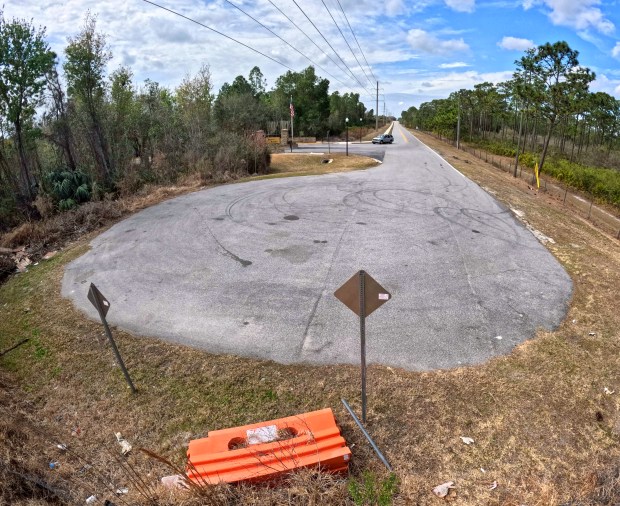 McCulloch Road, east of North Tanner Road, dead-ends at the Econ River Wilderness Area, in Oviedo Friday, Feb. 27, 2026. The road serves as the county line between Seminole and Orange counties. (Joe Burbank/Orlando Sentinel)
But in 2018, when developer and former state Rep. Chris Dorworth presented a plan to build the River Cross development within Seminole’s protected rural boundary, it stated that extending McCulloch by building a multi-lane bridge over the Econ would be necessary to accommodate the traffic.
River Cross, a proposed community of hundreds of new homes and apartments on ranchland just west of County Road 419, was unanimously rejected by Seminole commissioners that same year.
At an estimated cost of $33 million, the new McCulloch Road project would include widening it to a four-lane divided highway, as well as adding better lighting, wider sidewalks and upgraded storm-water drainage, according to county records.
About 28,000 vehicles use that stretch of McCulloch Road every day, according to the Florida Department of Transportation.
The project is currently in the study phase, which should be completed by May, and then voted on by Orange commissioners. The county would then move forward with design plans, acquiring land and construction. Each step would have to be approved by Orange commissioners.
But Dallari said his Seminole staff was unaware of the project. He attended a little-publicized public meeting last week hosted by Orange public works officials at a church in Seminole regarding McCulloch Road.
“Orange County was insisting they have full authority to move forward with this project. And I informed them that it’s not in our short-term plan and it’s not in our long term plan,” Dallari said in describing the meeting. “And we corrected them several times on misinformation that was being told to the public.”
Other Seminole officials who attended the public meeting at University Carillon United Methodist Church said they were also taken aback by Orange officials’ attitude toward the project.
Seminole County engineer Tawny Olori, who also attended, said she found it “concerning” that Orange was moving forward without input from Seminole.
But Orange officials shot back, saying that representatives from both counties met in March 2024 to discuss the project.
“Seminole raised no objections to the project at that time,” according to an email from Orange County public works staff sent to the Sentinel.
The email added that Orange sent notifications to all Seminole commissioners and county staff regarding last Monday’s community meeting. The project also was approved as part of MetroPlan Orlando’s transportation improvement program this month. And Dallari sits on the board of that transportation planning organization.
“Orange County will continue discussions with Seminole County to better understand the basis of their opposition to the McCulloch Road project and to work toward resolving the differences in order to improve safety,” the email said.
But Orange Commissioner Kelly Martinez Semrad, whose district includes McCulloch Road, said the road doesn’t need to be widened and will likely not support moving forward with the project.
She has heard from east Orange residents who fear widening the road is the first step toward eventually building an extension and bridge over the Econ and into rural Orange and Seminole counties.
“The community is not in support, and our neighbors are not in support, and our resources are limited,” Semrad said.
Semrad added the public money could be used for more urgent road improvement projects in other areas of the county.
“This is about taxpayer money,” she said. “And it’s a really hard justification to use it for this.”