
Last October, WFTV reported that the Downtown Orlando Action Plan would revert back to a two-way traffic system and included a quote from the executive director of the Downtown Development Board, David Barilla, stating: “Historic downtowns are really kind of returning themselves to how they operated in the past, which was two-way traffic and the economic benefits that that brings.” But what brought about the change to the one-way system that’s been downtown since the 1950s? If you guessed traffic and parking issues, you’d be correct.
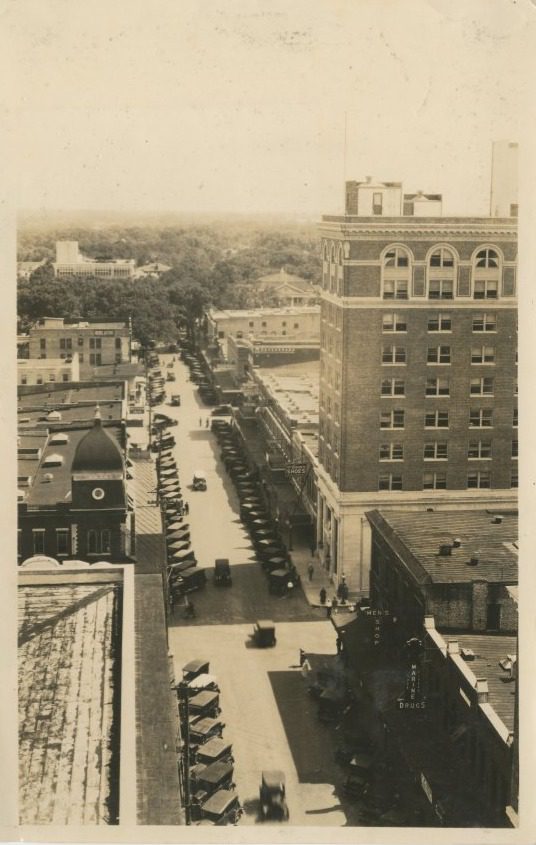
Orange Avenue in 1925, when it was a two-way street with full on-street parking. (COURTESY OF ORANGE COUNTY REGIONAL HISTORY CENTER)
Between 1920 and 1930, Orlando’s population tripled. It was also during this decade that automobiles first became more affordable and accessible. With more people in the city and more cars on the road, Orlando’s bustling downtown business district faced increasing traffic and parking concerns. Before parking garages littered the downtown landscape, on-street parking was the only option and would become difficult to come by as more people filtered into the downtown area. This caused more cars to drive around searching for an open spot, thus worsening the traffic.
In 1923, city officials established a one-hour parking ordinance to alleviate the parking problem but ultimately found it insufficient, with many drivers ignoring the ordinance, not paying parking tickets and not showing up to court dates for unpaid citations.
In early 1939, the Orlando city council implemented parking meters at 150 off-street parking spots, charging a nickel an hour to park. This was met with backlash as merchants feared the meters would deter business from their shops and petitioned against their installation, and some angry locals jammed candy such as jellybeans into the meters’ coin slots in protest.
By the end of 1939, Orlandoans voted the meters out of downtown, leaving the city council to figure out new ways to alleviate traffic.
In 1941, after the city council conducted a five-month study, it was determined that making certain thoroughfares one-way would relieve traffic by nearly 50%. However, this wouldn’t be implemented until the 1950s due to the council’s interest in hearing opinions on the matter from downtown merchants and residents.
Initially, Orange Avenue and Main Street (now Magnolia Avenue) were made one-way streets as an experiment in 1950 but later made permanent one-ways in 1956. It was also around this time that the city began buying plots of land to establish metered parking lots to further help curb the parking and traffic issues.
Of course, Orlando’s population would continue to grow over the years, with an influx of both locals and tourists pouring into the city, which would only worsen traffic despite the efforts of the city’s traffic department. Today, downtown Orlando does not see the same automobile traffic it did in its heyday. This is partially because of suburban sprawl and new shopping centers opening closer to residential areas, making it more efficient to shop closer to home.
But with the city’s hopes of revitalizing downtown business and bringing more people to the area, reminiscent of the 1920s – 1950s, will returning to the old traffic pattern revitalize the same historic traffic issues?
__
Rachel Williams is the historian at the Orange County Regional History Center.