
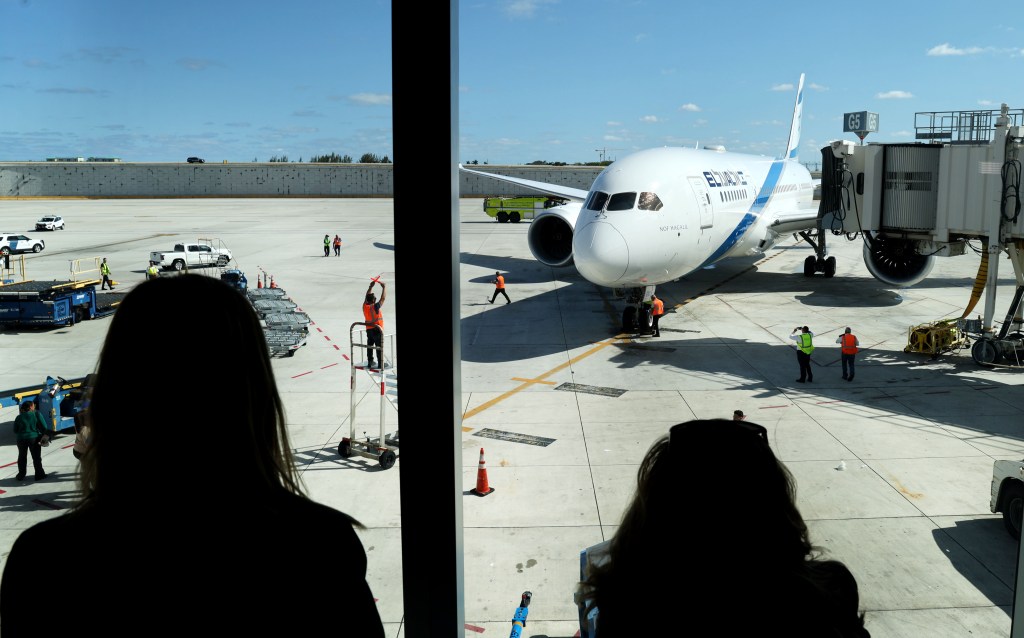
International air travelers flying from South Florida to the Middle East found themselves making alternate arrangements Monday as carriers including EL AL Israel, Emirates Airlines and Qatar Airways canceled flights after the U.S. and Israel commenced military attacks on Iran.
There are more cancellations to come, airport officials and the airlines said. And now that President Trump has declared the war with Iran could last for another several weeks, a resumption of full service to some of the world’s core commercial aviation hubs — Dubai, Doha and Abu Dhabi — could take longer than travelers and industry leaders had hoped.
“Dubai has flights that link all six populated continents,” Henry Harteveldt, president of Atmosphere Research Corp. in San Francisco, told the Sun Sentinel. “There are ripple effects of reduced air transportation all around the world.”
Dubai International Airport, he noted, handled more than 92.5 million passengers last year, Doha 53 million and Abu Dhabi more than 33 million. By contrast, in 2025, Miami International handled a similar amount of traffic as Doha, 55.3 million passengers, and Fort Lauderdale-Hollywood International had 32.2 million.
“All three Middle Eastern hubs had been growing with the expectation that 2026 would be another year of growth,” Harteveldt said.
But now, warfare has interrupted the status quo, and from South Florida to other U.S. cities whose airports connect travelers to Israel and the Arab states, airlines and their customers have found air travel to be a day-to-day proposition. Israel’s airports are closed to scheduled commercial traffic, and many of the region’s national carriers and U.S. airlines have suspended service to the Middle East.
“EL AL has notified us that their next flights tomorrow, Wednesday, and Thursday are canceled,” Greg Chin, spokesman for Miami International, said in an email Monday. “Qatar Airways has canceled their flight today.”
Shortly after that message, Chin reported that Emirates had canceled its Monday afternoon flight from Miami to Dubai International, which has been closed since Saturday. The airline operates wide-bodied Boeing 777 service to and from Miami, four times a week. UAE airports reportedly allowed limited operations to help move stranded passengers.
Qatar Airways, which started Miami service in late 2024, flies to Doha.
Chin also said all three carriers canceled their flights to and from the Mideast on Saturday, the day hostilities broke out.
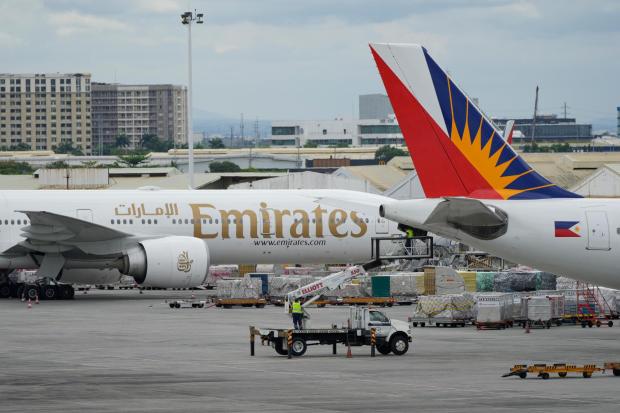 Emirates Airlines, which offers service between Miami and Doha, was among the Middle Eastern carriers canceling flights this week out of South Florida amid the renewal of hostilities among the U.S., Israel and Iran.
EL AL cancellations through Thursday
EL AL, which now operates only a Monday flight every week to Tel Aviv from Fort Lauderdale-Hollywood International, canceled the flight, airport spokesperson Arlene Satchell said.
This was in the wake of a company announcement Monday that the airline had canceled all flights between Sunday and this coming Thursday as Tel Aviv came under attack from Iranian drones and missiles.
“Following the declaration of a special situation on the home front and the closure of Israel’s airspace for departures and arrivals, as directed by the security and aviation authorities, all EL AL and Sundor flights to and from Israel that were scheduled to depart through Thursday, March 5, at 2:00 AM (between Wednesday and Thursday) are canceled,” the company said in a website announcement.
“We are preparing for an operation to bring Israelis back home as soon as Ben-Gurion Airport reopens for activity.” the airline added.
All around the Mideast, a weekend-long outburst of drone and missile strikes reportedly kept thousands of tourists and business travelers stranded in hotels and airport terminals in multiple Arab countries, as well as at airports on other continents where Mideast-bound commercial planes remained stuck with nowhere to go.
Airports in Dubai, Abu Dhabi and Doha all remained closed to commercial traffic after taking direct hits from airborne attacks by Iran.
U.S. carriers cancel flights
Major American air carriers with service into the region have canceled flights from various U.S. cities.
Atlanta-based Delta Air Lines canceled flights from New York’s John F. Kennedy International Airport to Tel Aviv through March 8, and from Tel Aviv to JFK through March 9.
American Airlines of Dallas suspended all flights between Philadelphia and Doha, and delayed the resumption of service between JFK and Tel Aviv. The flights had been scheduled to start March 28.
United Airlines, which is based in Chicago, canceled service to Dubai and Tel Aviv through March 4 and March 6.
All of the airlines posted various fee waivers and flight change options on their websites.
“The U.S. airlines tend to restart their flights after other airlines from other parts of the world,” Harteveldt said. “EL AL tends to be the last to shut down and the first to resume into Israel. Right now it is a very uncertain environment.”
Information from The Associated Press is included in this report.