
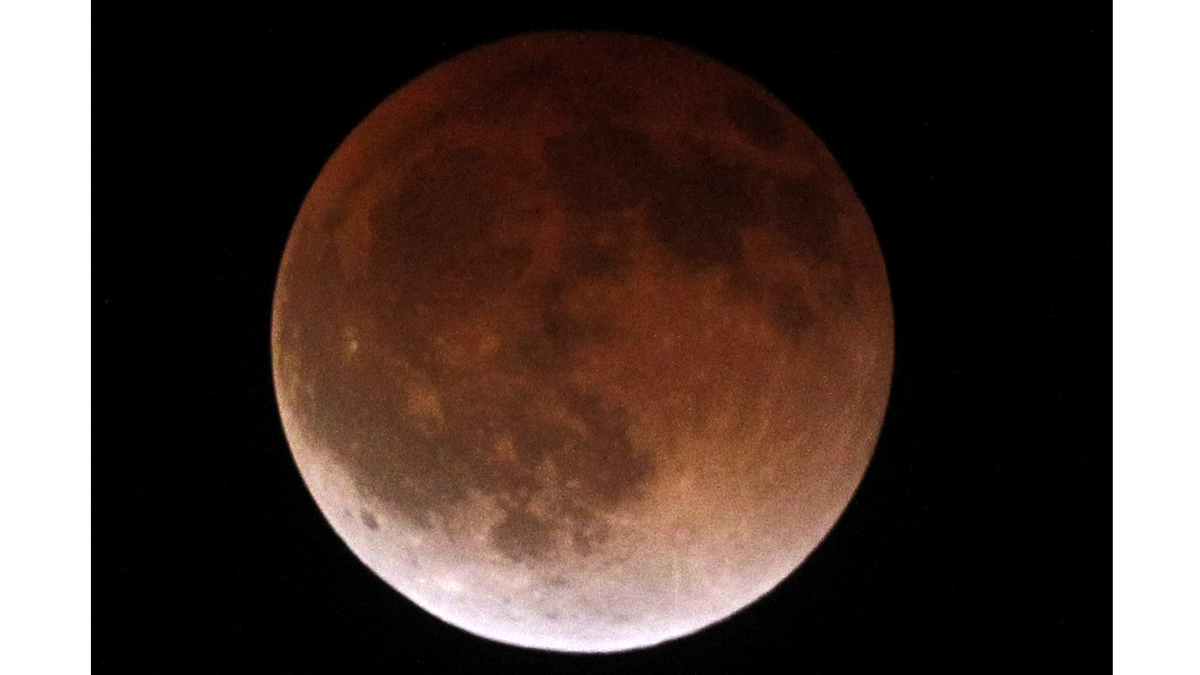
In the early hours on Tuesday, South Florida will get one of the year’s most striking astronomical events: a total lunar eclipse.
During this phenomenon, Earth will line up exactly between the Sun and the full Moon, casting its shadow over our natural satellite and giving it the “apparent” reddish hue that inspires the name “Blood Moon”.
The eclipse will be visible across much of North America, as well as Australia and East Asia, and South Florida will be among the areas with good viewing—weather permitting.
Eclipse times in South Florida (Eastern Time, EST)
Partial eclipse begins: around 4:50 a.m.
Totality begins: approximately at 6:04 a.m.
Peak of the eclipse: near 6:33 a.m.
Totality ends: around 7:03 a.m. (not visible)
Partial eclipse ends: near 8:17 a.m. (not visible)
The most spectacular phase, totality, will last nearly an hour, during which the Moon will appear fully red or coppery in the sky.
Why does the Moon look red?
During totality, direct sunlight doesn’t reach the Moon.
Still, some sunlight passes through Earth’s atmosphere, where blue tones are scattered, and reds, yellows, and oranges dominate—those are the colors that ultimately illuminate the lunar surface. It’s as if every sunrise and sunset on Earth were being projected onto the Moon at the same time.
This story was translated from Spanish with the help of a generative artificial intelligence tool. An NBC 6 editor reviewed the translation.