
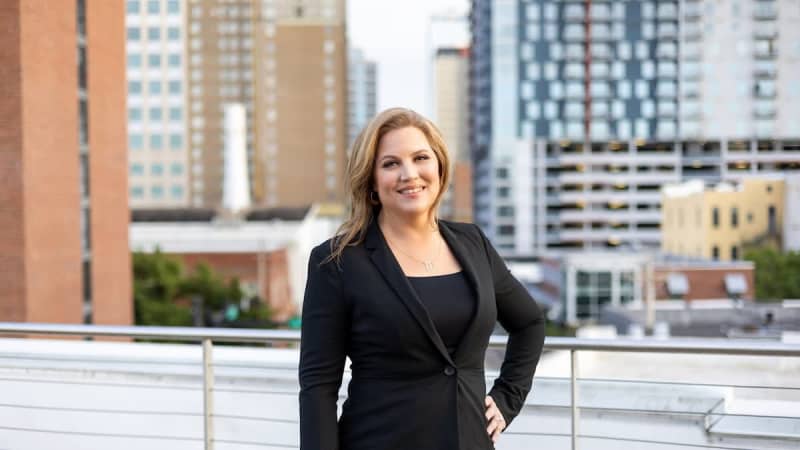
A ninth candidate has joined the crowded field for Tampa’s 2027 mayoral election.
Taryn Sabia, an urban designer, community advocate and the assistant dean for research at the University of South Florida’s College of Design, Art & Performance, announced her campaign on Monday.
“Sitting on dozens and boards and committees and civic associations, this was the best next step to really try to make the difference that we thought we could make,” she said in a phone call to the Tampa Bay Times.
Sabia, who grew up in Pasco County and moved to Tampa in 2006, said her priorities include reducing the cost of living, expanding transit options, mitigating climate risks and supporting local businesses through the permitting process.
“It’s important that we focus on the grassroots level and affordability for people that are here,” she said, “while at the same time being able to support development that works for us.”
Sabia has no background in elected office but said she has worked on policy projects with the city of Tampa, Hillsborough County and other local planning and transportation agencies.
A year out from the March 2 election, she joins a field that is still taking shape. Several candidates expected to steer the race have yet to announce their campaigns.
Former Tampa Mayor Bob Buckhorn, who led the city from 2011 to 2019, is likely to join the race soon.
A political committee supporting Buckhorn has raised more than $1.43 million as of the last quarter of 2025, according to campaign finance reports. Much of that money comes from construction, development and investment companies.
Tampa City Council member Lynn Hurtak announced her campaign last week and said city leaders have been “worried about development interests” rather than “the average person.” She listed affordability and transit among her priorities.
Tampa City Council member Bill Carlson, who represents South Tampa, has also said he plans to announce his campaign soon.
Sabia said the city needs “a new vision” rather than “the same politicians with the same playbook.”
“The same challenges we talked about 20 years ago are still here,” she said. “Tampa can’t afford another decade of the same conversations without solutions.”