
An emerging Florida public health emergency with potential life-or-death implications needs immediate action by the Legislature with two weeks left in the regular 60-day session.
Under Gov. Ron DeSantis, the Department of Health is severely restricting access to medications for thousands of people with HIV or AIDS who are uninsured or underinsured and receive coverage through ADAP, the AIDS Drug Assistance Program.
The Florida Department of Health has blamed rising insurance premiums as the cause of a $120 million shortfall in the federally funded program — a claim disputed by AIDS advocates — the state will limit eligibility to 130% of the federal poverty level as of Monday 1, a steep reduction from the previous level of 400%.
In real-life terms, eligibility would fall from a patient’s annual income of $63,840 to a drastically lower $20,748, hurting an estimated 16,000 Floridians. Without insurance, medications can cost more than $4,000 a month. Experts warn that new restrictions will increase homelessness and hospital costs and increase the spread of HIV in Florida.
Once again, Florida’s LGBTQ population justifiably feels targeted by the DeSantis administration.
The state also has said it would remove Biktarvy, the most widely prescribed HIV medication, from its coverage, while restricting the availability of a second drug, Descovy, to patients with renal insufficiency.
The medical news site Positively Aware has comprehensive details of this crisis and how the public can voice its concerns.
Panic and fear
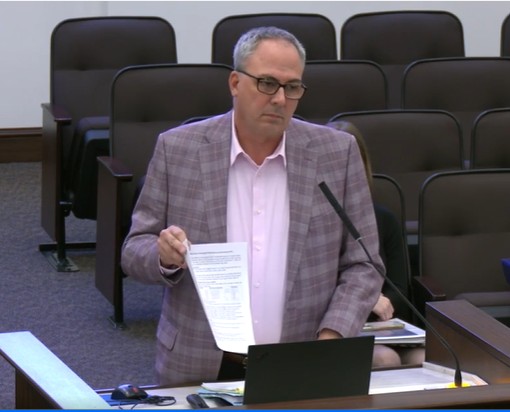
“There is panic. There is fear. People are crying,” Michael Rajner of Fort Lauderdale, who has lived with HIV since 1995 and who relies on ADAP, told the Senate Appropriations Committee at a Jan. 14 hearing.
For weeks, Rajner has been a persistent presence at the Capitol in Tallahassee. Until he showed up and began testifying, some senators said they were not aware of the ADAP crisis.
One senator is definitely aware, however. At that meeting, Sen. Carlos Guillermo Smith, D-Orlando, questioned DeSantis administration officials about how the state justified taking money away from the program. His concerns were echoed by David Poole, who ran the ADAP program from 1993 through 2005. “Pushing tens of thousands of people off potentially lifesaving medications … these are life or death consequences for many Floridians,” he said.
Rajner has prodded lawmakers to act while also accusing DOH of illegally diverting money from ADAP without adequately notifying the public of the implications of the severe cutbacks.
“There’s been no communication with the community or transparency,” Rajner told senators on Jan. 14.”We’re afraid for our lives.”
Blame for that rests squarely with the Department of Health. Its repeated and outrageous communications failures have heightened public outrage and anxiety.
Blindsiding the public
DOH executed its restrictions in secret and failed to solicit public feedback through an administrative path known as rulemaking, which caused a legal challenge by the AIDS Healthcare Foundation. AHF has pharmacies throughout Florida, including the one located inside the Out of the Closet thrift store on Mills Avenue.
Commentary: Florida’s proposed cuts to AIDS program harm public health
But rather than respond to the legal challenge, DOH blindsided the public a second time.
The agency enacted emergency rules that short-circuited legal proceedings, imposing a new 14-day legal clock that allows it to implement the restrictions. Rajner arrived at a state office Wednesday hoping to attend a hearing, but he instead discovered the state’s action. In an online video, he called it “outrageous and insulting.”
All states receive federal money through the Ryan White HIV/AIDS Program to help low-income people get FDA-approved medications. Passage last year of President Trump’s “One Big Beautiful Bill” cut Medicaid funding and access to insurance under the Affordable Care Act, which the state cites as reasons for the new restrictions.
The Senate is tackling this crisis. The preliminary Senate budget (SB 2500, pp. 126-127) orders the Department of Health to restructure ADAP later this year “to improve long-term sustainability and maximize access for eligible individuals within available resources” and to insure “as many eligible Floridians as possible within existing resources.”
DOH is also directed to provide monthly reports to the Legislature, starting Aug. 1, how ADAP money is accounted for and spent.
“At the end of the day, we are the appropriators,” Senate Appropriations Chairman Ed Hooper, R-Palm Harbor, told Department of Health officials in January.
In a state holding an enormous budget reserve of nearly $17 billion, legislators must resolve this manufactured health care crisis. No other state has imposed such severe income restrictions on the ADAP program.
Other states — Pennsylvania, Delaware, Kansas and Rhode Island, to name a few — have found solutions that minimize the impact to vulnerable people. Florida should too.
The Orlando Sentinel Editorial Board includes Executive Editor Roger Simmons, Opinion Editor Krys Fluker and Viewpoints Editor Jay Reddick. The Sun Sentinel Editorial Board consists of Executive Editor Gretchen Day-Bryant, Editorial Page Editor Steve Bousquet, Deputy Editorial Page Editor Dan Sweeney and editorial writers Pat Beall and Martin Dyckman. Send letters to insight@orlandosentinel.com.