
Home
»
Airlines News of United States
»
Thousands of Travelers Impacted in US as United, PSA, Alaska, Spirit Log 53 Flight Cancellations and 130 New Delays at Washington, Chicago, Miami, Orlando, Fort Lauderdale, Anchorage, Honolulu and More
Published on
March 4, 2026
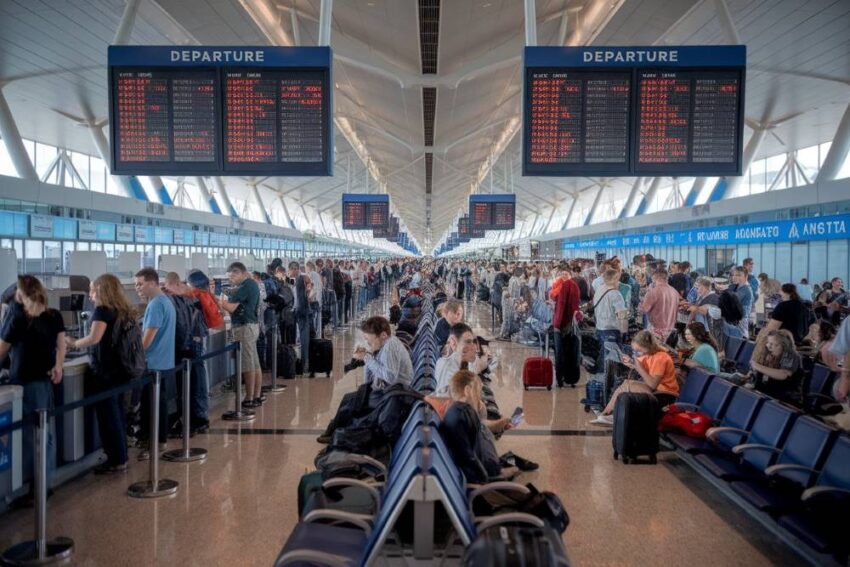
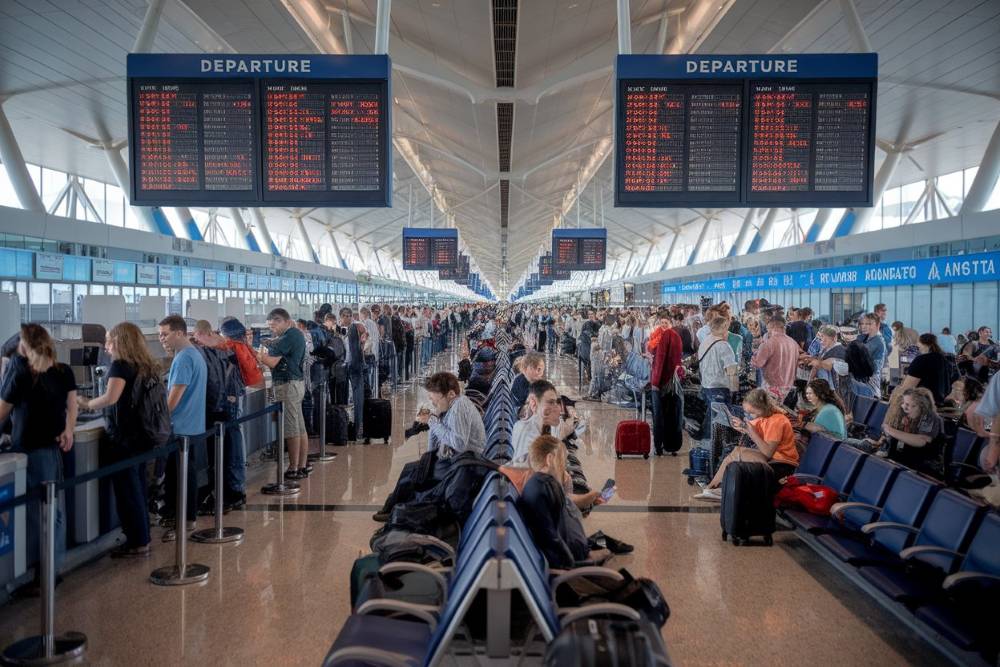
Image generated with Ai
“Thousands of Travelers Impacted in US as United, PSA, Alaska, Spirit Log 53 Flight Cancellations and 130 New Delays at Washington, Chicago, Miami, Orlando, Fort Lauderdale, Anchorage, Honolulu and More” sets the tone for a deeply disrupted travel day across the US. Today, thousands of travelers are impacted in the US as United, PSA, Alaska and Spirit struggle with 53 flight cancellations. At the same time, they face 130 new delays that ripple through Washington, Chicago, Miami, Orlando, Fort Lauderdale, Anchorage, Honolulu and more key cities. As a result, passengers encounter long lines, missed connections and reshuffled plans.
Yet airlines continue to adjust schedules and deploy teams to manage the fallout. Moreover, major US hubs like Washington, Chicago and Miami amplify every disruption. In this climate, travelers must stay alert, react quickly and use every available option to keep their journeys on track. These figures show that most flights are still operating, but many are running late, pushing connections, onward plans, and airport operations under pressure.
Where the Problems Are: Airports Under StrainEast Coast and Major Hubs Seeing the Most Impact
Among individual airports, several key US gateways are bearing the brunt of cancellations and delays. Reagan National (DCA) currently reports 19 cancellations and 138 delays, putting the Washington, D.C. airport at the top of both disruption lists.
In the New York region, John F. Kennedy International (JFK) has logged 15 cancellations and 59 delays, while Newark Liberty International (EWR) shows 9 cancellations but a particularly heavy 119 delays. Low ceilings and wind‑related restrictions are likely forcing longer departure and arrival queues, creating a backlog through the day.
Chicago O’Hare International (ORD), another critical national hub, has recorded 7 cancellations and 58 delays, mirroring its role as a central connector where any operational slowdown can affect both domestic and international passengers.
Miami International (MIA) reports 9 cancellations and 57 delays, pointing to significant disruption in and out of South Florida as well.
Washington Dulles International (IAD) is also under pressure, with 9 cancellations and 54 delays, reinforcing the picture of a heavily impacted Mid‑Atlantic corridor.
Orlando International (MCO) reports 7 cancellations and 20 delays, while Anchorage International (ANC) shows 4 cancellations and 19 delays, reflecting operational challenges in Alaska that are compounded by deicing needs and winter conditions.
In Florida, Fort Lauderdale International (FLL) has 4 cancellations and 15 delays, and Daniel K. Inouye International (HNL) in Honolulu shows 4 cancellations and 12 delays, indicating that even leisure‑focused and long‑haul gateways are not spared.
Airlines Hit by Cancellations and Heavy DelaysCarriers With the Most Scrubbed Flights
On the airline side, cancellations are concentrated among a cluster of major and regional players. United and PSA Airlines (operating under the American Airlines banner) each report 18 cancellations, putting them at the top of today’s cancellation chart. Spirit follows closely with 17 cancellations, highlighting significant disruption in the ultra‑low‑cost segment.
Alaska Airlines reports 8 cancellations, while JetBlue has recorded 5. Delta Air Lines has comparatively fewer cancellations at 3, and both American Airlines and Southwest show 2 cancellations each. While some carriers are clearly cancelling more flights than others, delays tell a broader story of network‑wide strain.
AirlineCancellationsDelaysUnited18144PSA Airlines (AAL)1858Spirit1754Alaska Airlines851JetBlue546Delta Air Lines376American Airlines2144Southwest2293City and Network Impact: Who Is Feeling It Most?Key Cities Under Pressure
From a city‑level perspective, the Washington, D.C. area (DCA and IAD combined) is experiencing notable stress, with a high number of both cancellations and delays. New York City travellers are feeling the strain primarily through JFK and especially Newark, where delays heavily outweigh cancellations, creating crowded terminals and congested departure boards.
Chicago and Miami, both important domestic and international gateways, are also seeing elevated disruption, affecting connections across the Midwest, Latin America and transatlantic routes. Orlando, Fort Lauderdale and Honolulu highlight that tourism and leisure travellers are also being caught up in today’s problems, while Anchorage and deicing‑affected airports point to ongoing winter‑related complications in northern regions.
Advertisement
Advertisement
Taken together, the data paints a picture of a US air system that is still functioning but under clear operational stress, with delays far outnumbering cancellations and a handful of airports and airlines absorbing a disproportionate share of the pain.
US AirportTotal CancellationsTotal DelaysReagan National (DCA)19138John F Kennedy Intl (JFK)1559Newark Liberty Intl (EWR)9119Chicago O’Hare Intl (ORD)758Miami Intl (MIA)957Washington Dulles Intl (IAD)954Orlando Intl (MCO)720Anchorage Intl (ANC)419Fort Lauderdale Intl (FLL)415Daniel K Inouye Intl (HNL)412
What Affected Passengers Can Do Now
Passengers whose flights have been cancelled should first confirm their flight status directly with their airline’s app, website or airport counter and immediately request rebooking on the next available service. Same‑day standby lists, rerouting through alternative hubs and switching to partner airlines can sometimes get travellers to their destination faster than waiting for the next nonstop.
Advertisement
Advertisement
For those facing long delays rather than outright cancellations, it is wise to:
Check whether minimum connection times are still realistic and, if not, proactively ask the airline to protect or rebook onward segments.
Monitor gate changes and updated departure times frequently, as conditions can improve or worsen quickly.
Keep all receipts if delays turn into overnight stays, as some carriers may offer vouchers, hotel discounts or partial reimbursement depending on their policies and the cause of disruption.
Planning Ahead and Knowing Your Options
Given today’s total of 1,541 delays and 130 cancellations across the US system, travellers with upcoming flights should build in extra time, avoid the tightest possible connections and consider earlier departures where available. Those flying through the most affected hubs—such as Washington, New York, Chicago or Miami—should be particularly cautious and keep a close eye on airline notifications.
Passengers should also review their airline’s conditions of carriage and any travel insurance coverage to understand what compensation or assistance may be available in the event of long delays, missed connections or cancellations. While today’s disruption level is not as extreme as during major winter storms or system‑wide outages, it is high enough that informed, proactive steps can make a significant difference to how smoothly a journey ultimately goes.
Source: FlightAware
Tags: airline operational issues, flight cancellations US
