
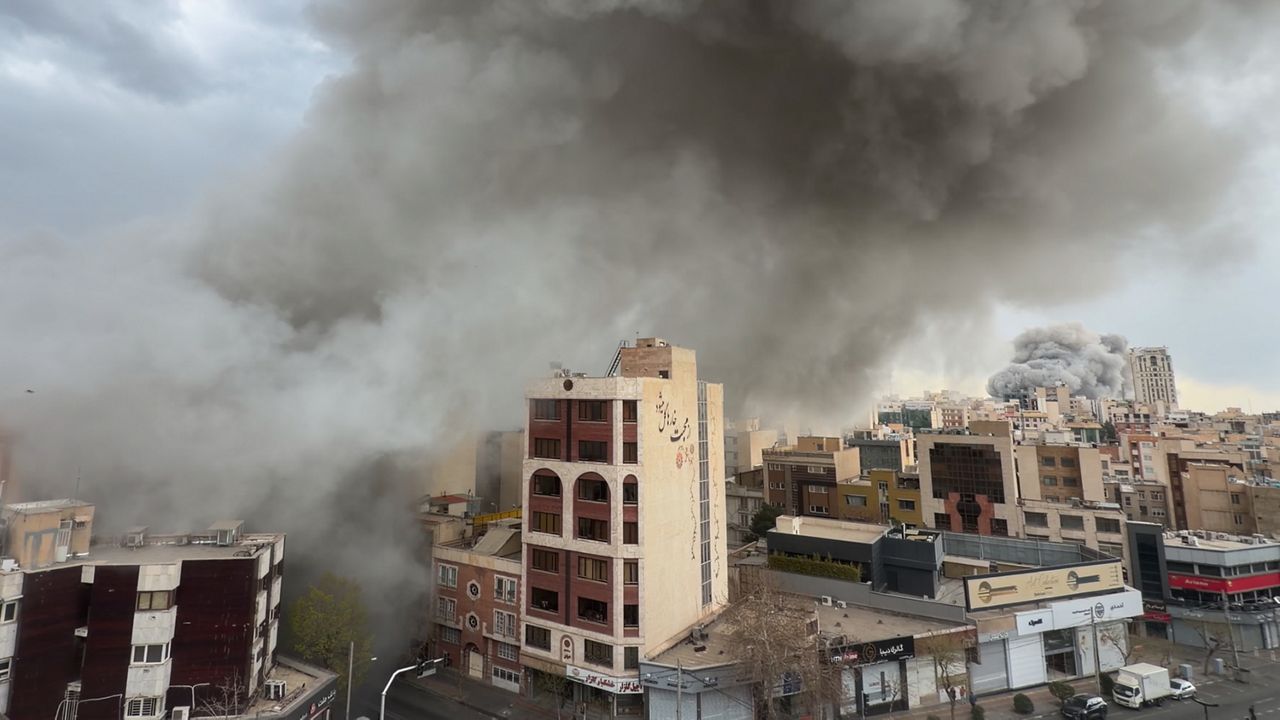
ORLANDO, Fla. — As the conflict in the Middle East intensifies, President Donald Trump warned the American public Monday that the war with Iran could last weeks.
A University of Central Florida professor who studies terrorism said that while it’s still early in the conflict, it is important for people to be aware of what’s going on.
What You Need To Know
The conflict in the Middle East is intensifying as the joint U.S.-Israeli action enters its fourth day
President Donald Trump warned Americans on Monday that the war with Iran could last weeks
A UCF professor and expert on terrorism studies says Central Floridians should not be afraid of what’s happening, but should remain vigilant
Dr. Ted Reynolds is the director of terrorism studies at UCF’s Office of Global Perspectives and has been studying terrorism and terrorist groups long before the Sept. 11 attacks.
He said Iranians have been living under a “very oppressive regime” — led by the nation’s supreme leader Ayatollah Ali Khamenei, who died this week during the conflict. The regime, Reynolds said, has sponsored multiple terrorist groups, including Hamas, Hezbollah and the Houthis, for a long time.
But as multiple attacks have been carried out in countries outside of Iran, including at the U.S. Embassy in Pakistan and in the Saudi Arabian capital, Reynolds said he doesn’t want anyone to be afraid, but he urged Central Floridians to remain vigilant
“If something feels off, trust your gut,” he said. “There is discussion, and I see this conversation going on in different forms of the FBI’s very concerned about domestic attacks by people that are either sleeper agents of the Iranian government and some of their proxies, or people that are sympathetic to the Iranian regime. And that’s not uncommon.”
On Saturday, Feb. 28, FBI Director Kash Patel said on X that FBI counterterrorism and intelligence teams would be on “high alert and mobilize all assisting security assets needed” for domestic attacks, after strikes were launched on Iran that killed the nation’s leader over the weekend.
Despite these measures, Reynolds said he believes there isn’t much to be concerned about locally for the moment.
“I would suspect that all of our national security interests here within Central Florida, as well as some of our more well-known venues, have protocols in place in case something were to happen, and protocols in place to consider what those threats might be and how to look out for them,” he said.
As an educator, Reynolds said he always encourages people to stay informed through multiple local and international news outlets — something he said he does himself.
He also said that anyone who travels regularly should check the U.S. Department of State’s website for any updated travel advisories.
Reynolds added that if someone has no choice but to travel to these affected regions, they should register their information with the State Department beforehand.