
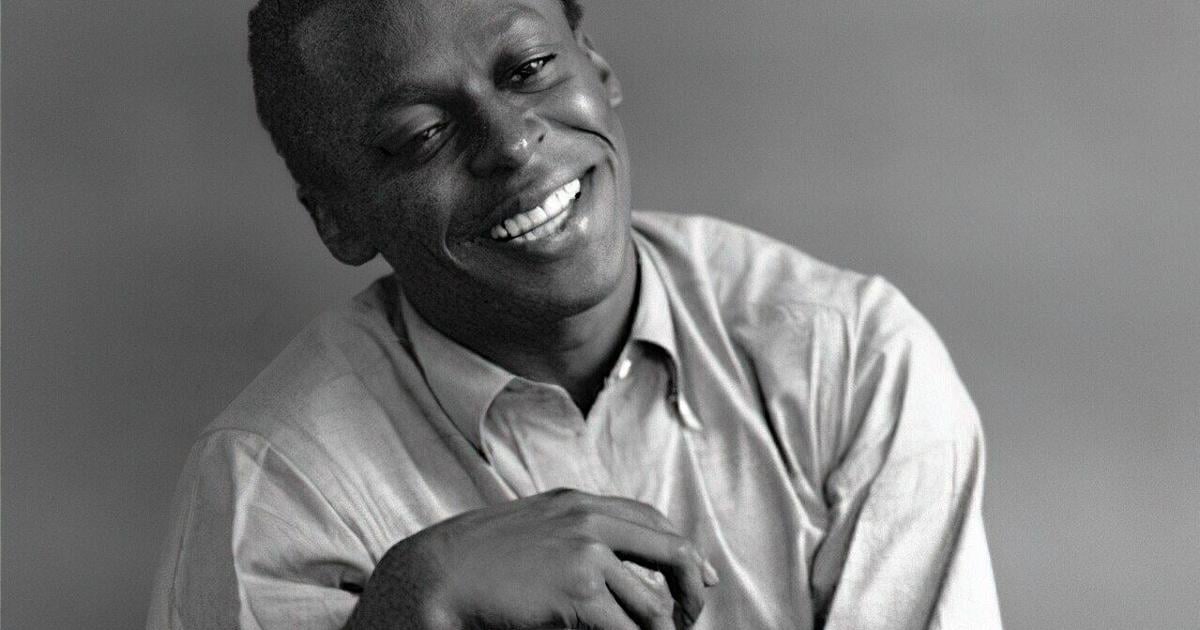
Last week, the Montreux Jazz Festival Miami celebrated the Miles Davis Centennial, a milestone tribute honoring one of the most dynamic figures in music history. In commemoration of what would have been Davis’ 100th year, a cadre of some of the world’s best jazz musicians – some who played with him, some who were inspired by him – assembled at the Miami Beach Bandshell for a night of music, remembrance, and the continuation of a legacy.
Davis’ nephew, Grammy Award-winning drummer and composer Vince Wilburn Jr., oversees the Miles Davis Estate along with Davis’ children, Erin and Cheryl Davis. In collaboration with Montreux Jazz Festival Miami, Wilburn brought together two essential eras of Miles Davis’ artistic journey, the acoustic period and the electric period, to honor the full arc of Davis’ music.
Miles Davis had a close relationship with the Montreux Jazz Festival, performing there ten times between 1973 and 1991. This legacy now extends to Miami, channeling the energy and exceptionality of his performance. Held on its opening night, the Miles Davis Centennial Celebration marked the very first Montreux Jazz Festival Day in the City of Miami Beach.

Host Michael Valentine, programmer at WDNA Serious Jazz at 88.9 FM.
(Elisabeth Campbell for The Miami Times)
“This event in years to come is going to become the Art Basel of music,” said David Whitaker, president and chief executive officer of the Greater Miami Convention & Visitors Bureau, one of the main partners of the festival.
As one of the most revolutionary personalities in modern sound, Davis left an impression on everyone who knew him, most of all his family. Since childhood, Wilburn knew he wanted to be a musician like his uncle.

Lalah Hathaway, the “First Daughter of Soul” and daughter of Donny Hathaway.
(Elisabeth Campbell for The Miami Times)
“When Uncle Miles would come to Chicago where I grew up, my parents would take me to his concerts,” said Wilburn. “But I always wanted to stay in the wings. I didn’t want to sit in the audience with them. I was fascinated by the interactions of the band members on stage because I had a bird’s eye view from the sidelines. That was the impression in my mind, that I wanted to do what they do.”
As a kid, Wilburn would sneak downstairs in his family home and listen to his parents’ record collection. He was mesmerized by the music, especially the records that featured Davis.
Donald Harrison, Jr. on alto saxophone.
(Elisabeth Campbell for The Miami Times)
“Uncle Miles hated the word jazz,” said Wilburn. “He called it social music.”
Davis wanted to highlight music’s role in representing social issues, connecting jazz with the broader conversation around civil rights and equality. His commitment to using music as a sort of language inspired Wilburn to love all sounds, from reggae to classical.
“As I gradually started playing and getting more into it, I had bands,” said Wilburn. “Uncle Miles would call my parents and have my mom put the phone down so he could critique us. We’d play for two hours, and he’d still be on the phone. One day he called us, and we rehearsed, and he passed the phone around and asked us if we wanted to make a record.”
That record was The Man with the Horn, a 1981 comeback album, combining elements of funk, soul, and jazz-rock.
Keyon Harrold on trumpet.
(Elisabeth Campbell for The Miami Times)
Over his prolific career, Davis had many collaborators, including Lenny White, a legendary drummer hailed as one of the founding fathers of jazz fusion. White considers Davis to be one of his biggest musical influences.
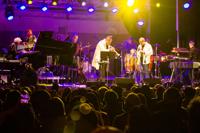
The M.E.B (formerly known as the Miles Electric Band).
(Elisabeth Campbell for The Miami Times)
“We didn’t want to play with Miles Davis,” said White, “we wanted to be Miles Davis. He was the epitome of cool, and in playing this music that we played, he was the pinnacle. The true artist really wants to advance in whatever it is that he or she does, and Miles Davis changed music four or five times. I was just fortunate to be a part of that major change from the acoustic to the electric. That was the first record that I recorded.”
That album, Bitches Brew (1970), is lauded as being the transitional moment between Davis’ acoustic innovation and electric experimentation. For White, playing drums on that record was a lesson in artistry.
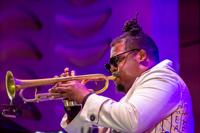
Keyon Harrold during a trumpet solo.
(Elisabeth Campbell for The Miami Times)
“The drums are the heartbeat of the music,” said White. “Whatever kind of music, whether it be jazz, classical, rock or hip hop, the drums are the heartbeat of what happens and how the music really translates. Any artist really wants to take whatever it is that they feel – whether it’s a painter, whether it’s an author, an actor, whatever it is that they feel within them – and translate it to whoever’s listening, whoever’s watching, whoever’s reading.”
As Davis’ legacy lives on, Wilburn Jr. and jazz musicians around the world continue to push the boundaries of traditional sounds, inspired by and motivated through one of jazz’s most influential figures and the records he left behind.
“None of us can recreate Herbie and Chick and Jack and Ron and, you know, all these great musicians,” said Wilburn. “What we’re trying to do is interpret the teachings of what Uncle Miles taught us. We like to evolve, to not play it safe; we like to keep the pots stirring.”
Close
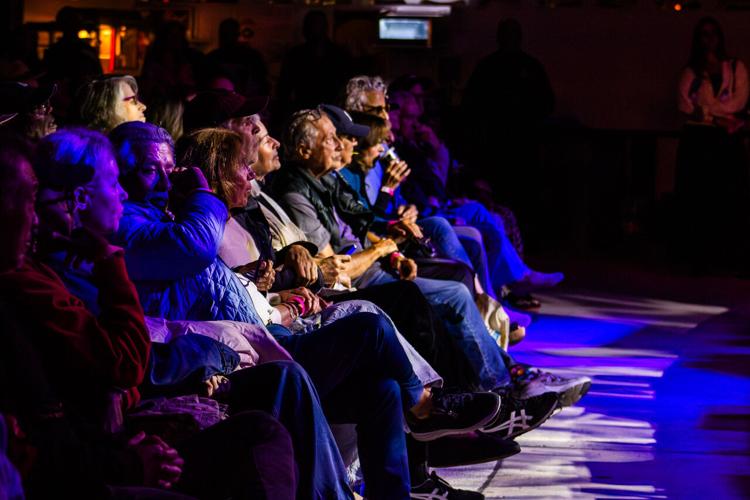

The Miles Davis Centennial Celebration drew a diverse audience to the Miami Beach Bandshell.
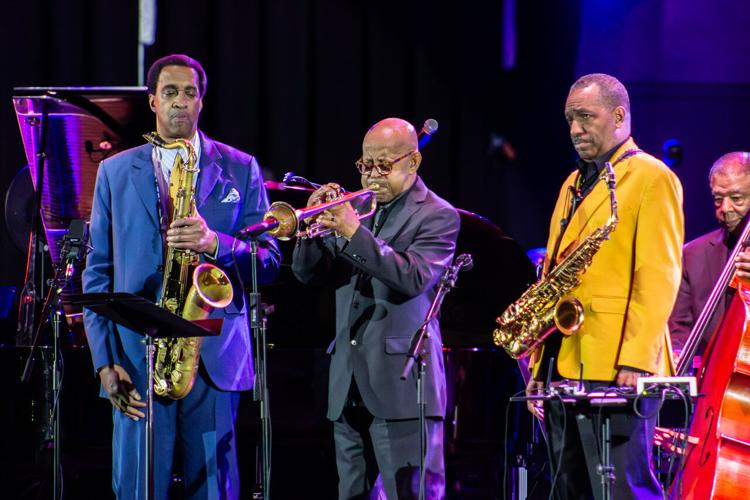
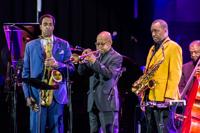
(L-R) Javon Jackson on tenor saxophone, Dr. Eddie Henderson on trumpet, and Donald Harrison, Jr. on alto saxophone.
The Miles Davis Centennial Celebration drew a diverse audience to the Miami Beach Bandshell.
(L-R) Javon Jackson on tenor saxophone, Dr. Eddie Henderson on trumpet, and Donald Harrison, Jr. on alto saxophone.