
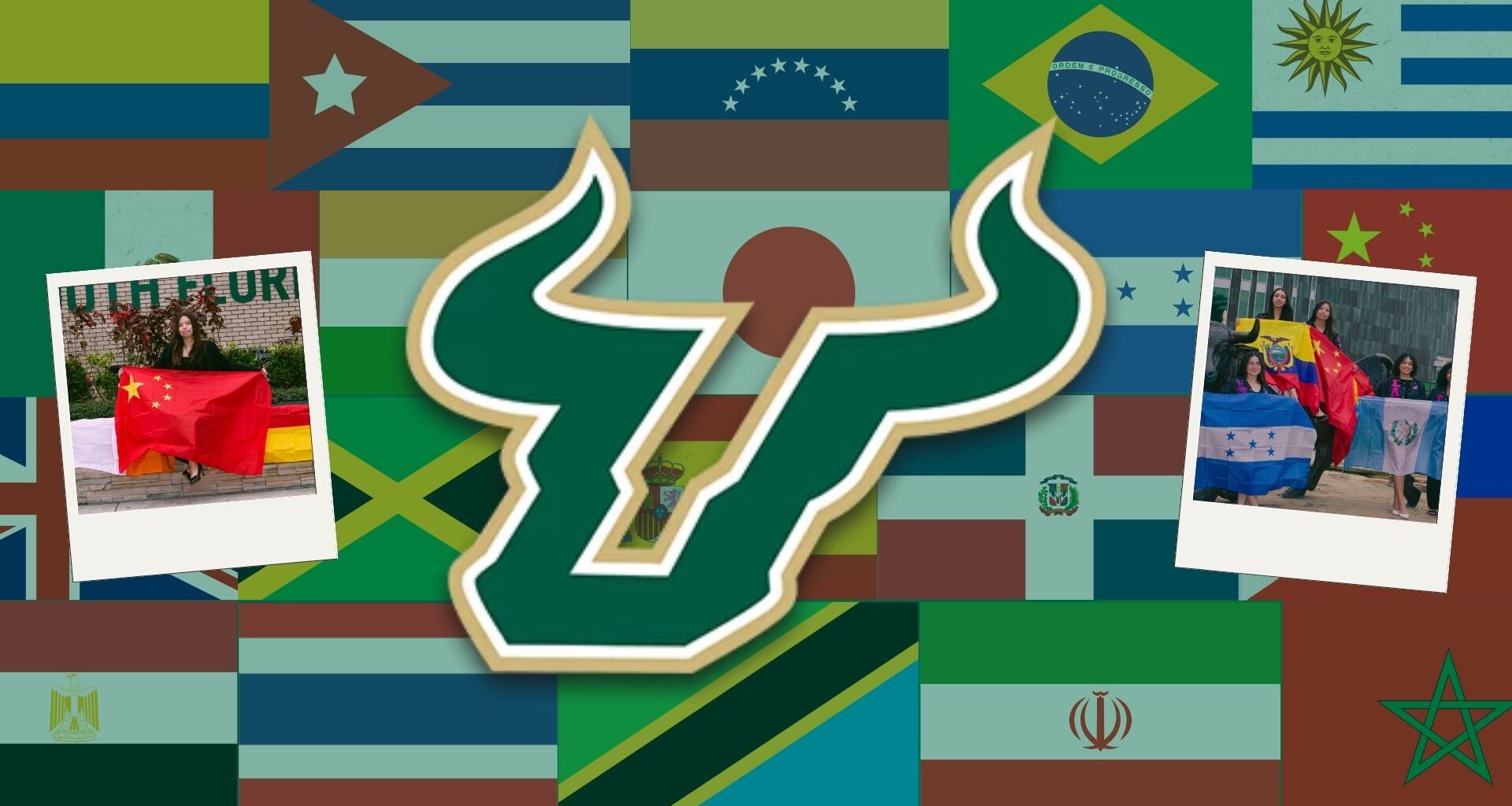
 USF’s cultural clubs allow students to connect with many others and maximize inclusion for the student body. ORACLE GRAPHIC/KEATON DUKE
I recently helped a friend write a personal essay for a scholarship. The question was, “What does inclusion mean to you?”
When we were working on how to answer the question, she immediately knew she should write about the Japanese Culture Club at USF.
She went to one of the club’s events last year as a way to make new friends, but ended up enjoying it so much that she decided to join it this year.
As a Japanese student, she said the organization allowed her to find people with the same cultural identity as her.
This writing session made me think about all the cultural clubs USF offers.
As a Black woman, I have attended a few Black Student Union events to make friends and connect with others.
I attended an event last year during BSU Week, where the organization held an event once a day for a week to celebrate Black History Month.
At the Love in Bel-Air Date Auction, people would come up and introduce themselves and their hobbies on stage, and others would auction off a potential “date” with them.
During this event, I made a few friends as I bonded with some women in the audience. We talked about Black hairstyles and how important they are to us.
Related: OPINION: Attacking international students, staff won’t make Florida stronger
Seeing people close to me talk about how other cultural clubs at USF made them significantly happier inspired me to explore the campus culture club scene.
USF has over 600 organizations, and a lot of them are culture-based, whether it is Western, Asian or African-based, according to the Official USF website.
USF also has the Multi-Community and Unity Council, a coalition of multicultural student organizations that strives to empower students of all cultures to lead cultural clubs.
I believe that cultural clubs are extremely important in universities, as they provide a safe haven for students to connect with others who share similar racial and cultural experiences.
And connections between race and culture matter in college. There is something special about having a group of friends who understand the cultural things that make you who you are.
These are the people who understand that the reason you wear your hair a certain way or don’t eat certain food groups is due to how you were raised.
Jenny Greer, a senior biomedical anthropology major, is the president of the Japanese Culture Club.
Greer said she has been in the club for three years and has made a lot of friends during that time.
“I view it as a club who promotes its culture to many diverse people who are interested,” Greer said. “It is important to have a club like this because it should be inclusive towards anyone with great interest, not exclusive.”
Related: OPINION: USF’s multicultural student orgs need to be celebrated
And Greer said although the organization is called the Japanese Culture Club, it welcomes students from all cultures and strives for inclusion within its student body.
This is an amazing feature offered by cultural clubs, which allow you not just to meet people from your own culture but also to compare your experiences with those of people from other backgrounds.
Greer said events held by cultural clubs also offer unique learning opportunities for different traditions, food and activities.
They also provide information, such as beliefs or sayings of a particular culture, that can be applied to anyone’s daily lifestyles, she said.
I believe that no matter your race or ethnicity, it is always great to get involved and respectfully learn about other cultures.
Doing so allows for the spread of knowledge, growth and potential friendship with fellow club members.