
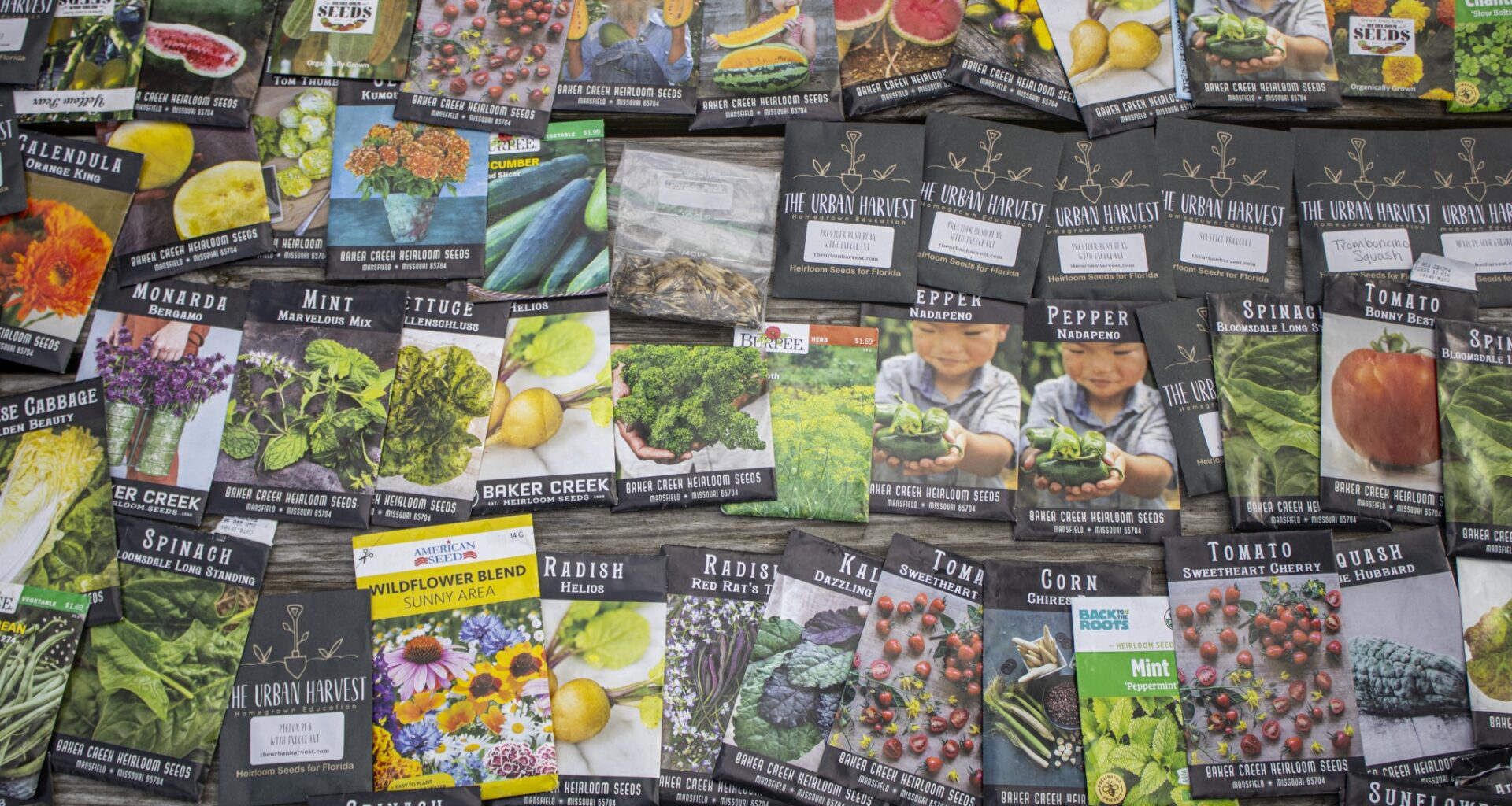
 USF’s Agrarian Club is collecting seeds for its seed library, which will be housed in the USF Herbarium. ORACLE PHOTO/AUDREY KOCZANSKI
The USF Tampa Library and the Agrarian Club are working on curating more than stacks of books — they’re also collecting seeds for a seed library.
The Agrarian Club is a student gardening club that practices and teaches sustainable food production through its vegetable garden at the USF Botanical Gardens, according to BullsConnect.
Dharsh Saravana is a senior environmental science and policy major, and a member of the Agrarian Club.
Saravana said the seed library initiative started in fall 2024 and was inspired by Eckerd College’s self-service seed collection.
“I saw their seed library there, and I was just so in awe of the collections that they had,” Saravana said. “The impact of the freedoms that it gives a community to have a repository like that reflects that area.”
Saravana said the six-member seed library team is waiting to finalize a Memorandum of Understanding agreement with the USF Herbarium to begin storing seeds in a Herbarium cabinet at the USF Tampa Library.
Saravana said a temporary “satellite location” is stationed at USF’s Feed-A-Bull pantry to allow the seed library to collect seeds until the cabinet is finalized.
“We hope that once the space use agreement is finalized, people can mail seeds to the USF Library directly, and those seeds will then be channeled to the Herbarium, where we will access them,” Saravana said.
USF students involved with the seed library said the initiative allows students to support plant diversity, create local food sources and learn about seed saving.
Related: USF environmental organizations petition to reinstate the Office of Sustainability
Ameya Singh is a senior environmental science and policy major, and a member of the Agrarian Club.
Singh said the organization initially submitted the seed library proposal to the Student Green Energy Fund for financial support, which was later approved.
The Student Green Energy Fund started in 2012, and supports dozens of projects that improve sustainability across USF’s campuses — ranging from solar power to water refill and charging stations.
Singh said seed library members have already collected over 100 varieties of seeds — including those for different beans, herbs, tomatoes, squash, greens, flowers and cover crops.
USF’s seed library will be “unique” because of its variety of plant seeds, Singh said.
“It’s harder to find cultural produce here in Tampa, even though it is very diverse here,” Singh said. “So we started off wanting to provide more varieties of seeds than what food is available in grocery stores.”
Saravana said the seed library will keep a log of which seeds people are seeking and taking, so members can keep up with demand and restock popular seeds.
Students will not need to pay for seeds, Saravana said, because the club wants students to “freely exchange” them to grow plants and food.
“We’re not just any seed library, but rather a seed library that reflects the community and reflects the needs of the community and what they’re looking for,” Saravana said.
Saravana said they hope the seed library will raise awareness of the ongoing loss of seed variety due to the industrial agricultural system.
The industrial agricultural system has contributed to the loss of seed and plant diversity due to the space needed to grow crops, according to the Center for Strategic and International Studies.
“We want students to understand that there’s this ongoing seed extinction, why seeds are so important to protect and save,” Saravana said.
Seed extinctions are often caused by habitat destruction and loss, which introduces the need for seed libraries and banks, according to Kew Gardens.
Saravana said the seed library initiative is important because it helps him stay connected to his South Indian cultural heritage.
“Each seed can invoke some sort of memory in people,” he said. “I definitely think the significance that they hold matters to us, but our current industrial society ignores that type of value to seeds and only looks at the monetary value that seeds have.”
Related: USF Herbarium moves to Tampa Library’s Special Collections
Singh added that the seed library team plans to hang and post artwork near the Herbarium’s seed cabinet to make the space feel more inviting once it opens.
“We try to go beyond just having seeds available,” Singh said. “We want to embrace that cultural side of things. And we want information available for people. We want artwork, we want recipes, things like that.”
She said the team is also working to develop a website to provide people with recipes they can make with the plants they grow from the seeds they take from the library.
Now that the seed library initiative is almost in action and finalized, Saravana said he hopes students feel happy and intrigued about it.
“I hope that they’re excited and they want to learn more,” Saravana said. “I hope that they’re inspired to try and grow their own food.”