
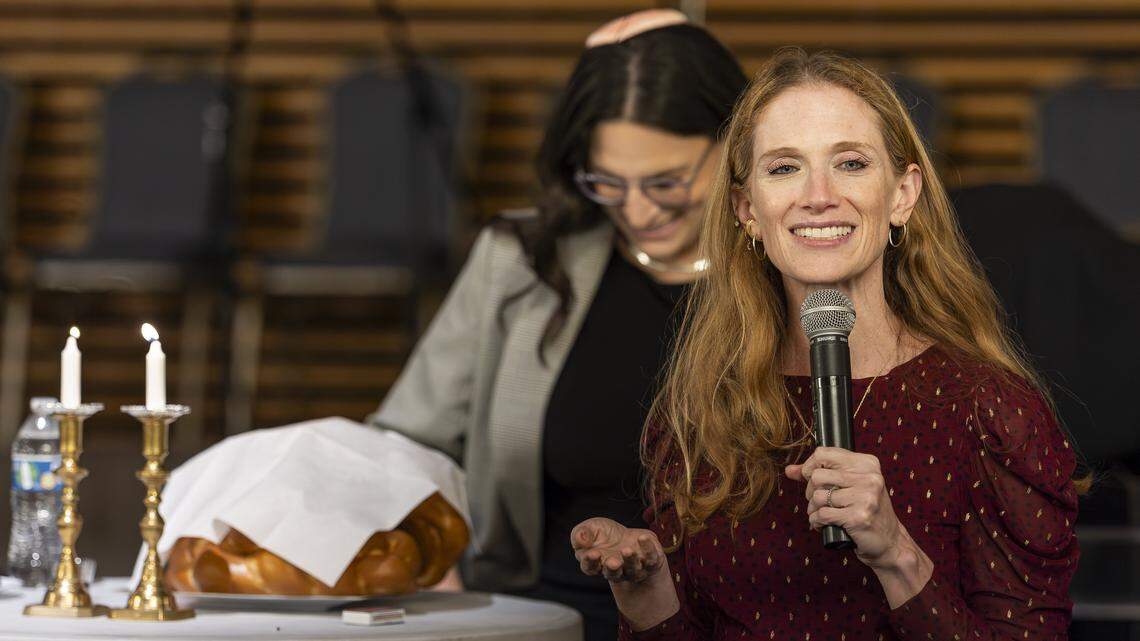
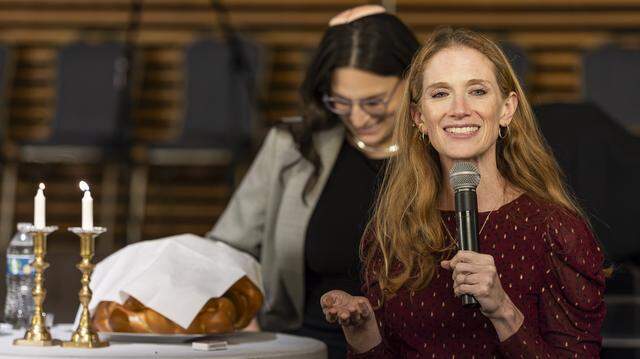
Rabbi Rachel Greengrass speaks during an interfaith iftar dinner at Temple Israel of Greater Miami on Friday, Feb. 27, 2026, in Miami, Fla.
Photo by Matias J. Ocner
mocner@miamiherald.com
Plates of challah bread and bowls of dates sat in the center of each table. Manischewitz wine — a staple of Shabbat — was replaced with grape juice to accommodate those who don’t drink alcohol.
Faith leaders of various religions gathered around the table to discuss fasting — not just as a religious ritual, but a way to build empathy for people who go without food because of their circumstances, not by choice.
At an uncommon merging of holy days, Jews and Muslims came together in Miami on Friday for a family-style dinner to celebrate Shabbat, the weekly Jewish day of rest, and Ramadan, Islam’s holiest month marked by daily fasting from sunrise to sunset.
The event, hosted by the Jewish Community Relations Council of the Greater Miami Jewish Federation at Temple Israel of Greater Miami, highlighted a shared tradition between the two faiths: fasting as both a spiritual discipline and a reminder of responsibility to the hungry. The celebratory dinner brought Jews and Muslims together in Miami to share commonalities and build empathy at a time of global tension.
The event took place just hours before the United States and Israel launched multiple airstrikes on Iran, killing the country’s supreme leader and starting a war affecting more than half a dozen countries across the Middle East.
The Shabbat-iftar dinner successfully brought together two religious groups that have had a somewhat strained relationship ever since the fallout of the attacks in Israel on October 7th. But at Friday’s event, the only palpable tension in the room at Temple Israel of Greater Miami came from the anticipation of breaking fast and eating dinner.
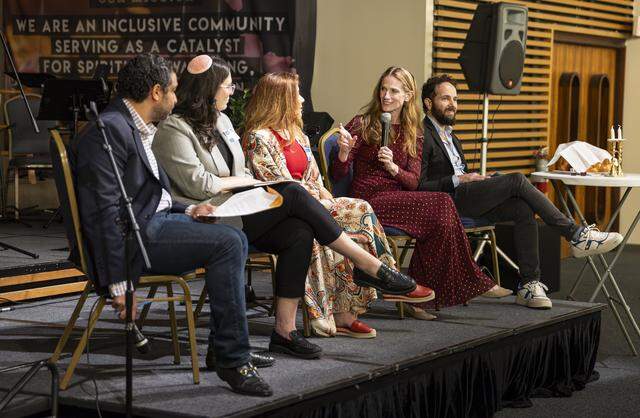 Rabbi Rachel Greengrass speaks during an iftar dinner welcoming Muslims and Jews to discuss the role of fasting in both traditions at Temple Israel of Greater Miami. Photo by Matias J. Ocner mocner@miamiherald.com Fasting creates empathy
The panel discussion, led by Mosaic Miami’s executive director Matthew Anderson, explored focused on how fasting — a practice shared by many religions — can deepen empathy for people experiencing hunger.
During Ramadan, Muslims break their fast with an iftar, or evening meal often held at mosques or Islamic centers. The communal event, much like Shabbat, is a special meal meant to be shared with friends and family.
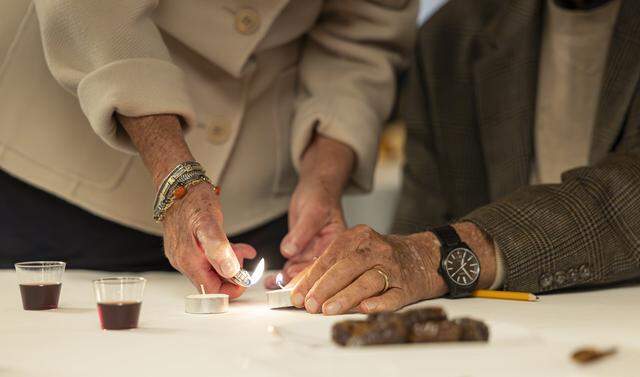 Guests light candles during an interfaith iftar dinner at Temple Israel of Greater Miami. Photo by Matias J. Ocner mocner@miamiherald.com
“Fasting, on the face of it, is not just about not eating or drinking or smoking,” said Mohammad Homayounvash, founding director of the Jaffer Institute for Interfaith Dialogue & Education.
Abstaining from food and drink also “paves the way for becoming more empathetic and to be capable of empathizing with folks who don’t eat, not by choice, but by circumstance,” Homayounvash said.
Rabbi Jessica Jacobs of Temple Beth Sholom said that on Yom Kippur, Jews learn about how fasting is linked to empathy and responsibility. She noted that synagogues often collect food for the community on that holiday and year round.
“It’s really up to us to take responsibility to care for other people,” she said.
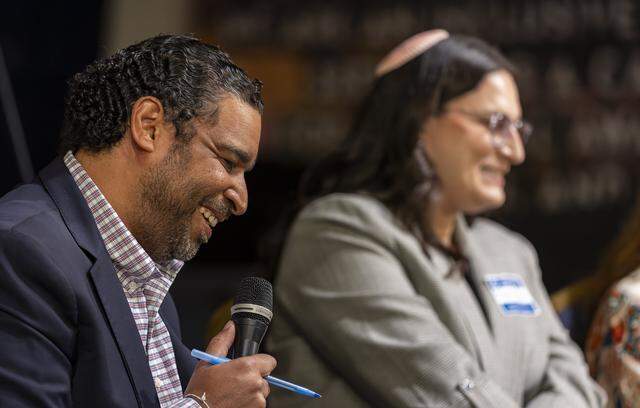 Matthew Anderson, executive director of Mosaic Miami, speaks during an iftar dinner welcoming Muslims and Jews. Photo by Matias J. Ocner mocner@miamiherald.com The importance of interfaith dialogue
For many of the speakers, shared practices like fasting also open the door to stronger relationships between religious communities.
Rabbi Rachel Greengrass of Temple Beth Am in Pinecrest said interfaith dialogue helps prevent the misunderstandings that often fuel conflict.
“The only way for us to be able to stand together … and to be God’s voice in the world that is very, very broken, is for us to be able to have the conversations and call on each other when one of our communities is in need,” said Greengrass.
Greengrass told a story of her upbringing in a majority Christian town in Indiana where she was the only Jew in her high school class of 1,600. The rabbi said that her best friends during her youth were Muslims, because they shared a bond of being “othered.”
“When we are in a dialogue, we don’t have those misunderstandings. We always see each other as brothers and sisters,” she said.
Yasemin Saib, a religious studies professor at Florida International University, said personal relationships are one of the most effective ways to reduce prejudice.
“There’s a saying that goes: it’s much more difficult to hate somebody that you know,” said Saib. “Because when you know somebody, you know that they’re multifaceted. There’s so much more to that person.”
Sustaining an interfaith network
While events like the Shabbat-iftar dinner highlight cooperation between communities, some attendees acknowledged that sustaining widespread interest in interfaith dialogue can be difficult.
Divisions exist even within specific faiths, as Jacobs pointed out how some Jewish traditions would not agree with a woman being a rabbi.
“We are a small community, but we are also a diverse community, and we want to be unified, but we are very much not uniform,” said Jacobs.
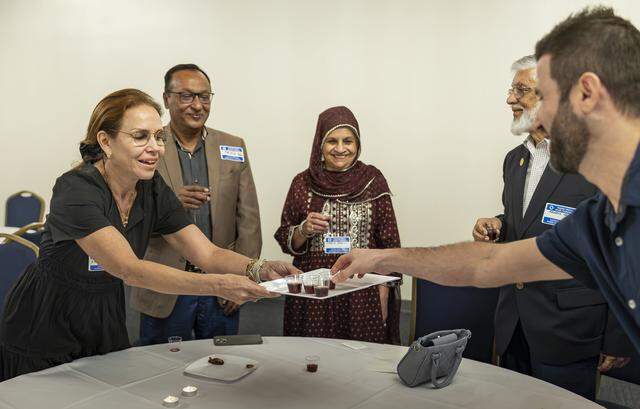 Mytyl Simancas shares grape juice with other guests attending an interfaith iftar dinner. Photo by Matias J. Ocner mocner@miamiherald.com
“In general whenever there’s any [interfaith] event … it’s very difficult to have young people involved in it,” said Kamruz Hosein, president of JAM & ALL Interfaith, a nonprofit that hosts interfaith events.
Hosein said that inviting people of other faiths to mosques (and vice versa) is important because it “breaks down the barriers” of misconceptions that people have about religions and cultures different from their own.
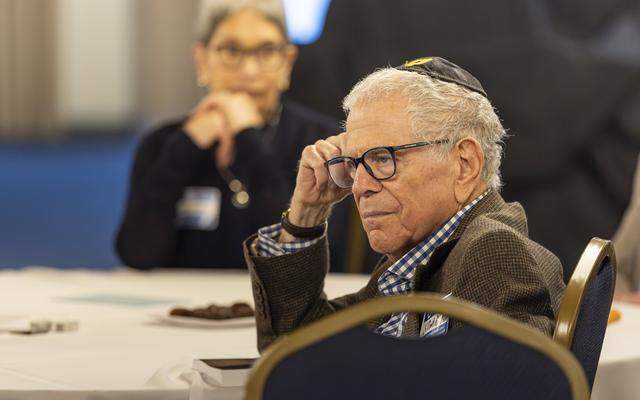 Stewart Merkin listens to speakers during an iftar dinner at Temple Israel of Greater Miami. Photo by Matias J. Ocner mocner@miamiherald.com
This story was produced with financial support from Trish and Dan Bell and donors in South Florida’s Jewish and Muslim communities, including Khalid and Diana Mirza and the Mohsin and Fauzia Jaffer Foundation, in partnership with Journalism Funding Partners. The Miami Herald maintains full editorial control of this work.