
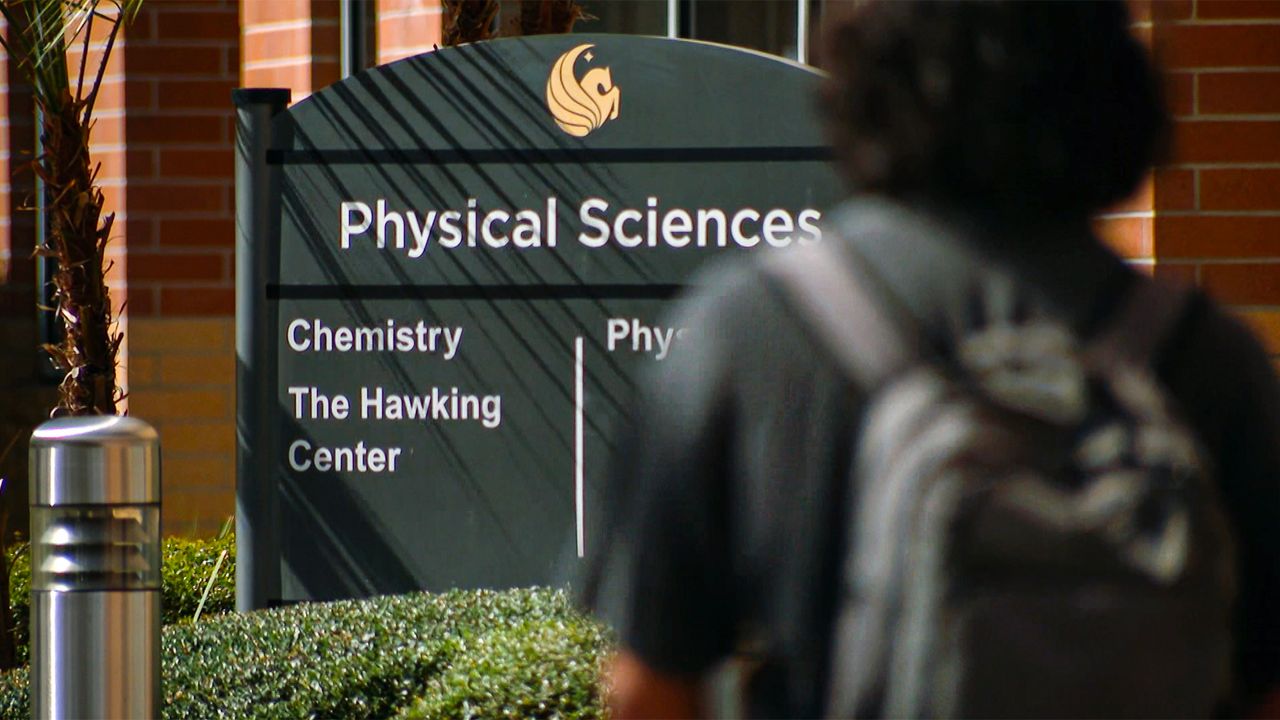
ORLANDO, Fla. — A 10-month hiring freeze approved by the Florida Board of Governors has University of Central Florida students and faculty concerned, with some calling the decision unfair for immigrants with H-1B visas looking for work at public universities.
What You Need To Know
A hiring freeze for H-1B visa candidates looking for a job at a Florida public university is in effect until Jan. 5, 2027
In October, Gov. Ron DeSantis told the Florida Board of Governors to crack down on enforcement in an effort to hire more Americans for the job
All Florida public universities must comply, including the University of Central Florida
Gov. Ron DeSantis said he wants to “crack down on H-1B visa abuse,” directing the board to end the practice in October. On Monday, the board approved the hiring freeze until Jan. 5, 2027.
Talat Rahman, a member of United Faculty of Florida, got an H-1B visa after finishing her PhD in California. She later joined UCF as a physics professor.
“A significant part of the people who apply and rise to the top will have to be ignored,” Rahman said about the hiring freeze.
Rahman told Spectrum News 13 there is already a position faculty wants to fill, but their top candidate would require an H-1B visa, which they cannot get now until after the freeze.
“We may either lose the candidate or we will have to start the search again,” explained Rahman. “And basically, it’s a lot of waste of time, but also the fact that we all put in a lot of effort and found somebody who was really, really good, that we are not going to be able to have that.”
Rahman doesn’t want others to confuse hiring visa recipients as “a favor” to those looking for work.
“We are doing ourselves a favor by being able to attract the talent from all over the world to serve in our universities. If they don’t come, it is our quality of education that is going to go down,” said Rahman.
Alexis Peters, a student at UCF, shared her opinion too.
“If people are genuinely just trying to come here and find work and have a life for themselves, who are we to stop them,” said Peters. “Especially if they are on a visa, they are coming here legally.”
According to the H-1B Employer Data Hub, five people were approved to work at UCF this fiscal year. In FY2025, that number was 47 people, an increase from the 40 people employed during FY2024.
Attorney Madhurimi Paturi explained how this hiring freeze will affect people who want to work in Florida.
“It’s going to directly and indirectly affect a lot of Floridians who are ready to go to higher education,” said Paturi, citing research and teaching as top occupations for visa recipients within the university system.
Paturi says the H-1B visas regarding public universities is cap-exempt and doesn’t come under the same registration process as the lottery that opened on March 4. She has noticed public concern and recommends other visa options such as the O-1 or EB-1A.
Florida Education Association President Andrew Spar shared the following statement with Spectrum News:
“H-1B visas are often used by universities to recruit highly qualified faculty and researchers for critical positions that may otherwise go unfilled. Florida’s colleges and universities have been recognized as leaders, not only in the United States but also around the world, by attracting the very best professors and empowering them to educate students at an extremely high level. Limiting the pool of potential employees does nothing to further the mission of Florida’s colleges and universities. Instead of creating obstacles, we should focus on what is best for Florida’s students and the professors and graduate assistants who work hard every day to provide a world-class education.”