
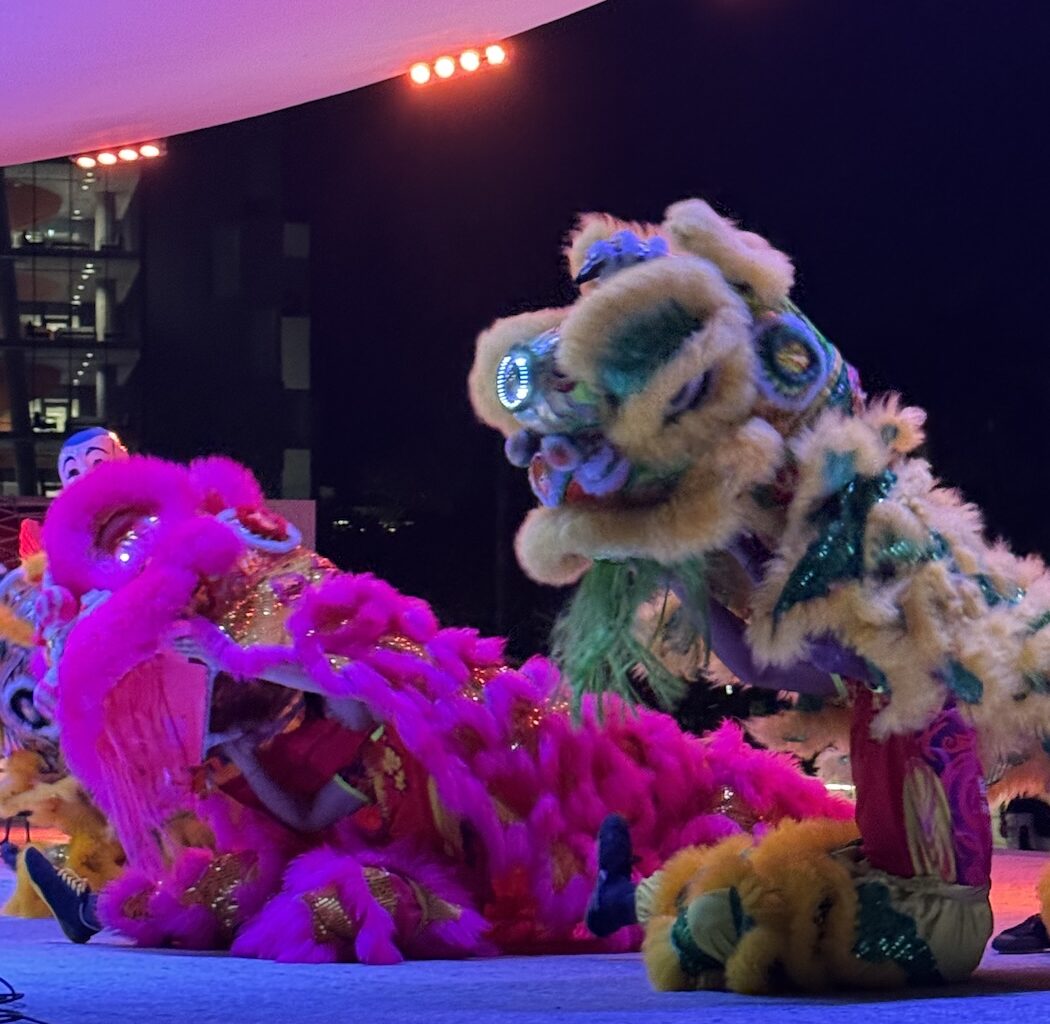
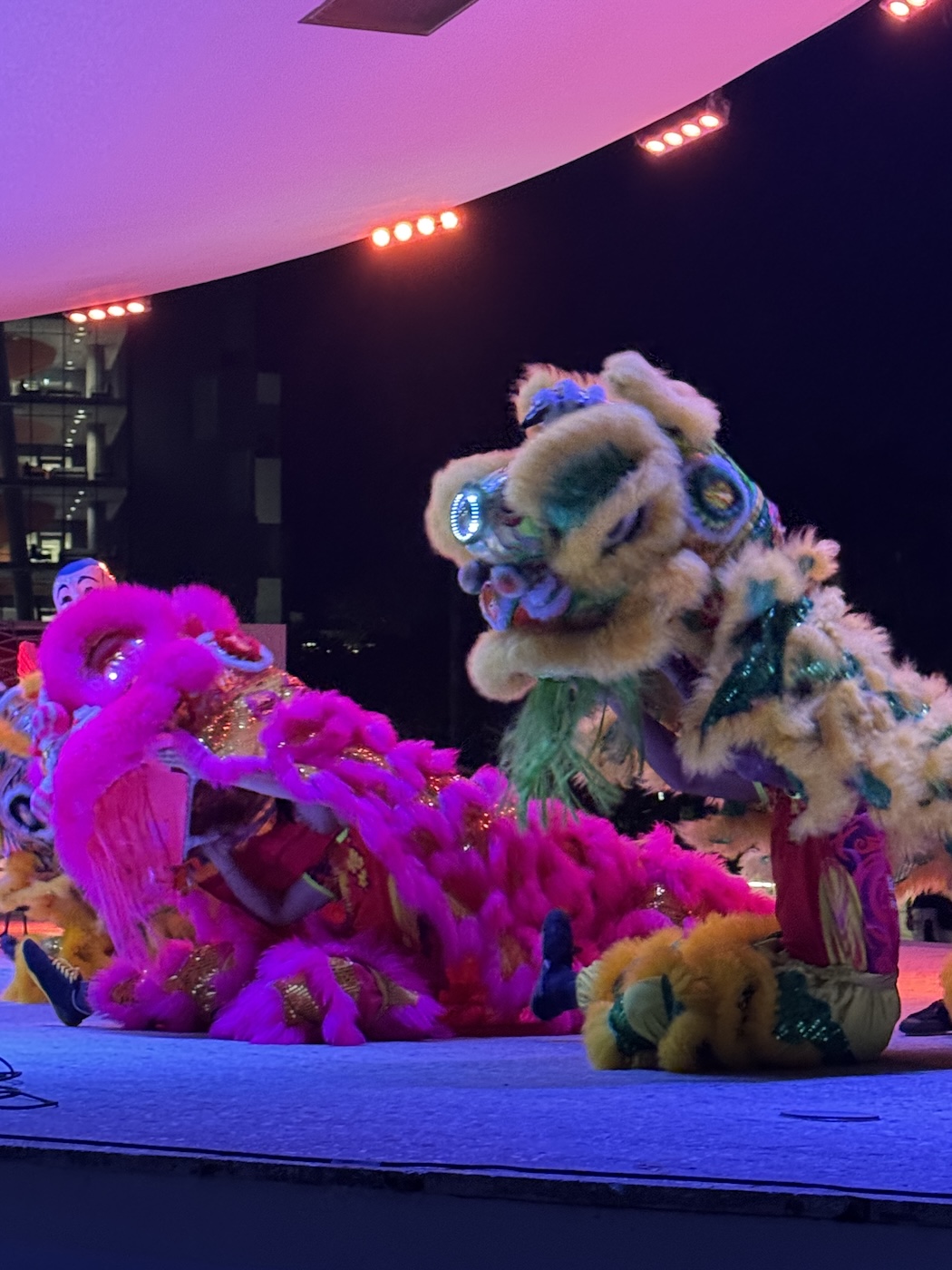
 Lee Koon Hung Kung Fu lion dance performers at the Lakeside Patio stage on Feb. 20, 2026. Photo Credit // Olivia Attalla
The University of Miami’s Lakeside Patio glowed red and gold on Friday, Feb. 20 as drums thundered, paper lanterns swayed in the breeze and hundreds of students gathered for one of campus’ most beloved cultural traditions: the Asian American Student Association’s annual Lunar New Year Festival.
While the Lunar New Year officially began on Feb. 17, AASA hosted its celebration on Feb. 20 so students could honor the holiday collectively on campus.
Now in its 14th year, the event has grown into AASA’s largest celebration, drawing between 400 and 500 attendees. This year carried an added layer of rarity and symbolism.
For the first time in six decades, the Lunar New Year welcomed the Year of the Fire Horse — a zodiac cycle historically associated with fierce independence, transformative energy and a kind of unstoppable momentum that defines entire generations.
“This year is more about going in with a stronger mindset,” Keira Tellado, AASA president and a junior studying industrial engineering, said. “Previous years are meant for clearing the slate, but the Fire Horse is about renewal. It only comes every 60 years, so it feels special to celebrate it with the whole community.”
AASA transformed the Lakeside Patio into a bustling cultural fair, with ten student organizations hosting interactive tables. Students collected stamps by completing activities, everything from origami stars to cultural trivia, before redeeming them for free Asian cuisine and boba.
The lineup of eight multicultural student organizations tabling at the event reflected the range of UM’s Asian and international communities.
For many of those organizations, the event was both a celebration and a milestone. The Vietnamese Student Association for example, is only in its first official semester as a COSO‑approved organization.
“Last year we were running as an unofficial group,” Katie Wang, VSA’s president and founder, said. “Now that we’re approved and getting funding, we hope to do more Vietnamese‑oriented events.”
VSA’s table featured origami, specifically folded paper stars.
“The star is on the Vietnamese flag,” Wang said. “It was the easiest option for us this year, but we’re excited to grow.”
Nearby, the Filipino Student Assocaition revived one of its traditional activities: candle balancing, a practice rooted in Filipino folk dance. Elijah Corpus, a sophomore and general E‑board member at FSA, told students the significance of the dance.
Candle dances symbolized storytelling through light, with performers balancing flames on their heads or hands to honor resilience, spirituality and the idea that movement can carry not just the body, but the soul.
“We’re trying to be more active this semester and bring the club back,” Corpus said. “FSA is an extension of AASA, but we focus on bringing together the Filipino community on campus.”
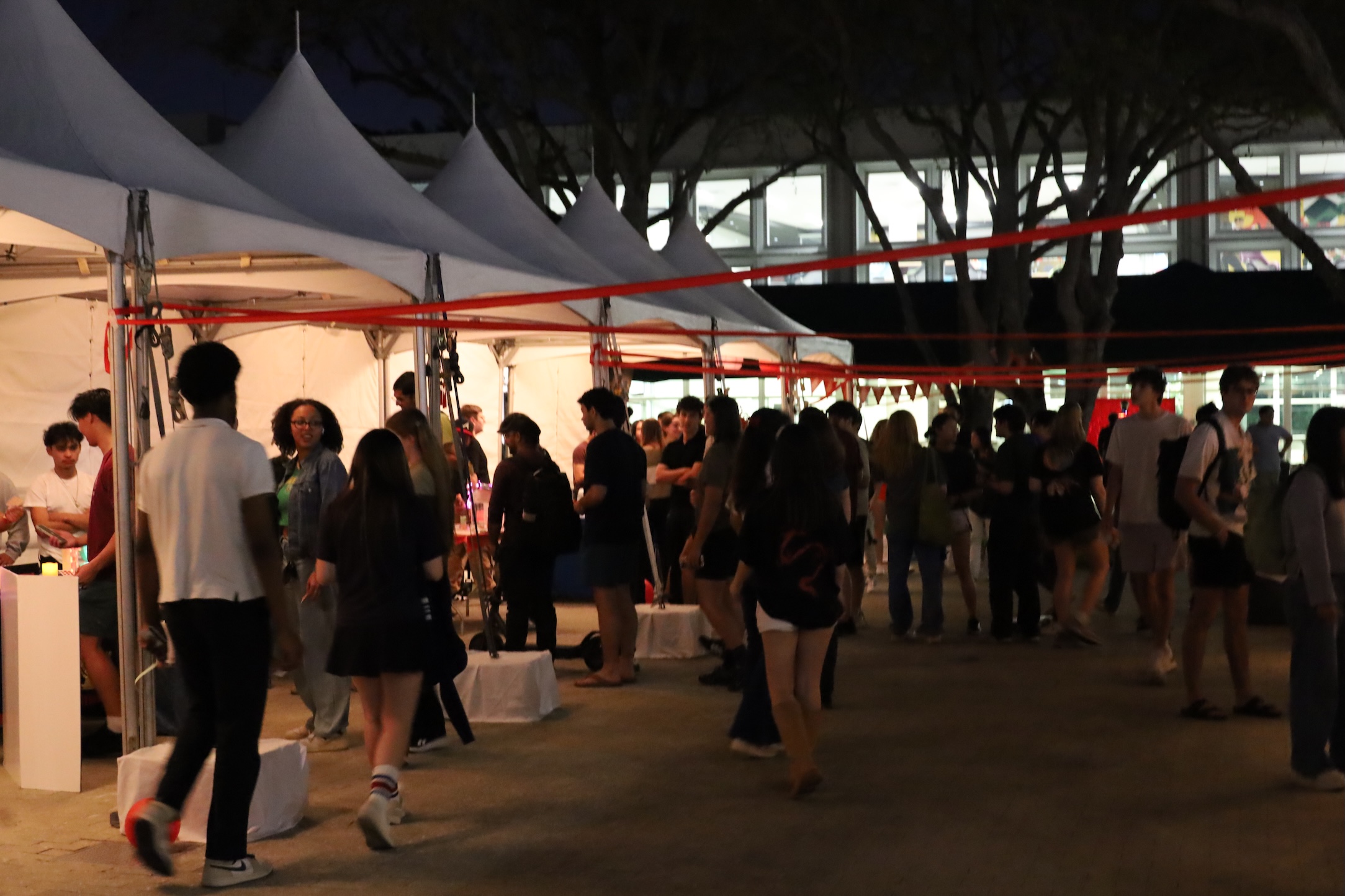 Multicultural student organizations showed students cultural activities and food from their communities. Photo Credit // Olivia Attalla.
As the evening grew later, the festival shifted into its performances — one of the most anticipated parts of the evening. AASA brought together a mix of professional performers, student artists and cultural groups.
The lion dance, AASA’s traditional opener, performed by Lee Koon Hung Kung Fu drew one of the largest crowds of the night.
“It’s our big opening act,” Tellado said. “Locked [UM’s student K-pop dance team] is a group I’m also excited for. They perform every year and bring a lot of traction. I have friends in it, so it’s always fun to watch.”
The performances ranged from high‑energy drumming, to contemporary dance from Locked, and onto martial arts demonstrations, each one adding a different cultural lens to the celebration.
What began as a modest cultural gathering has evolved into one of UM’s most anticipated spring events. Students return year after year, Tellado said, and many have watched the festival expand in scale, diversity and visibility.
“This is our biggest event of the year,” Tellado said. “People really love it, and they keep coming back.”
For first‑year students experiencing Lunar New Year away from home, the festival offered a sense of belonging. For others, it was a chance to learn, taste and participate in traditions they may not have grown up with.
For AASA, it was a moment to showcase the vibrancy and range of Asian cultures on campus.
As the Fire Horse year began, defined by courage, reinvention and collective momentum, the night closed on a scene that felt both celebratory and grounding.
Drums pulsed like a heartbeat across the patio, lanterns cast warm halos over students sharing food and stories, performers bowed, friends reunited and the community moved together into a new year shaped by light, intention and possibility.
To see AASA’s upcoming and future events, go to their Instagram: @aasaum.